Educational Film · Illustration · Animation · Visual Storytelling
The Science of Kindness — Hand-Drawn Explainer Film for 52 Lives & The School of Kindness
A three-minute illustrated film introducing children to the science, emotional effects and social consequences of kindness through character-led visual storytelling.
Client: 52 Lives / The School of Kindness · Released: November 2025
Role: Visual Concept Development · Character Design · Storyboard · Illustration · Animation · Editing · Production
The Film
The Science of Kindness

The Brief
Explain kindness rather than simply celebrate it
For the UK charity 52 Lives and its educational initiative The School of Kindness, I created The Science of Kindness, a fully hand-drawn explainer film for young audiences, schools and wellbeing programmes.
Released ahead of World Kindness Day and Anti-Bullying Week UK, the film needed to explain what happens in the brain, body and social environment when people act with empathy, generosity and care — without turning the subject into either a biology lesson or a motivational poster.
I handled the visual production from the supplied script through shooting-script refinement, character design, storyboard, scene planning, illustration, animation, editing and final 4K UHD delivery.
01 · Character-Led Learning
Sam makes the science personal
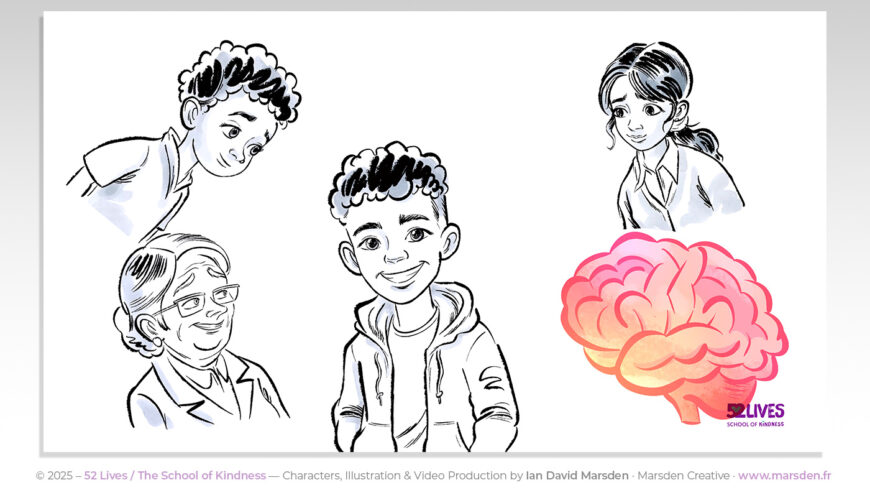
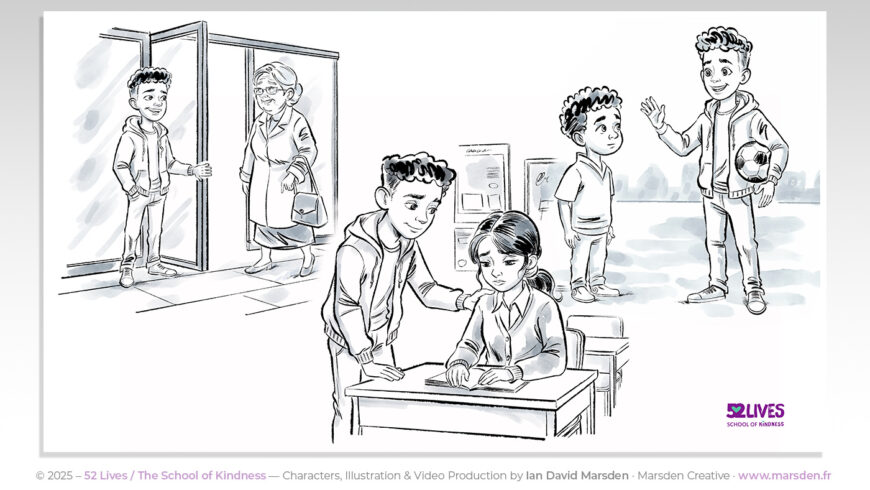
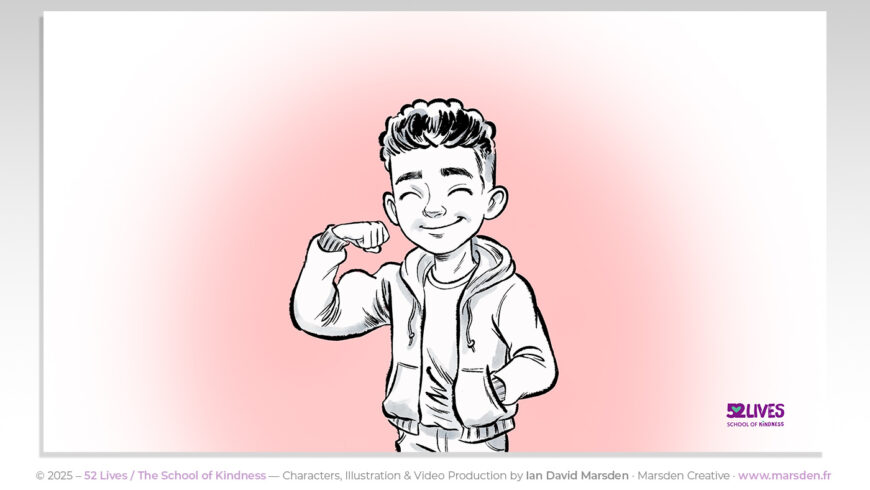
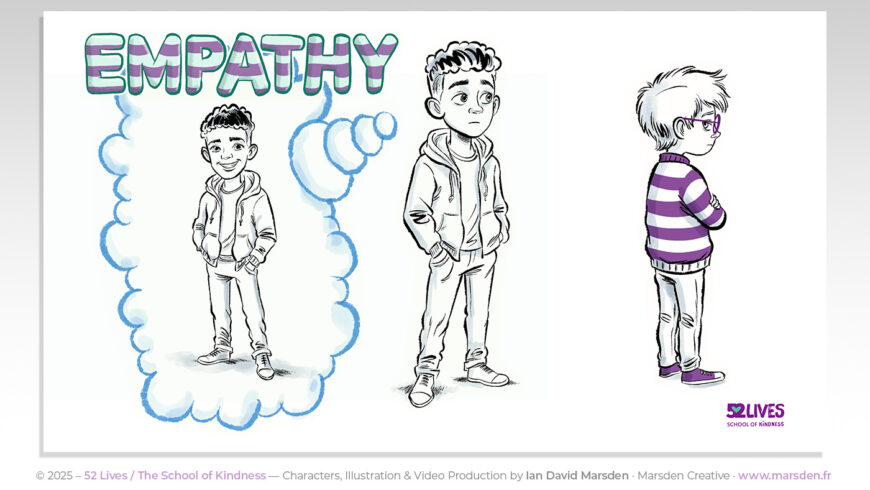
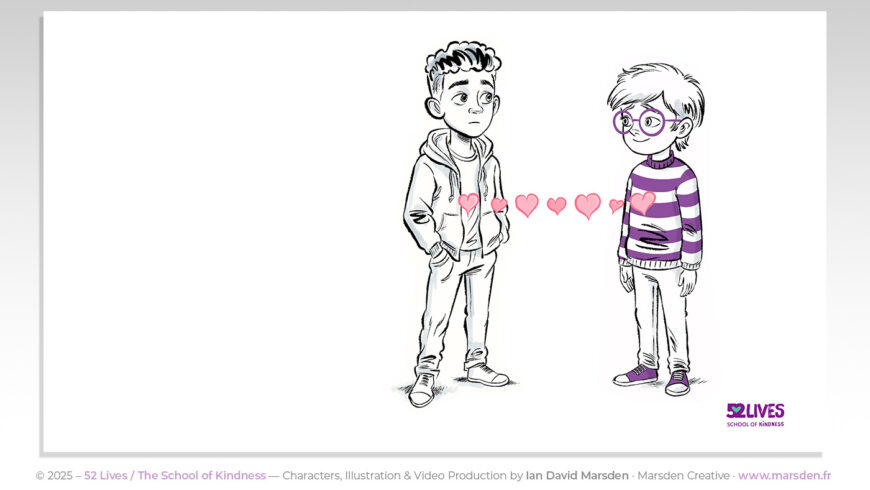
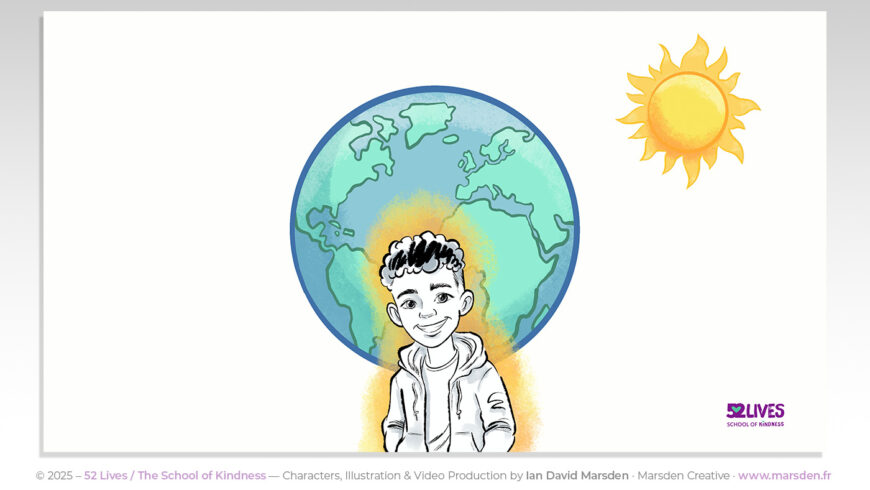
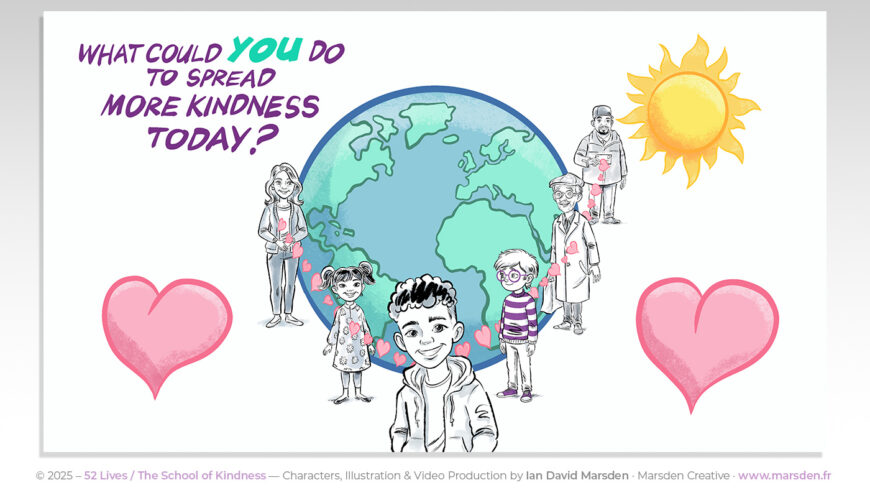
At the centre of the film is Sam, a thoughtful child whose small everyday choices create the narrative thread. Holding a door, comforting a classmate and inviting another child into a game give the scientific ideas something recognisable to attach to.
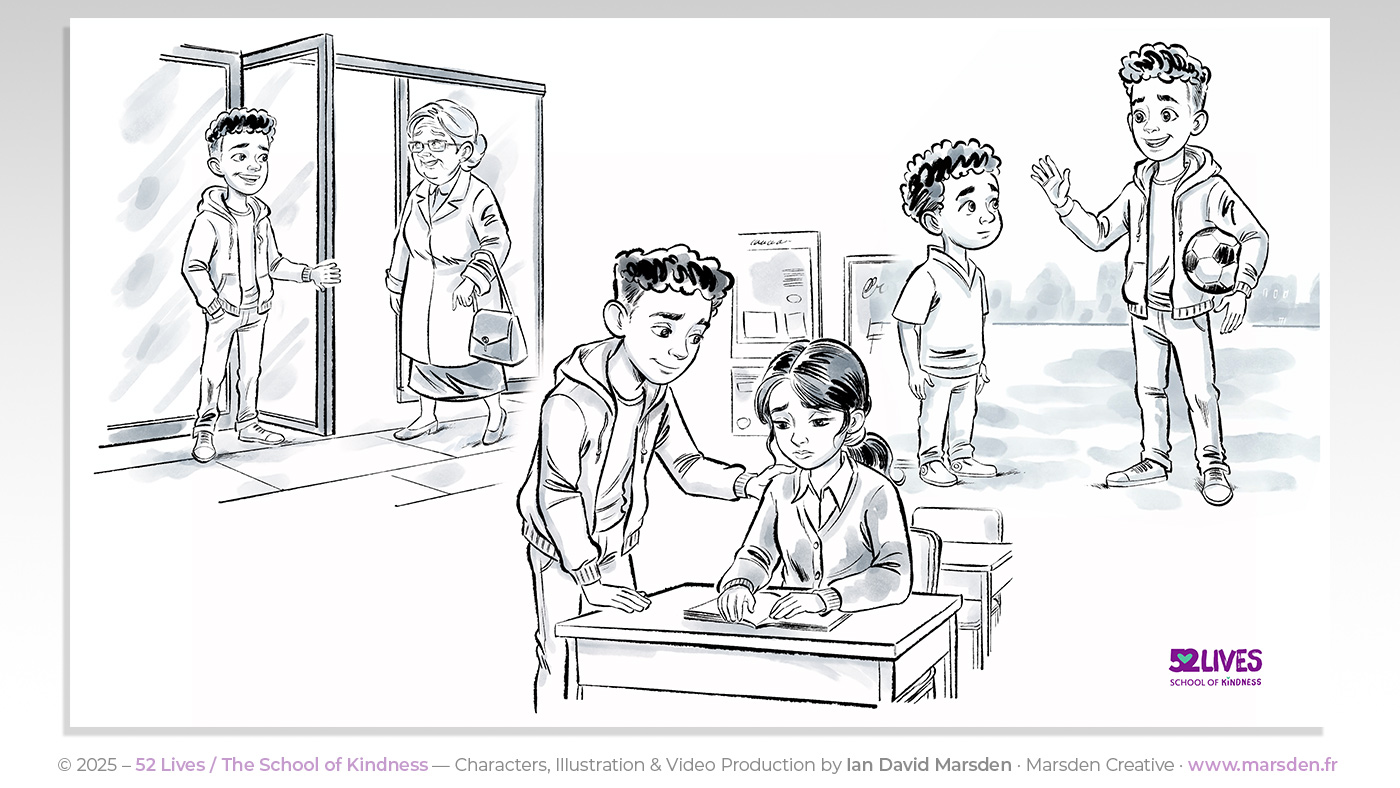
Sam is not presented as heroic in a grand sense. He is deliberately ordinary: close enough to the viewer that his actions feel possible rather than exceptional.
02 · Visualising the Science
Turning neuroscience into images children can follow
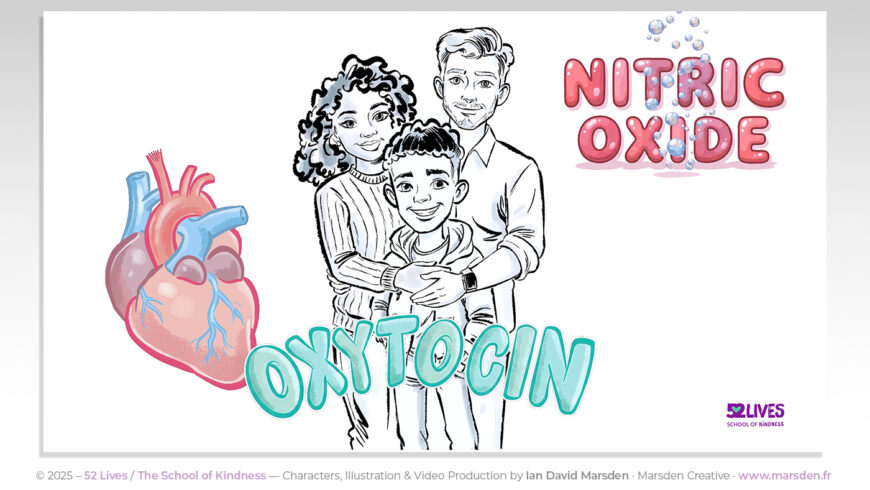
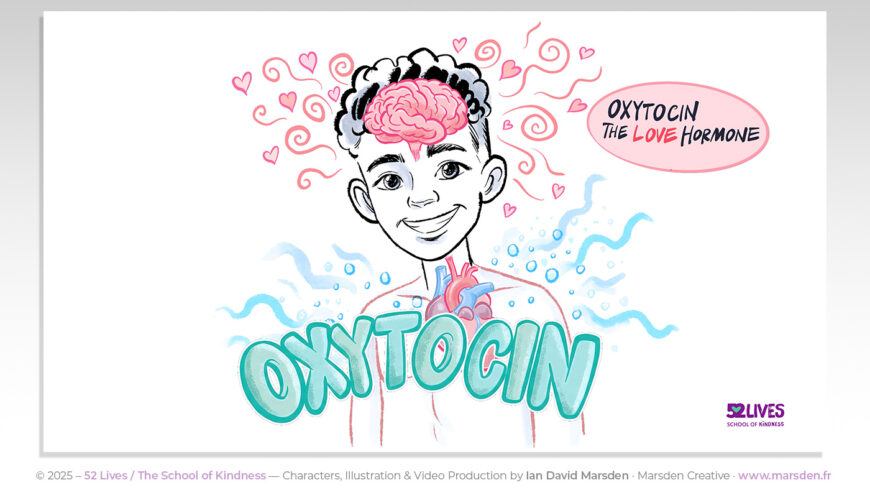
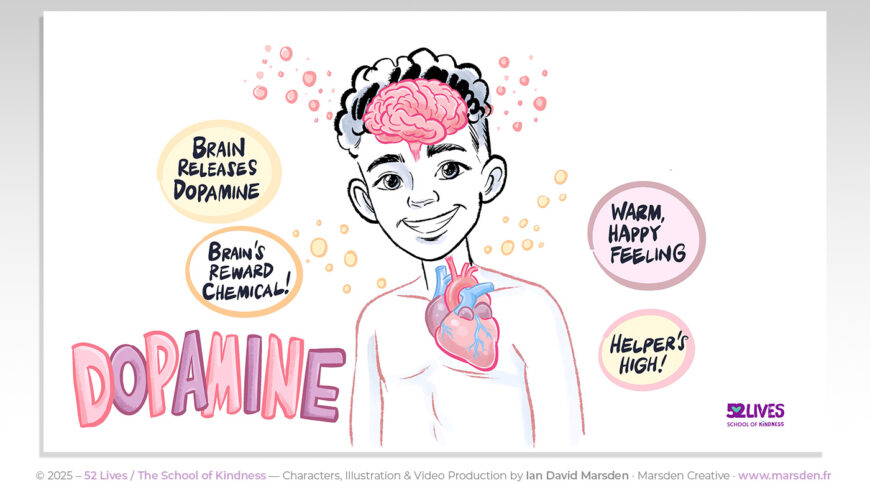
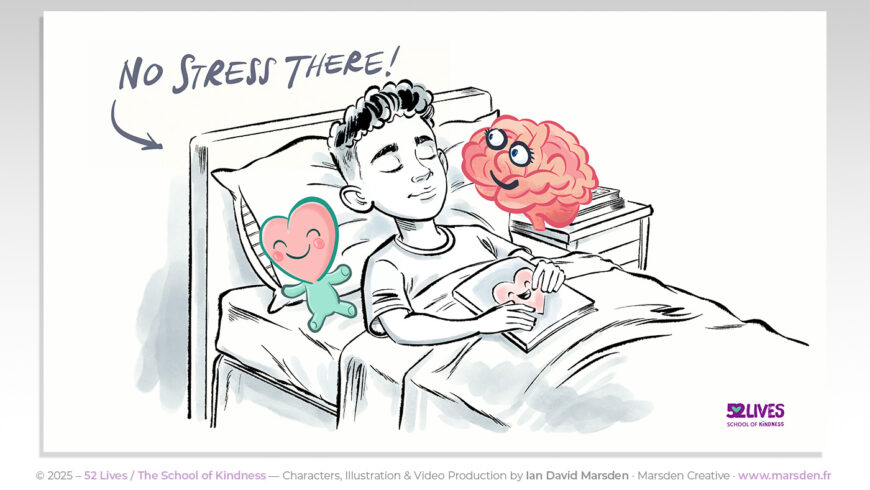
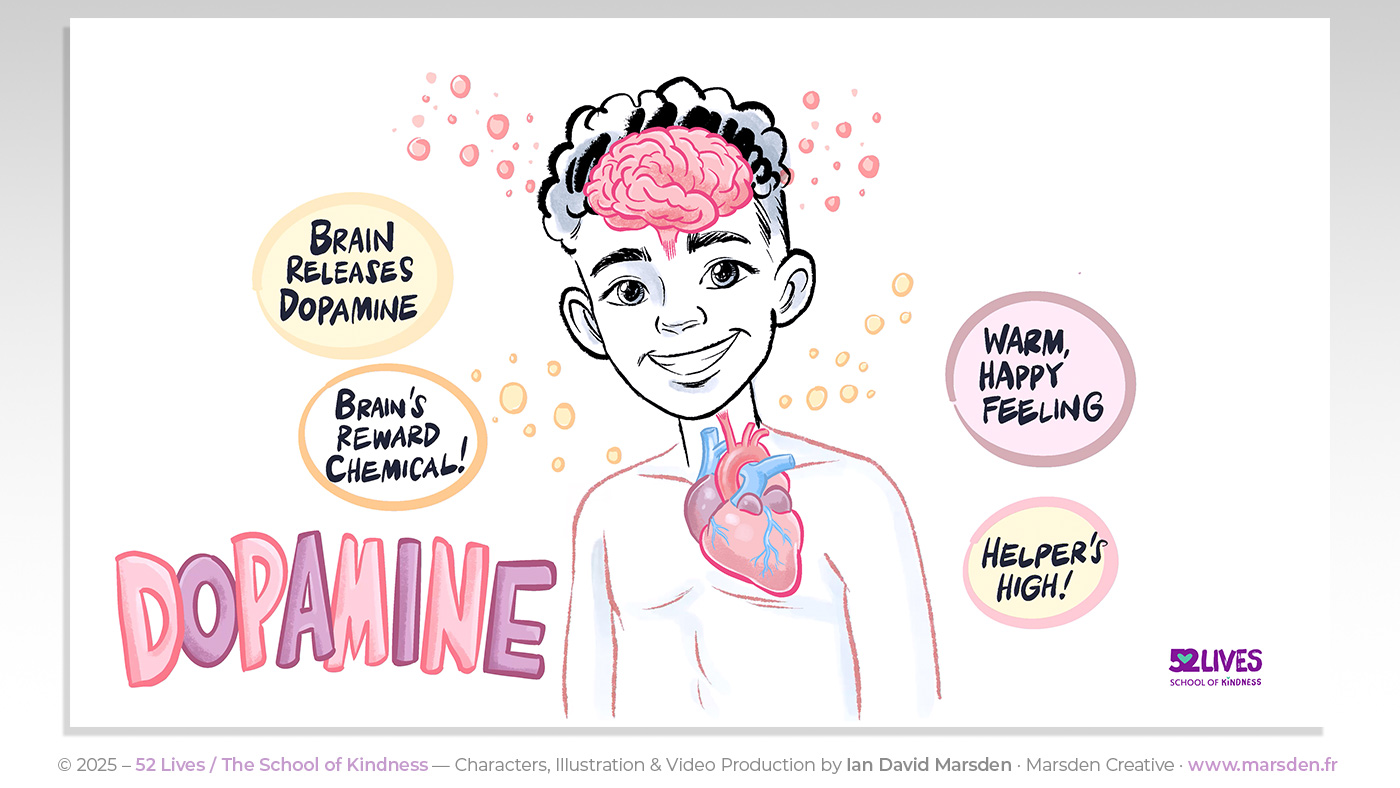
The film introduces ideas around stress, social connection, oxytocin, dopamine, empathy and the so-called helper’s high. Those concepts needed to become understandable without becoming vague or childish.
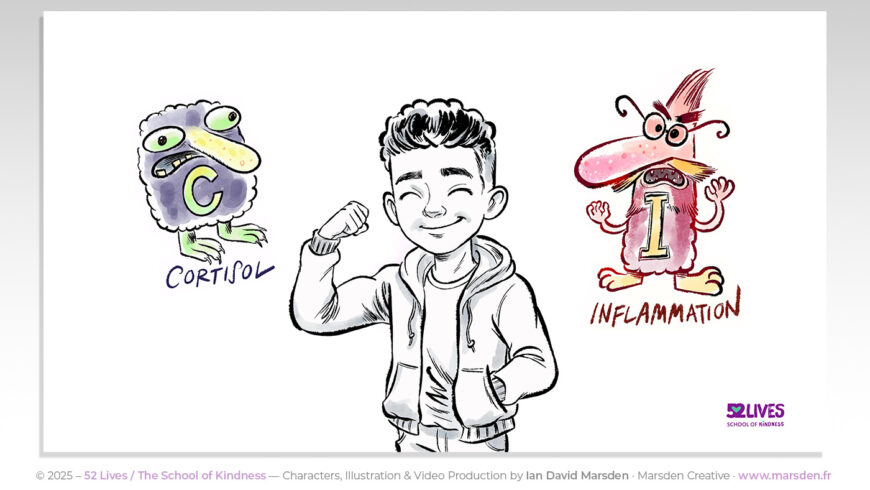
Hormones, stress responses and social-emotional processes do not arrive with convenient facial expressions, so the visual language gives abstract material characters, actions and situations that can be understood while the film is moving.
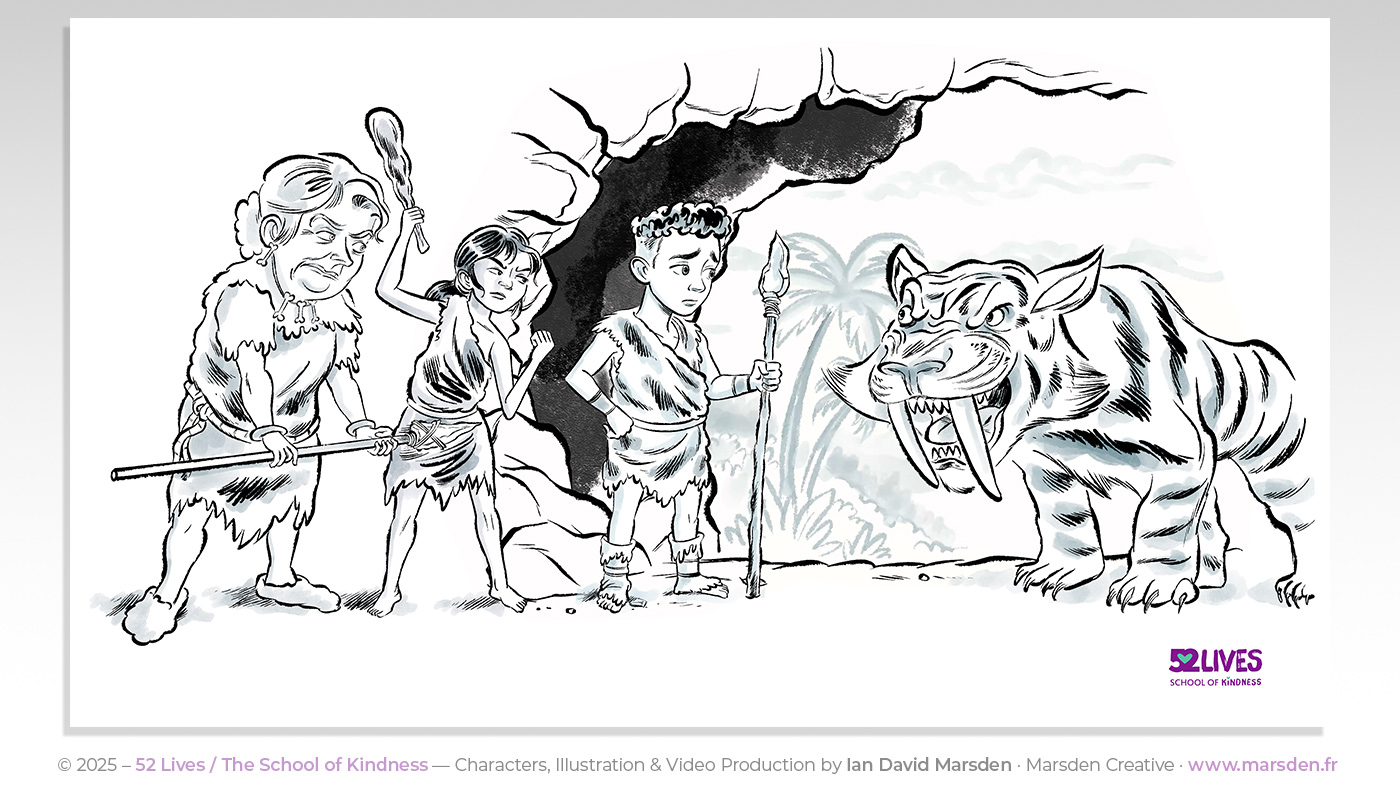
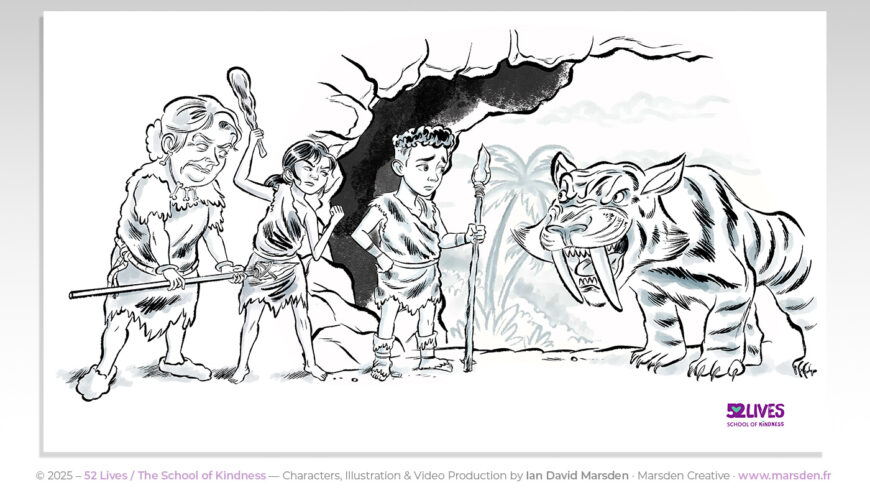
The cave sequence is also a good example of collaboration improving a scene. During development, the team suggested adding a sabre-tooth tiger to make the ancient danger more immediately legible to children. They were right. The tiger arrived, did its job, and the sequence became clearer.
03 · One Visual Language
From playgrounds to brain chemistry to social connection
The film moves between very different kinds of information: everyday school situations, the human nervous system, families, prehistoric survival, brain chemistry and eventually a wider chain of social connection. The drawing system had to hold all of those subjects together without making the transitions feel arbitrary.
04 · Production
From supplied script to final 4K animation
Every character, prop, diagram and transition was developed specifically for the film. The visual production covered the complete route from script interpretation to finished master.
- Visual concept development
- Shooting-script refinement
- Character design
- Storyboard & scene planning
- Original illustration
- Hand-drawn animation sequences
- Editing, pacing & synchronisation
- Final 4K UHD delivery — 3840 × 2160 px
Schools & Education
Designed for schools, wellbeing programmes & Anti-Bullying Week
The film was created as a practical educational resource suitable for classroom discussion, school assemblies and wellbeing activities. Teachers can use the official YouTube film directly with students, with related educational material available through The School of Kindness.
PSHE & wellbeing
Classroom conversations about empathy, stress, social connection and the effect of everyday behaviour.
World Kindness Day
A concise visual resource that can introduce wider activities around kindness and social-emotional learning.
Anti-Bullying Week
A starting point for assemblies and discussions about inclusion, empathy and small actions within a group.
Creative Team
The people behind the film
- Illustration, animation & visual production: Ian David Marsden
- Written by: Jaime Thurston and Greig Trout — The School of Kindness
- Narration: Matt Abbott
- Scientific advisor: Dr. David Hamilton
- Produced by: 52 Lives / The School of Kindness, November 2025
The Final Sequence
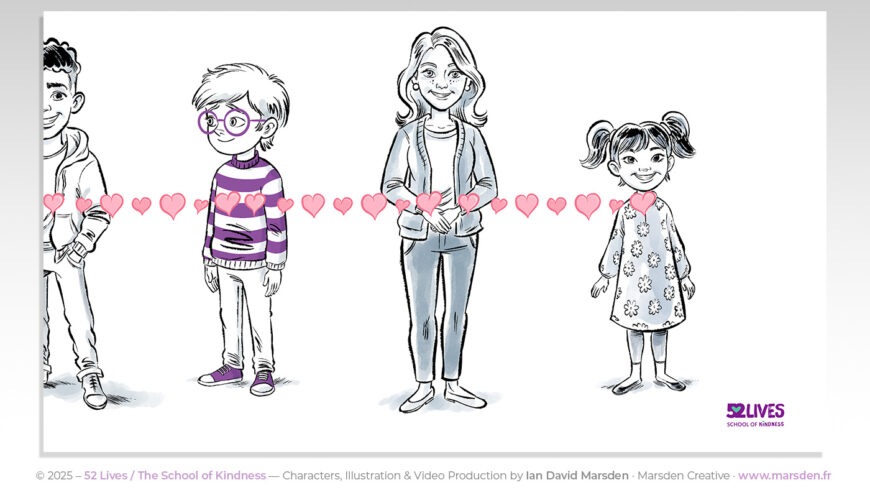
From one small action to a wider social effect
The film begins with individual choices and gradually expands outward. The final scene takes the idea from one child helping another to a broader picture of connection between people.

Related Work
Illustrated communication for education & complex subjects
Hand-Drawn Explainer Videos →
Editorial & Educational Illustration →
Case Studies →
Educational & Explainer Films
Have a subject that needs to become clear, visual and engaging?
If you have an educational topic, social initiative, training subject, healthcare message or complex process to explain, send me a brief outline of the subject, audience and intended use.
Extended Archive
More artwork from The Science of Kindness
The gallery below contains additional scenes, visual development and production artwork from the film.
Hand Drawn Explainer Video Illustrations – Ian David Marsden
Title card from the explainer video “The Science of Kindness” created by Ian David Marsden for UK charity 52 Lives and its School of Kindness. This hand-drawn 4K video introduces neuroscience and empathy to young viewers through engaging, illustrated storytelling.
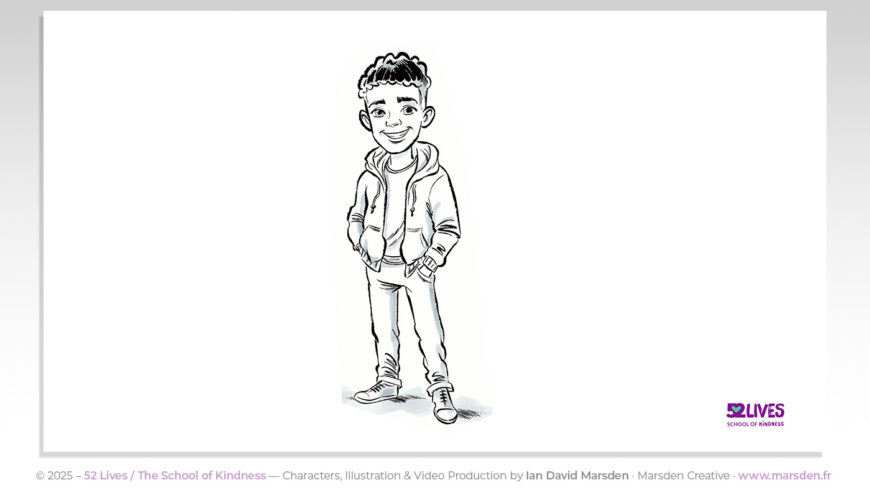
Meet Sam, the central character in “The Science of Kindness” explainer video, fully illustrated and animated by Ian David Marsden for the UK-based School of Kindness. Designed to appeal to children aged 7–12, Sam’s hand-drawn features embody approachability and warmth.