Explainer Video Production · Direct Studio · Custom Illustration
Hand-Drawn Explainer Video Production — From Script to Final Animation
A direct production model for explainer films in which concept development, script support, storyboarding, character design, illustration and animation are developed as one coherent visual process.

The Science of Kindness for 52 Lives / School of Kindness — one example of the complete visual production process described below.
An explainer video begins before anything moves
Animation is only one stage of an explainer project. Before that comes a more important question: what does the audience actually need to understand?
A complex service, technical process, educational subject or behavioural message rarely arrives already organised into a visual narrative. The first job is therefore clarification: identifying the central idea, removing what is unnecessary and deciding what can be shown more effectively than it can be explained in words.
From there, structure, characters, scenes and timing can develop around the message instead of being added afterwards as decoration.
Full Production Pipeline
From message structure to finished animation
01
Clarify the Message
Identify the audience, purpose and central idea before designing scenes.
02
Shape the Script
Develop or refine the script into a sequence that can be communicated visually.
03
Storyboard
Translate the script into scenes, transitions, visual metaphors and pacing.
04
Design & Illustration
Create the characters, props, diagrams and finished artwork specifically for the subject.
05
Animate
Use movement, drawing sequences and timing to guide attention through the explanation.
06
Deliver & Extend
Produce the finished film and, where useful, adapt the visual system into additional communication assets.
Why keep the visual pipeline together?
Some productions require large teams, and there are good reasons to divide work across specialists. But many explainer films benefit from a more direct structure.
My studio model keeps the central visual thinking with one senior creative partner. The person helping to structure the explanation is also developing the storyboard, drawing the characters and scenes, and carrying that visual logic into animation.
This continuity helps reduce the small shifts that can happen when a project passes repeatedly between departments: changes in tone, inconsistent characters, visual ideas that no longer correspond to the script, or animation added without a clear narrative purpose.
It does not remove collaboration. Client feedback and approval remain part of the process. It simply keeps the visual authorship coherent while those decisions are made.
Pipeline in Practice
The Science of Kindness — translating abstract ideas into visual scenes
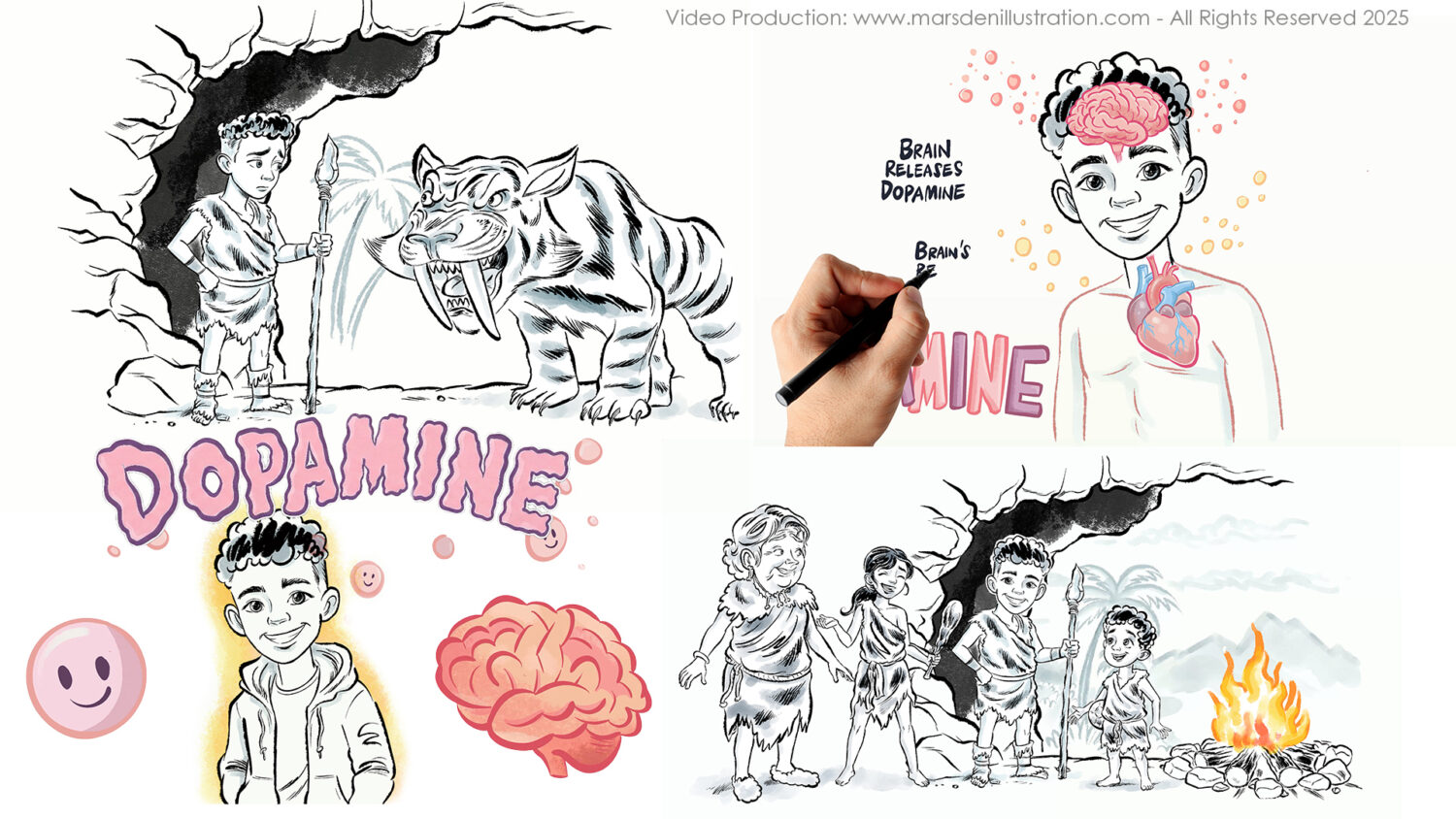
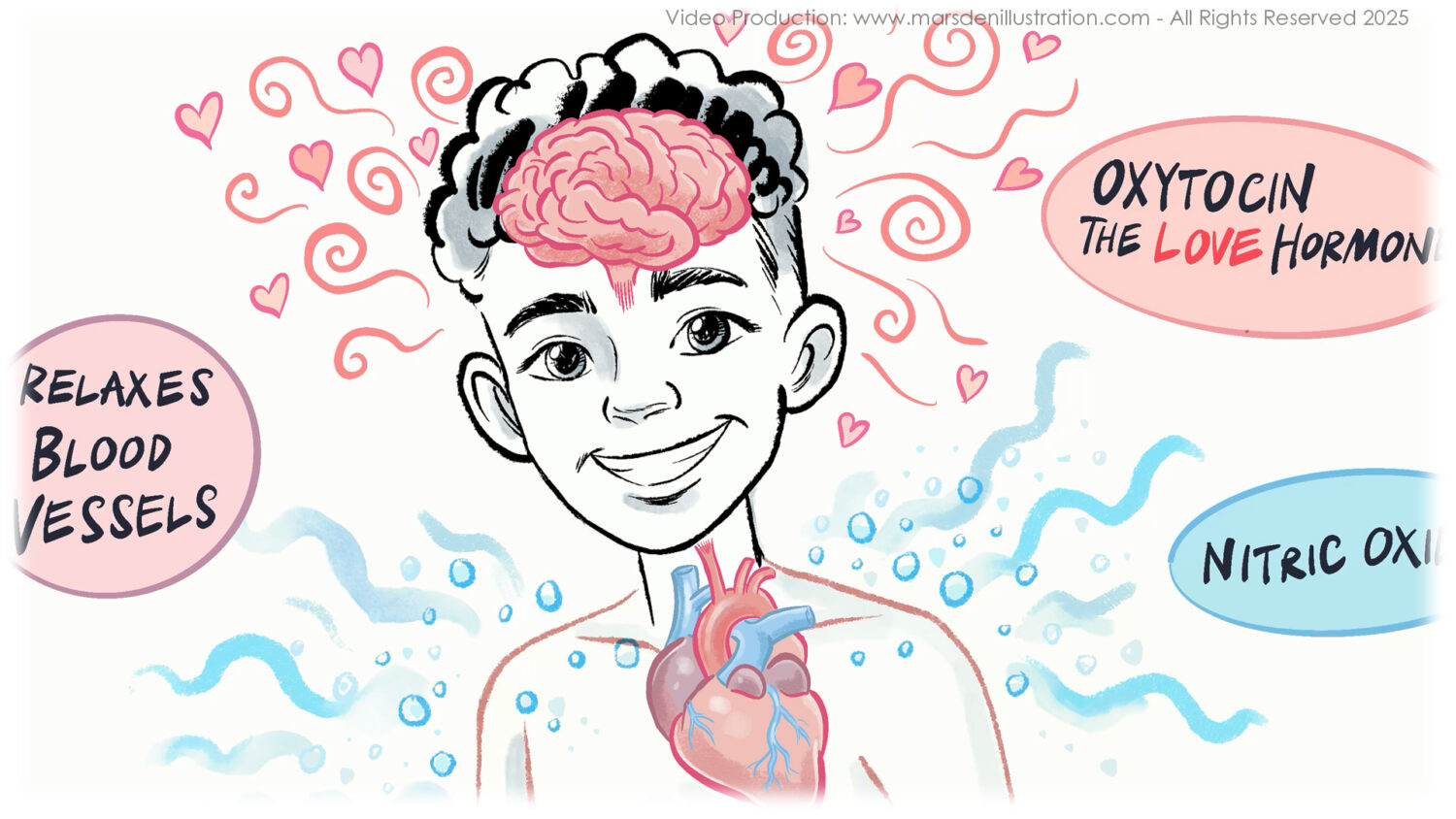
For the UK charity 52 Lives and its School of Kindness initiative, the challenge was to explain ideas around kindness, neuroscience, stress and social connection to children.
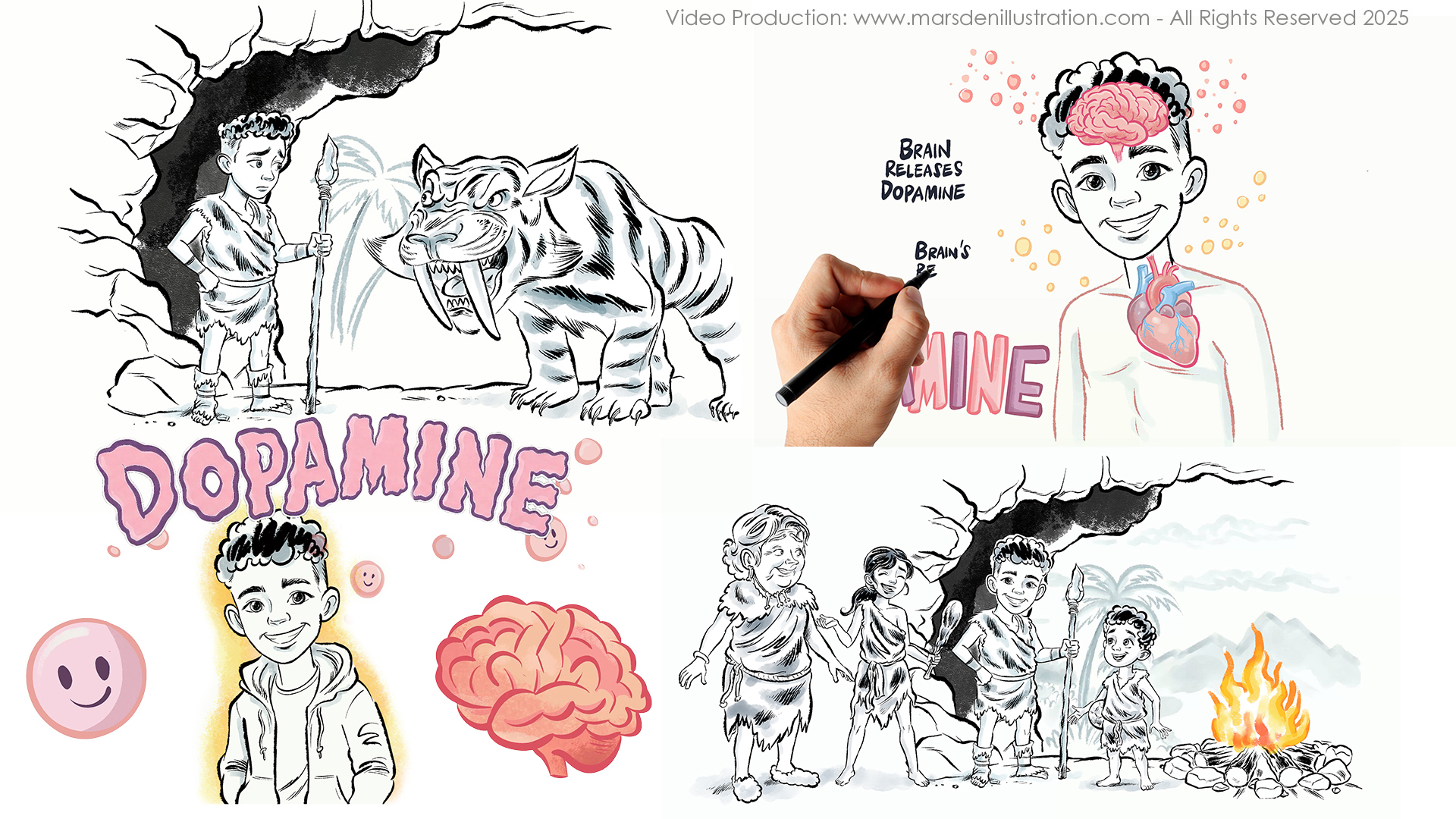
The project therefore began with translation rather than animation: finding concrete situations that could make concepts such as dopamine, oxytocin, empathy and the “helper’s high” understandable without turning the film into a lecture.
I worked across the full visual production: script-to-shooting-script development, character design, storyboard, scene planning, final illustration, hand-drawn animation, drawing sequences, static visual assets and the finished film.
The central character, Sam, provides continuity while the story moves through a series of different visual explanations.
A small example of the collaborative process came during the prehistoric sequence. The client suggested introducing a sabre-tooth tiger to make the sense of risk immediately clearer to children. It was a good suggestion, and the scene became stronger because of it.
For the full project, see The Science of Kindness — hand-drawn explainer video.
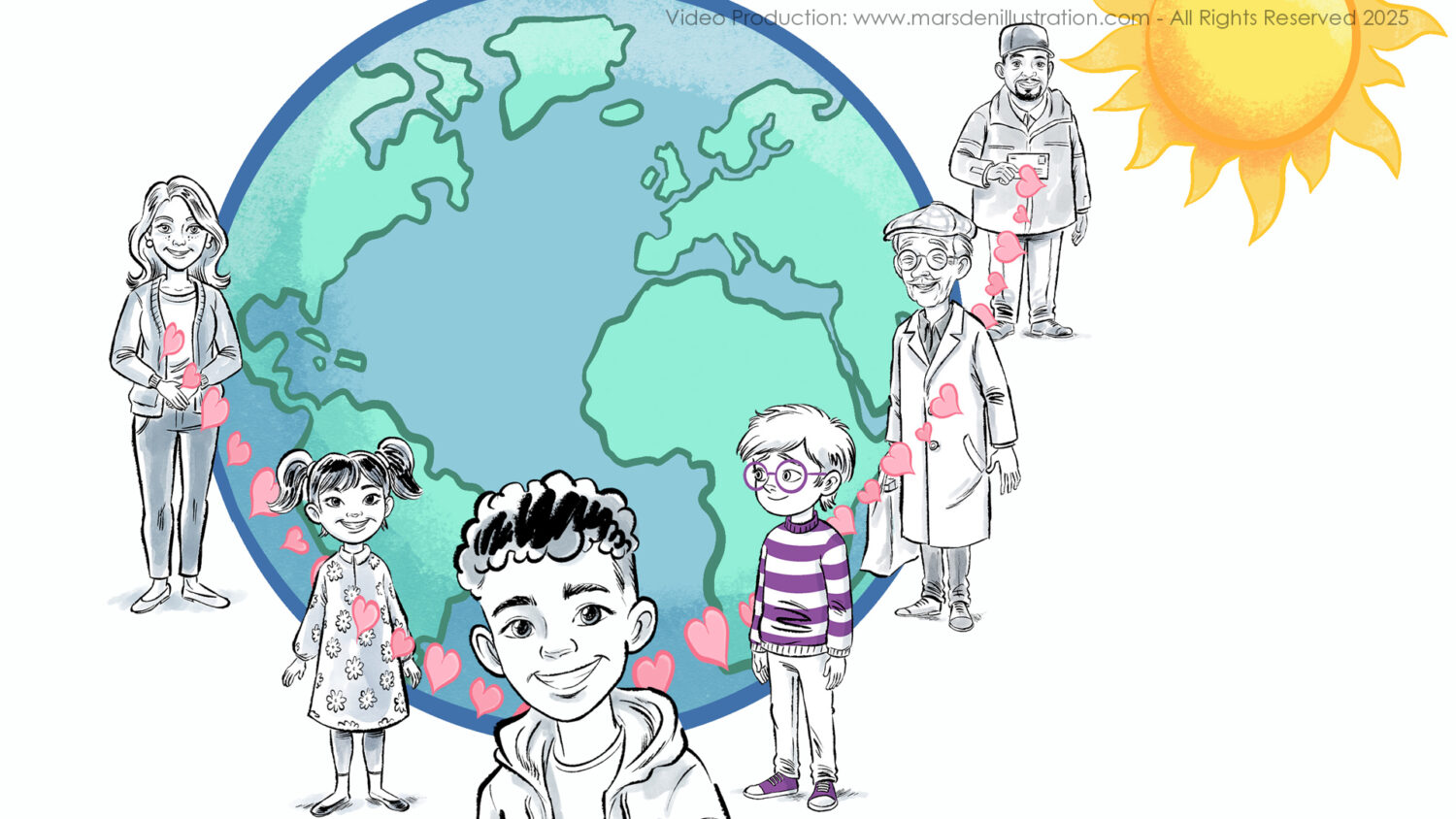
Custom imagery gives the explanation its own visual language
Characters, props, diagrams and backgrounds are developed specifically for the brief rather than selected afterwards from a generic visual library.
That matters because visual decisions carry meaning. A character’s expression, the scale of an object, the amount of detail in a scene or the decision to remove something can all change how quickly an explanation is understood.
For educational, charitable, technical, healthcare or internal communication projects, specificity is particularly useful. The visual system can reflect the audience and subject instead of forcing the message into an existing template.
Commissioned imagery in these projects is individually created for the brief and is not AI-generated.
Not every explainer needs to look the same
The production method can support different visual approaches depending on subject, audience and communication task.
Hand-Drawn Animation
Character-led illustrated storytelling with drawing, scene animation and timed visual explanation.
Whiteboard / Timelapse
A drawing-led process in which the act of constructing the image becomes part of the explanation.
Illustrated Motion
Existing poster or campaign concepts extended through movement, transitions and visual sequencing.
Beyond the Film
The artwork can become a reusable communication system
An explainer film does not necessarily have to end as a single video file. When the artwork is developed coherently, individual illustrations and characters can often be adapted for additional uses, depending on the agreed project scope and license.
- Educational posters
- Teaching material
- Presentation slides
- Website illustrations
- Campaign graphics
- Social media assets
- Internal communication
- Training documents
- Print and PDF material
This can extend the value of the original production by giving the organisation a consistent set of images that continue to support the message after the film itself has been published.
Where a direct explainer-video pipeline is especially useful
This approach is particularly effective when the subject depends on tone as much as information: education, healthcare, behavioural change, training, charity communication, technical workflows, internal communication or a service that needs to become understandable without becoming impersonal.
These subjects rarely benefit from animation for animation’s sake. They need visual judgement: what to show, what to omit, when to use a character, when to use a diagram, when an analogy helps and when the clearest solution is simply to keep the image quiet.
That is the real purpose of the pipeline: not to manufacture movement, but to build a visual explanation that remains coherent from the first discussion to the final frame.
Selected Explainer & Motion Projects
The same production thinking applied to very different subjects
- The Science of Kindness — educational animation for 52 Lives / School of Kindness.
- Mycotrition — illustrated explainer films around functional mushrooms and health communication.
- Hawlik — a series of ten illustrated explainer films.
- Dräger Global — infection-prevention campaign posters extended into animated communication assets.
- Elephant Bird Consulting — a whiteboard-style visual explanation of graph-database workflows.
Explainer videos, illustration and visual storytelling
For the broader service overview, see Hand-Drawn Explainer Videos. Related areas include Editorial & Educational Illustration, Business Comics & Sequential Illustration, Commissioned Illustration & Campaign Visuals and the wider Case Studies.
A concise selection of work is also available in the Illustration Portfolio PDF.
Explainer Video Production
Have a subject that needs to become visually clear?
If you have a project in mind, send me a brief outline of the subject, intended audience, approximate length, required formats and timing.