Case Study · Character Design · Information Design · Visual Communication
IN TALENT WE TRUST — PPHO Character Design & Visual Communication
An illustrated visual system combining original character design, conceptual drawing, information graphics, learning materials, digital communication and motion.
A multidisciplinary commission for IN TALENT WE TRUST, Paris · March 2024–March 2025
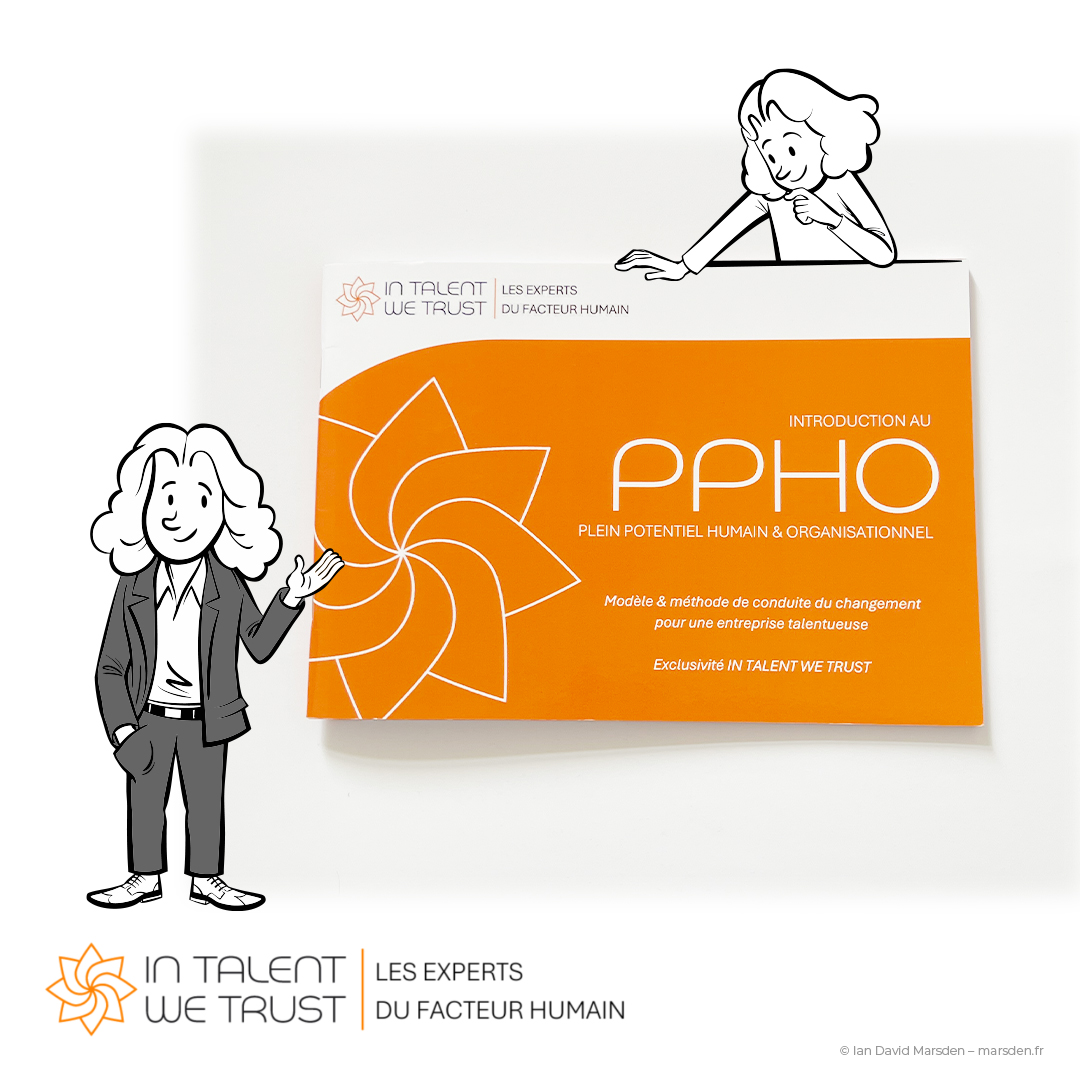
Between March 2024 and March 2025, I worked with IN TALENT WE TRUST, a Paris-based consultancy founded by Anne Weber, on an illustrated communication system for its PPHO methodology — Plein Potentiel Humain & Organisationnel.
The assignment combined character design, conceptual illustration and information graphics with artwork for printed learning guides, digital communication, a campaign poster and a short drawing animation. At its center was Léonard, an original character developed to make a complex organizational methodology more approachable.
Project Overview
An illustrated language for human potential
Client: IN TALENT WE TRUST / WEBER SAS, Paris, France
Project: PPHO — Plein Potentiel Humain & Organisationnel
Period: March 2024–March 2025
Methodology: Anne Weber
My role: Illustrated visual communication system, original character design, conceptual illustration, information design, editorial artwork, campaign illustration and motion graphics
01 · The Assignment
Giving complex ideas a recognizable visual form
PPHO addresses human potential, adaptation, cooperation and organizational performance. The methodology was developed by Anne Weber. My assignment was to interpret its ideas visually, creating illustrations that could help readers follow the material across different formats.
Some subjects called for a recurring character. Others needed visual metaphors, small symbols or diagrams that showed relationships more directly. The artwork also had to function at different sizes, from compact illustrations beside dense French-language text to larger campaign and digital applications.
The solution was a connected illustrated system, with enough consistency to establish recognition and enough flexibility to suit the subject.
02 · Character Design
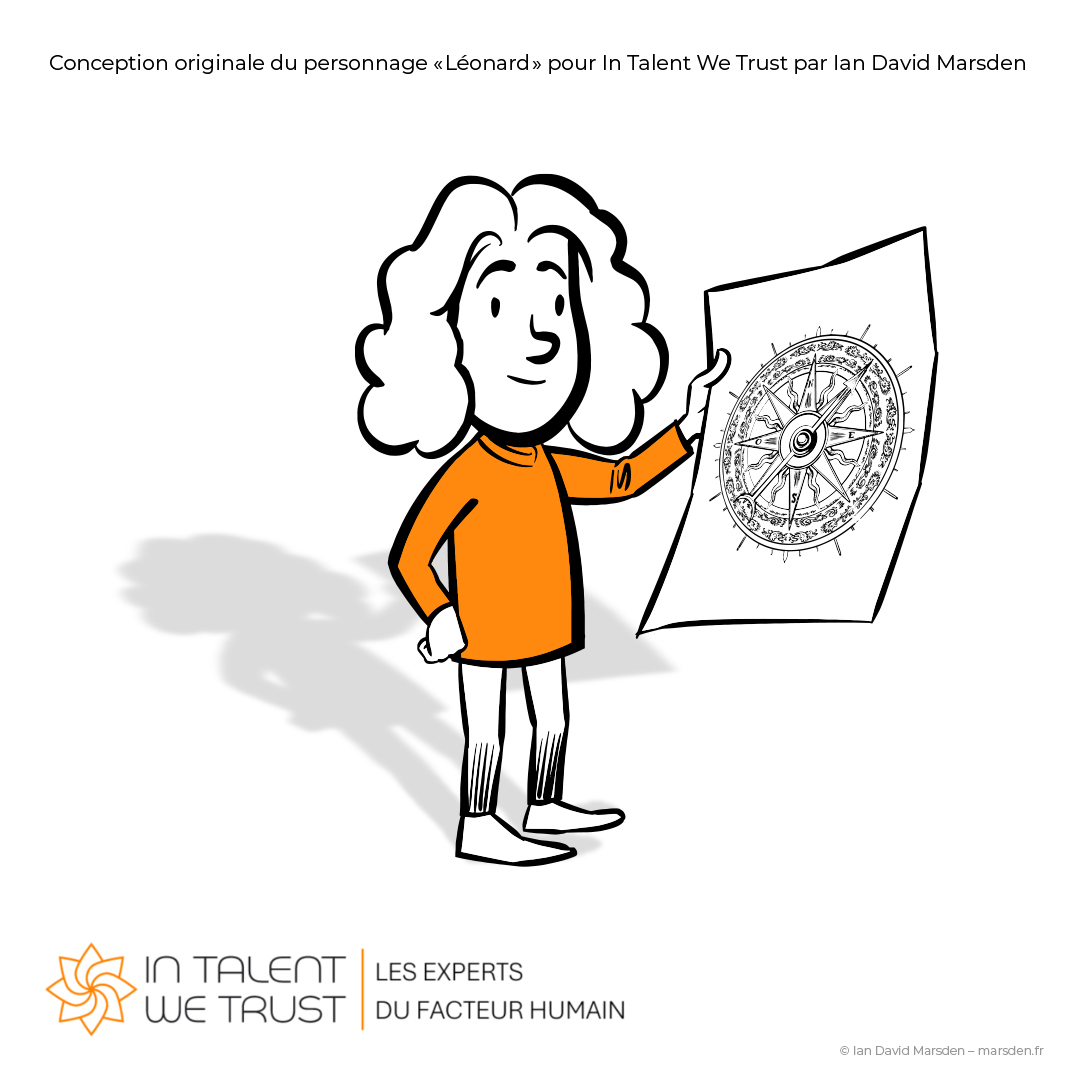
Léonard — a character designed to explain
I developed Léonard as an original recurring character inspired by the curiosity and multidisciplinary thinking associated with Leonardo da Vinci. He needed to feel recognizable without becoming restricted to one costume, profession, gesture or situation.
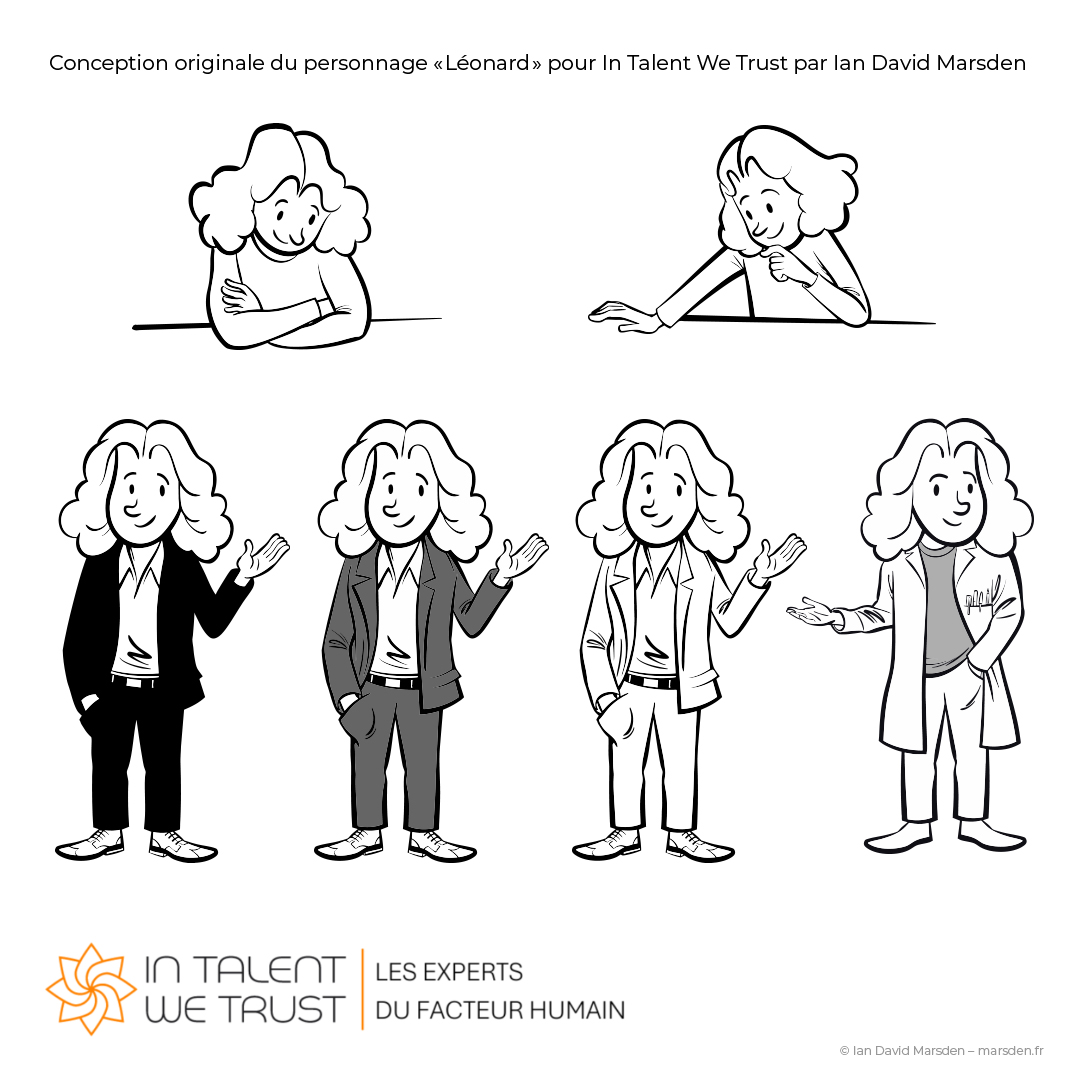
The drawings use clear expressions and uncomplicated forms. That gives Léonard a useful range: he can introduce a subject, reflect, experiment, explain a process or react to a situation without requiring a new character for every illustration.
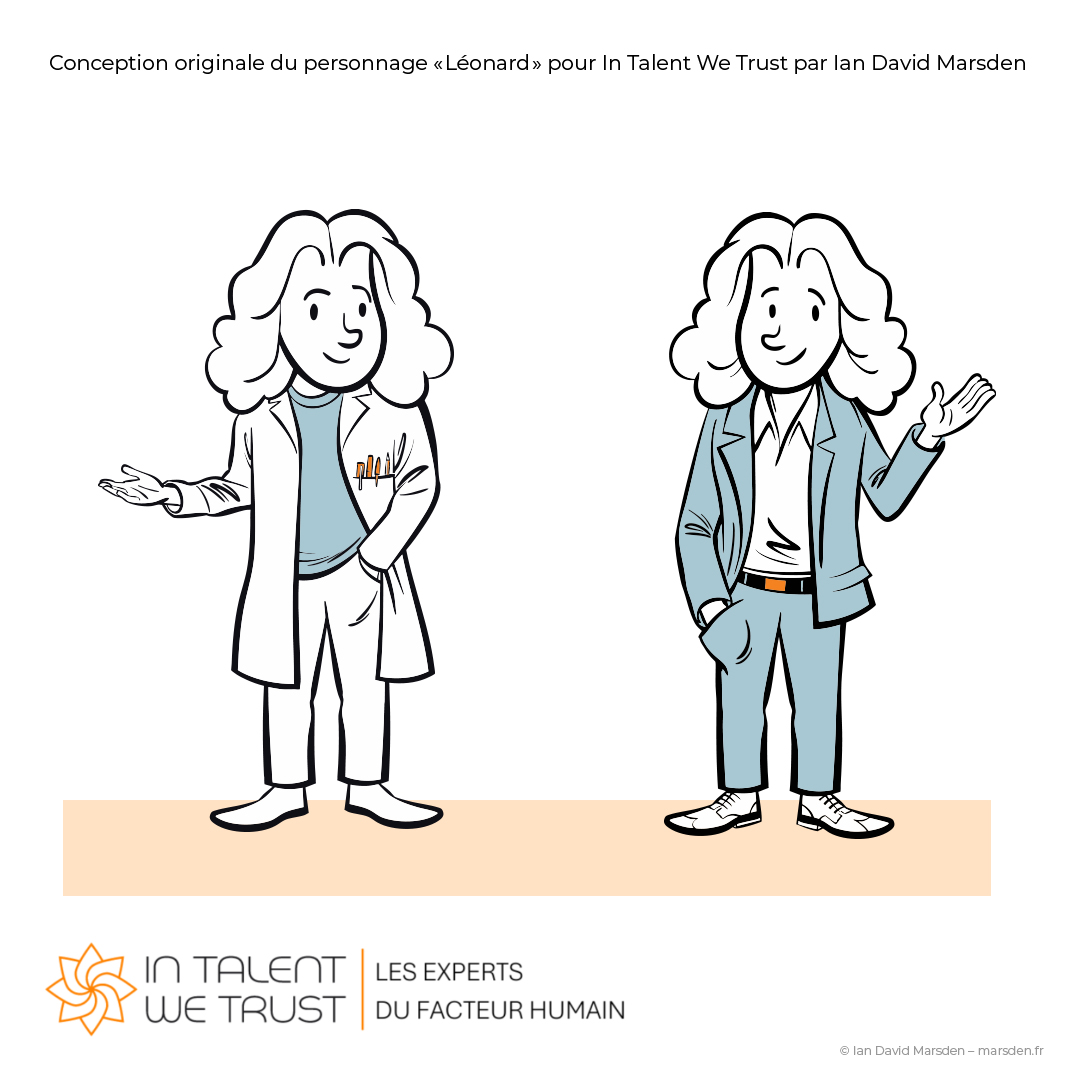
Professional roles
Scientific and business variations of the same character.
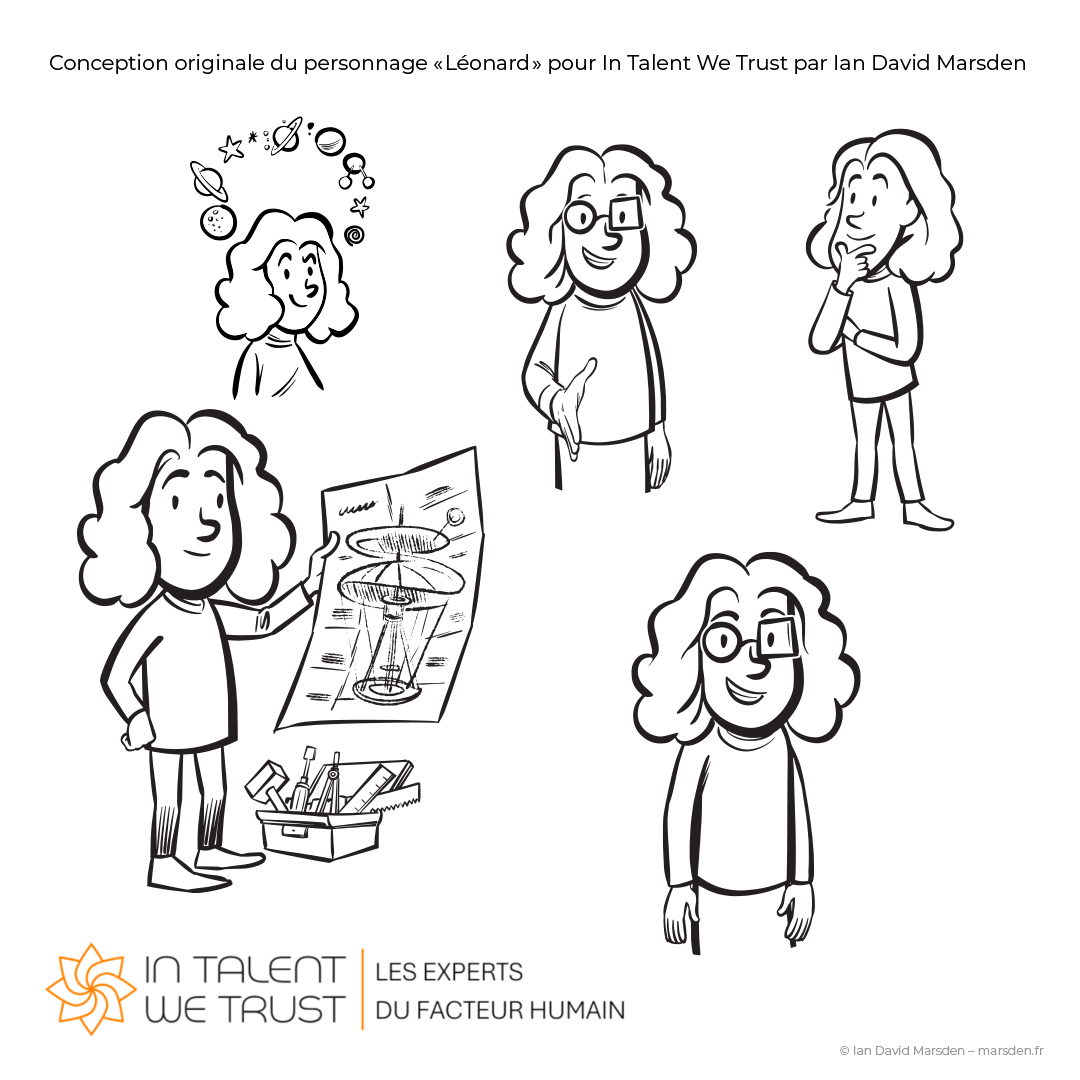
Actions and gestures
Character variations for explanation and interaction.
The character was also developed in everyday and more imaginative situations. These drawings introduced familiar emotional responses, interactions and references to experimentation into the methodology’s explanatory material.
Character Variations
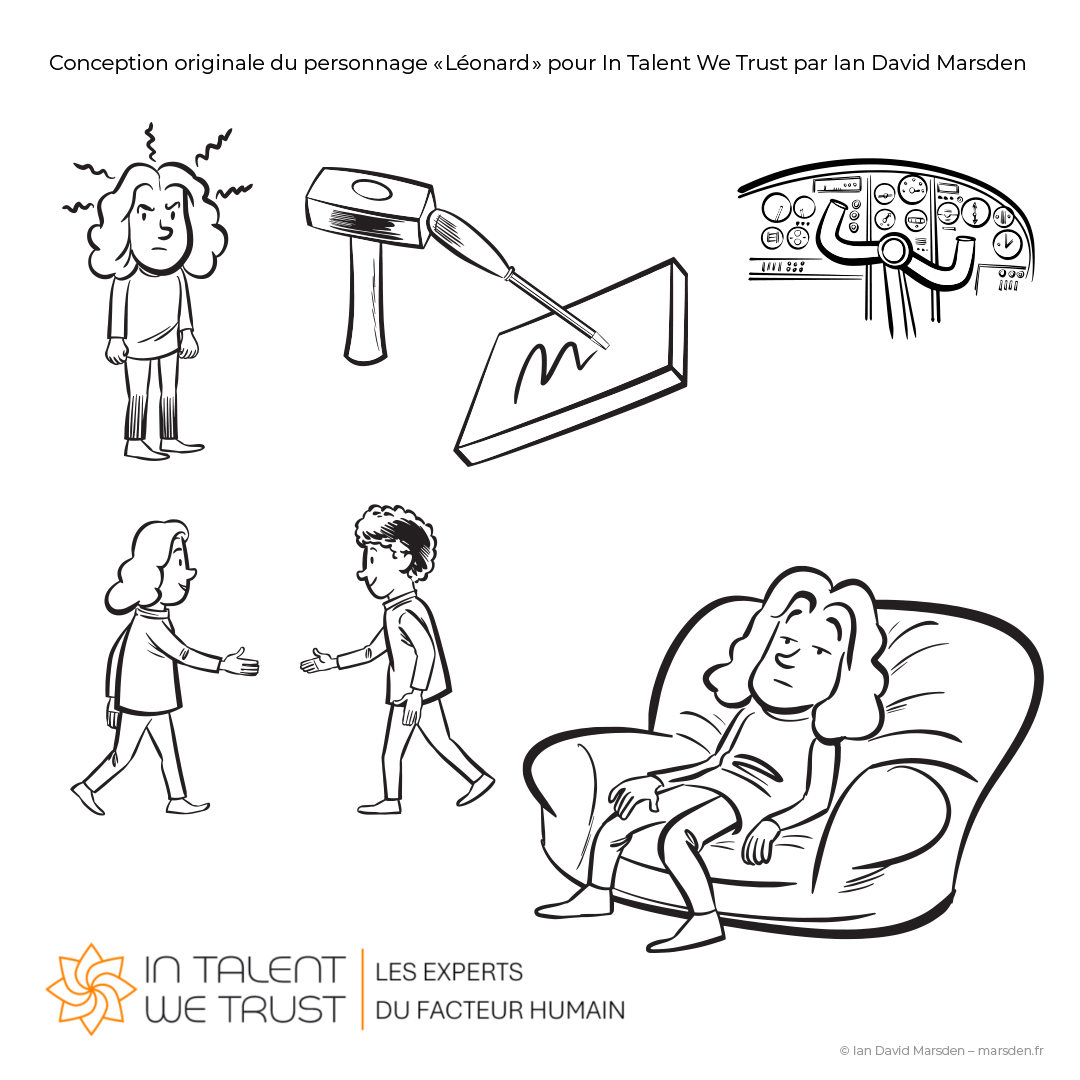
A broader emotional and behavioral vocabulary, created for different explanatory contexts.
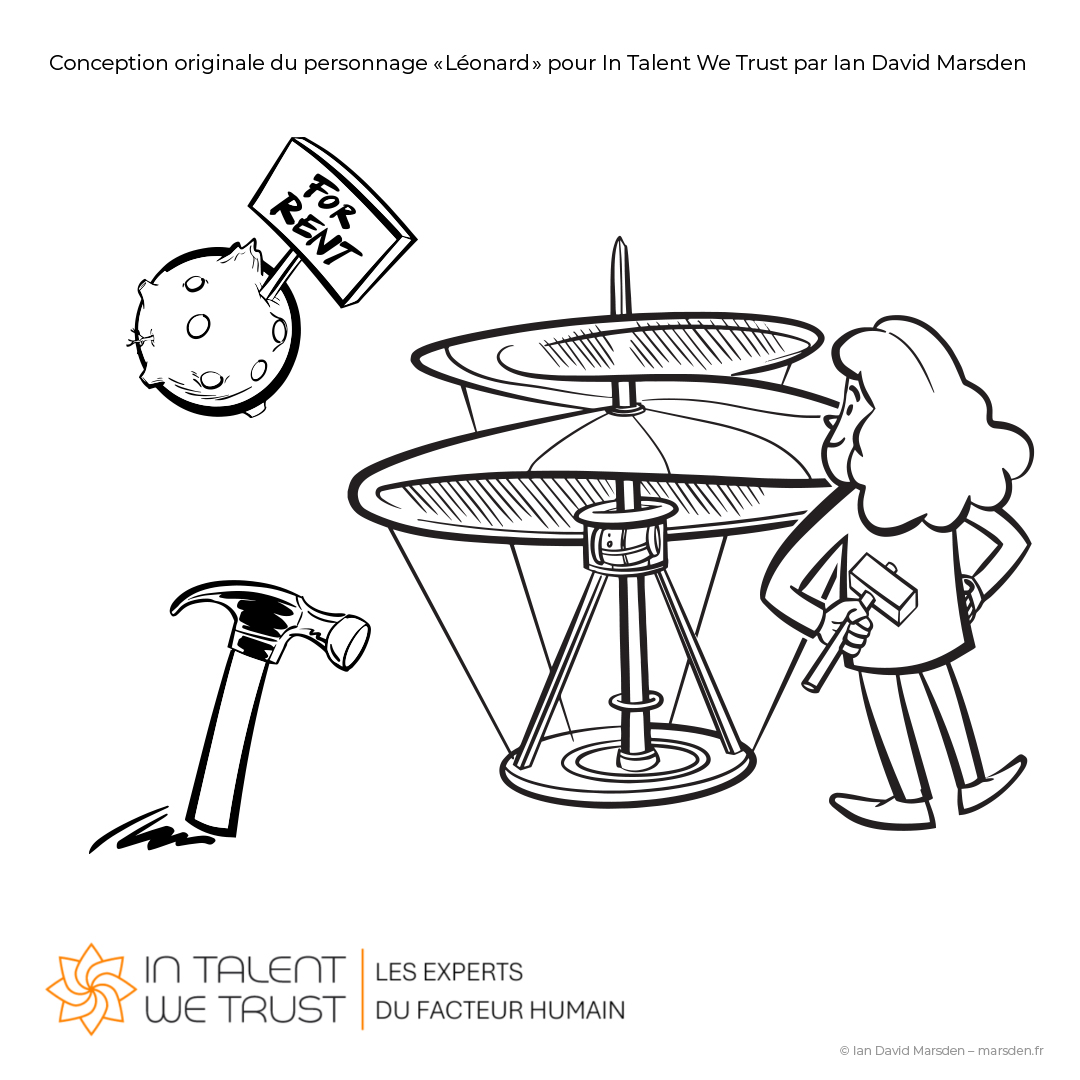
03 · Conceptual Illustration
Using visual metaphors to express change
Beyond everyday gestures, I explored more conceptual images. One sequence revisits Leonardo da Vinci’s Vitruvian Man: Léonard appears confined within a geometric structure before breaking free of it.
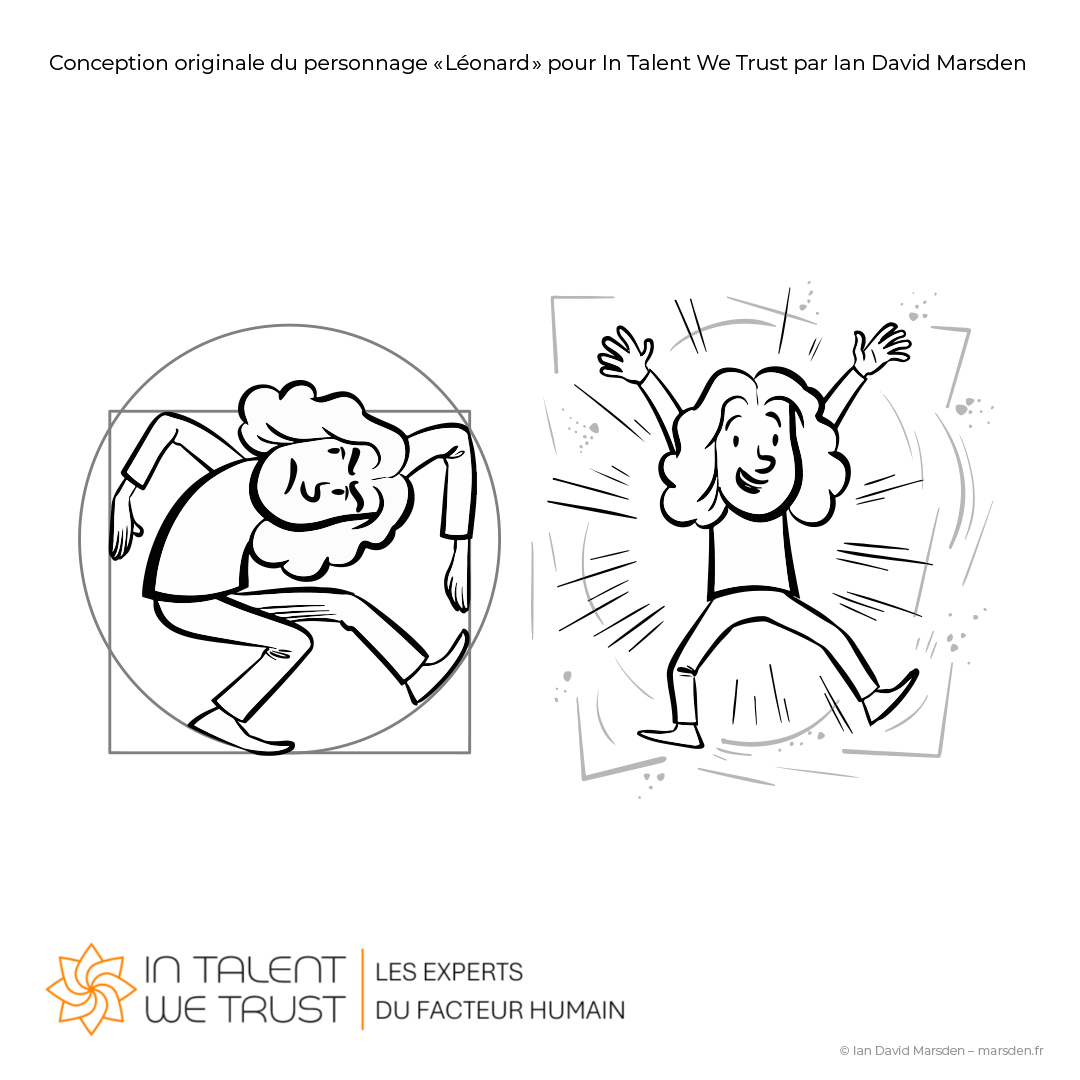
The difference between the two illustrations carries the idea without needing to reproduce the surrounding text. It is a useful example of how conceptual drawing can introduce movement, tension and possibility into otherwise abstract subject matter.
04 · Information Design
Explaining relationships through diagrams and symbols
Not every subject could be explained through Léonard. The methodology also needed a system of diagrams and symbolic illustrations that could communicate relationships directly.
For team dynamics, I used rowing figures arranged in contrasting groups. Repetition establishes the shared activity, while changes in color and alignment make different patterns of participation visible.

A different family of illustrations uses star shapes to examine approaches to talent and performance. The drawings keep a shared visual vocabulary while changing details such as shading, expression, symbols and directional arrows.
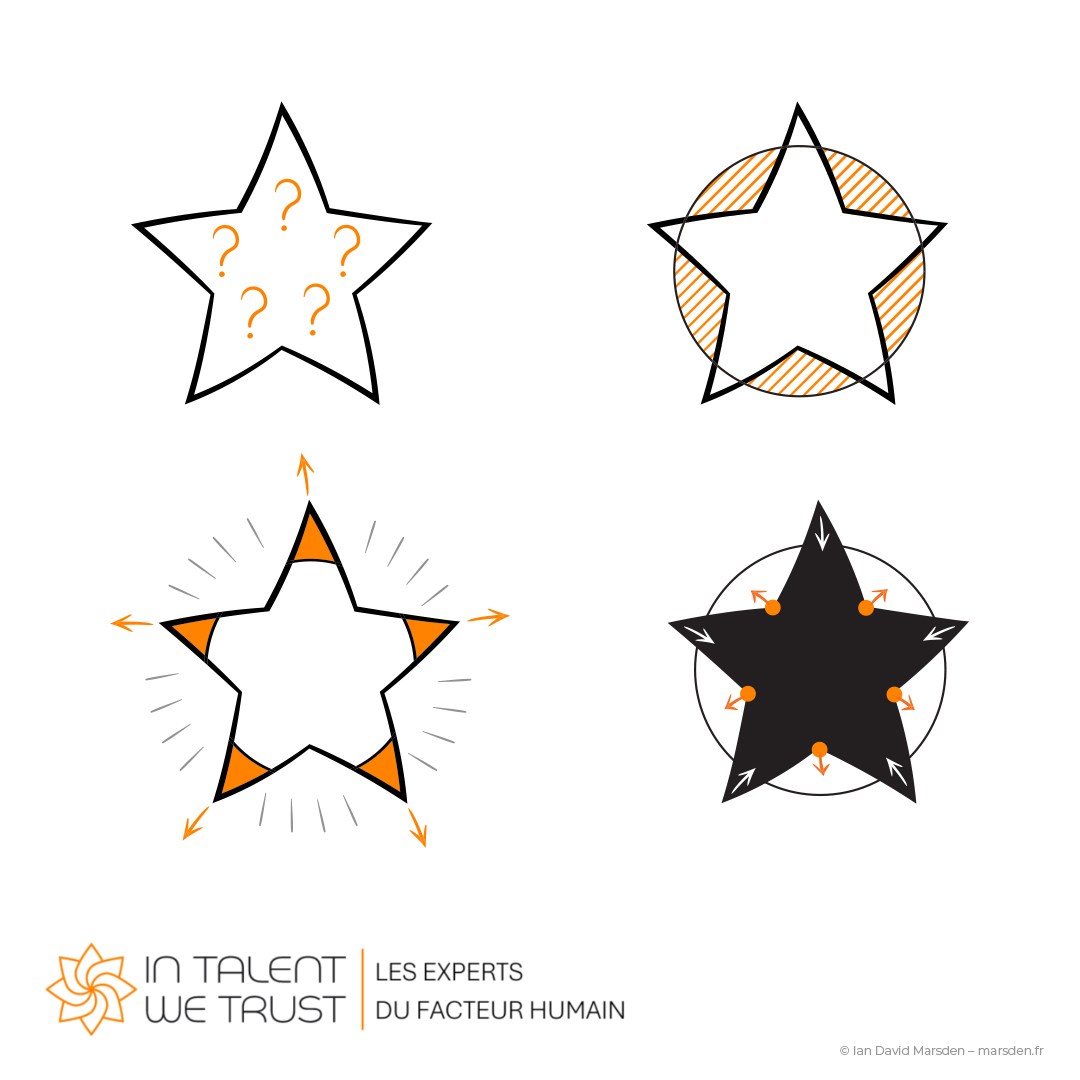
Supporting Visual Vocabulary

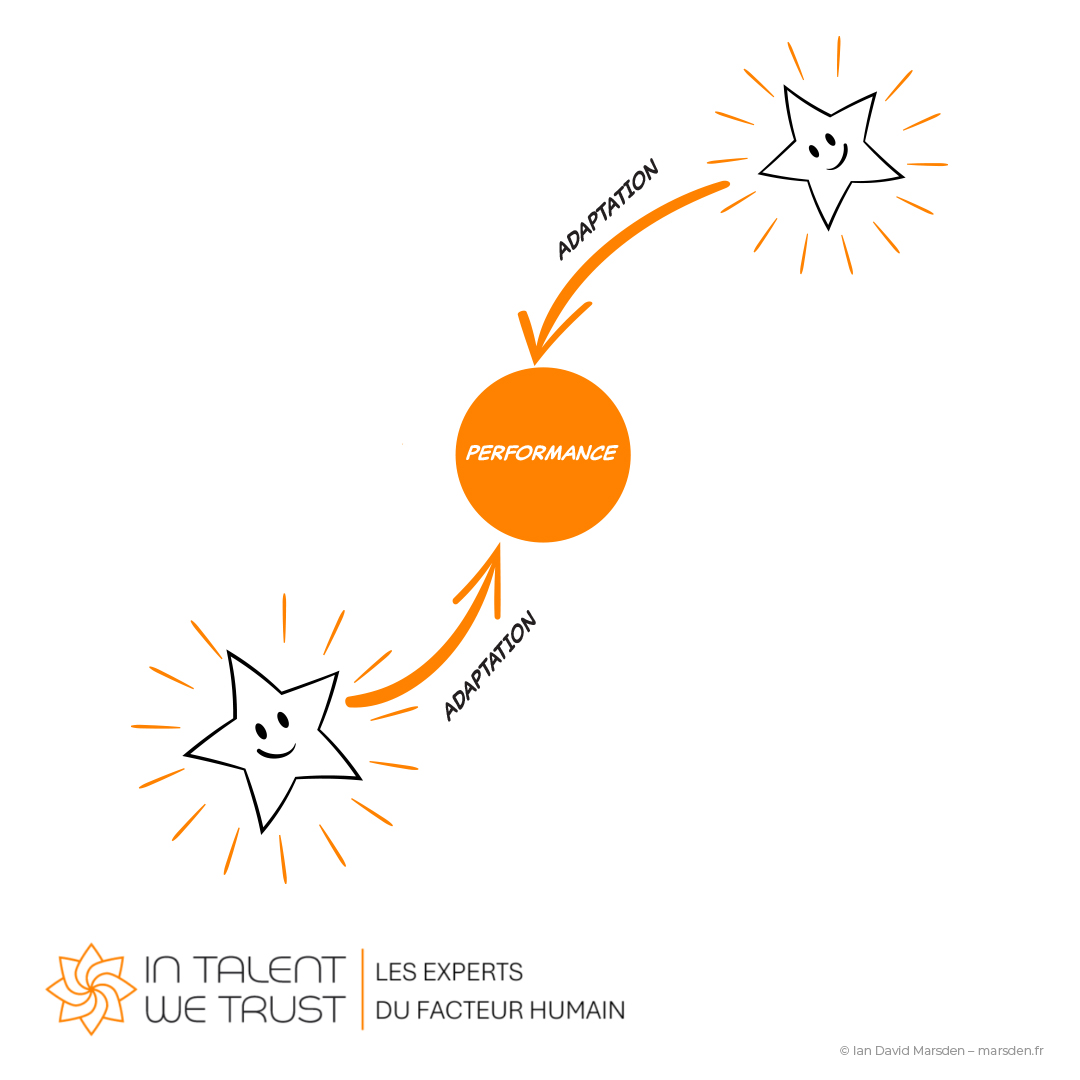
Expressive star icons and an adaptation–performance cycle extend the visual language into smaller symbols and explanatory relationships.
These graphic systems were developed around the concepts supplied by IN TALENT WE TRUST. My contribution was the visual interpretation: finding forms that would remain clear, recognizable and reusable across the different communication materials.
05 · Printed Learning Materials
Illustration within the printed PPHO methodology
The printed PPHO learning guides show how the different parts of the illustration system function together. Character drawings, symbols and diagrams appear alongside detailed methodological explanations rather than being presented as isolated pieces of artwork.
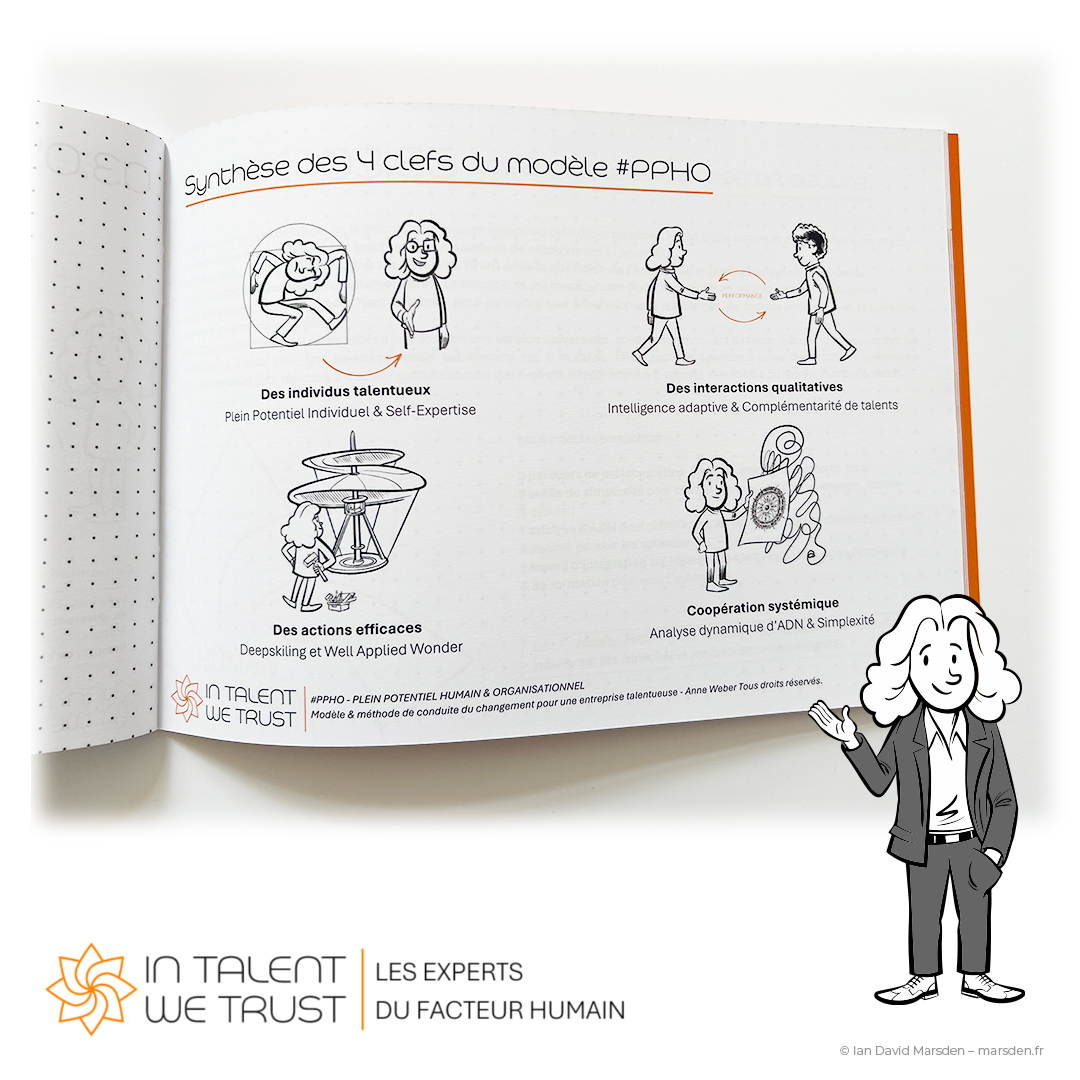
The drawings needed to remain legible at publication size, support the surrounding French-language material and maintain the same visual character from one subject to another. In many cases, simple line work and selective color were more useful than a heavily rendered illustration.
Selected applications in the learning guides
These examples show illustrations applied to chapters on systemic cooperation, adaptive intelligence, engagement and approaches to talent development.
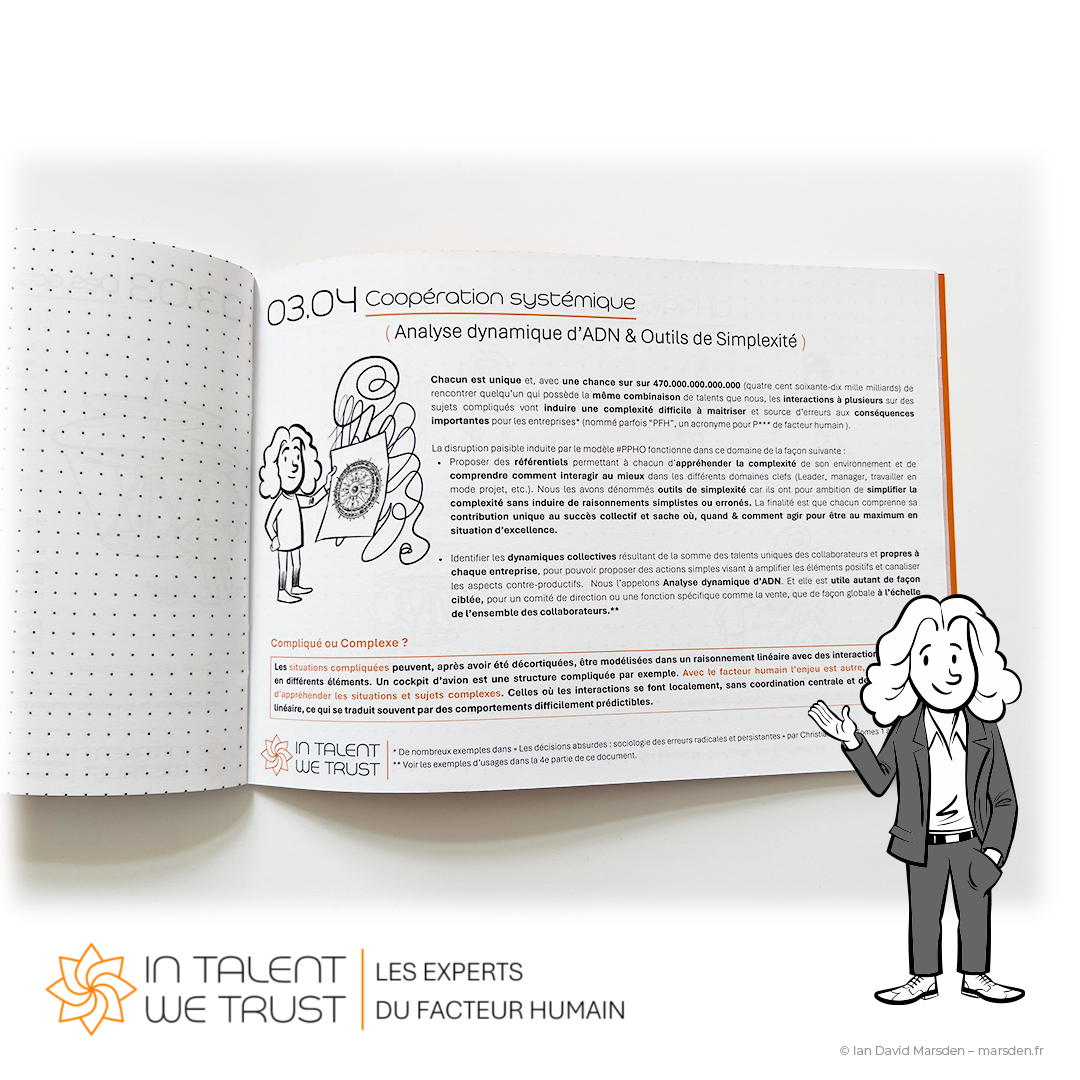
Systemic cooperation. Character-led explanation integrated into a printed chapter on organizational relationships.
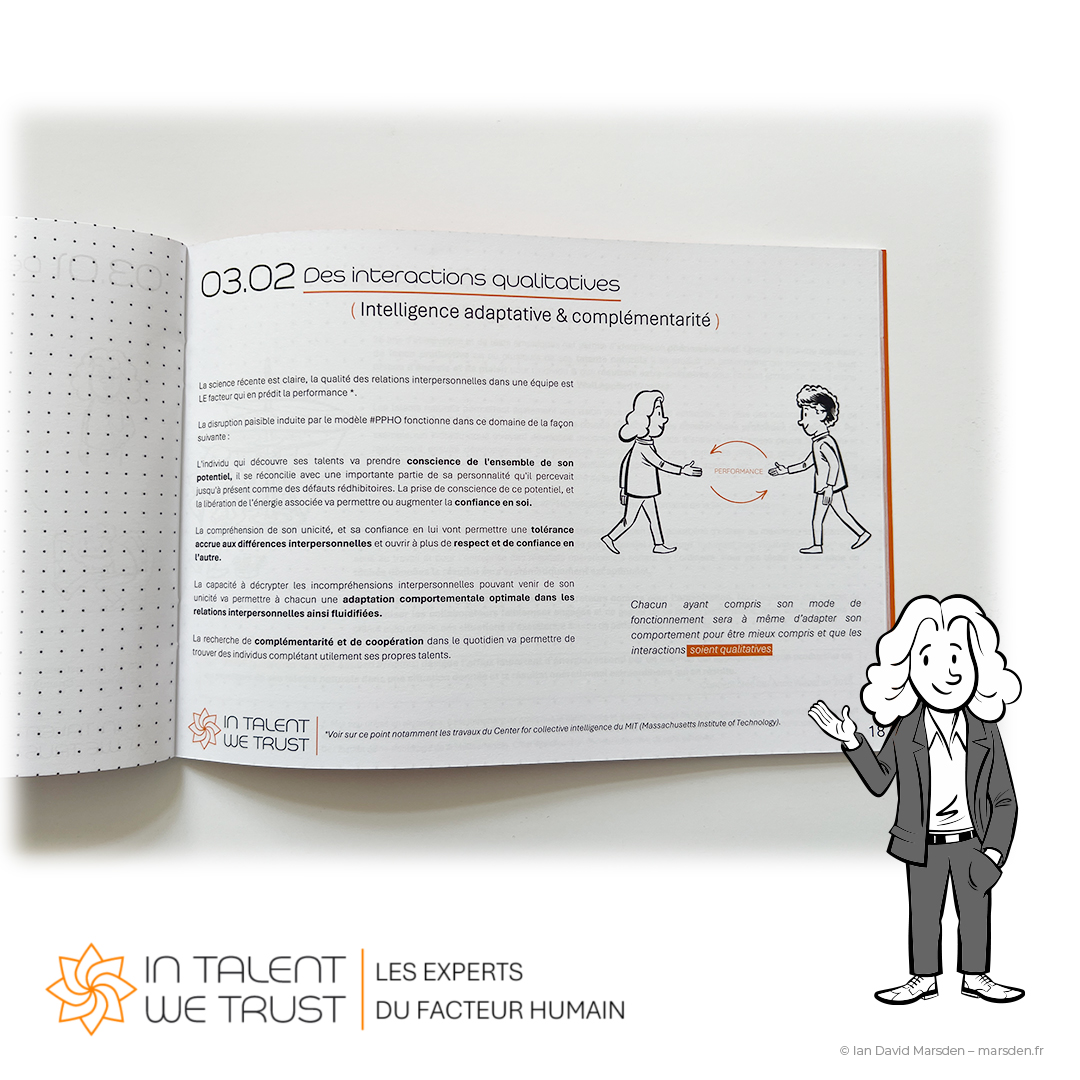
Adaptive intelligence
Illustration supporting qualitative interactions.
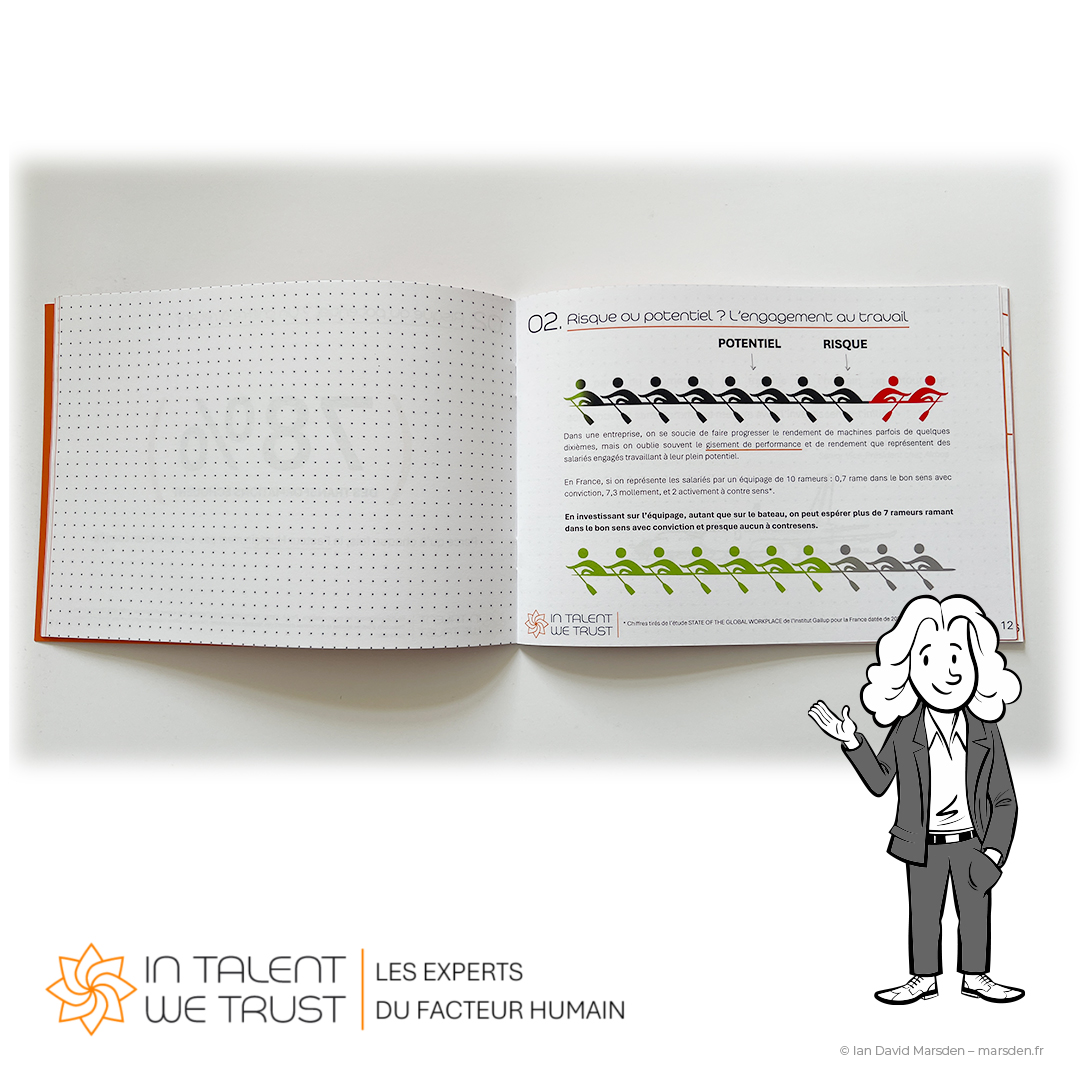
Employee engagement
Rowing diagrams applied to printed learning material.
Talent strategy. The star-diagram system incorporated into a printed explanation of talent and development.
Some of these portfolio photographs include additional Léonard illustrations positioned outside the actual printed pages. The printed layouts and illustrations are shown as examples of application; booklet layout is not attributed to me.
06 · Digital Communication
A consistent visual language online
The illustrated system also appeared in IN TALENT WE TRUST’s digital communication. Léonard accompanies material about the complexity of human behavior, while the star-based diagrams support explanations of talent and organizational development.
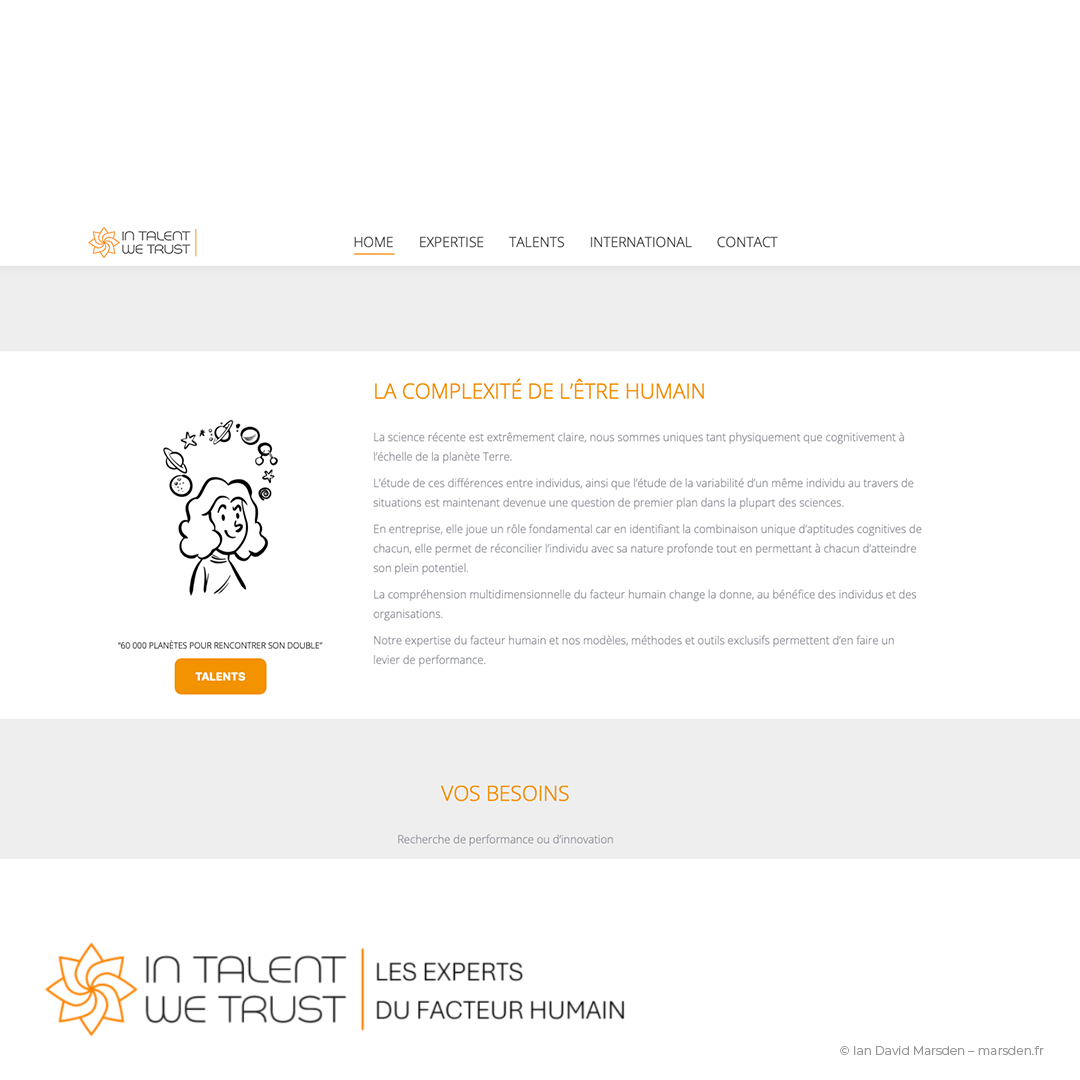
Website Applications
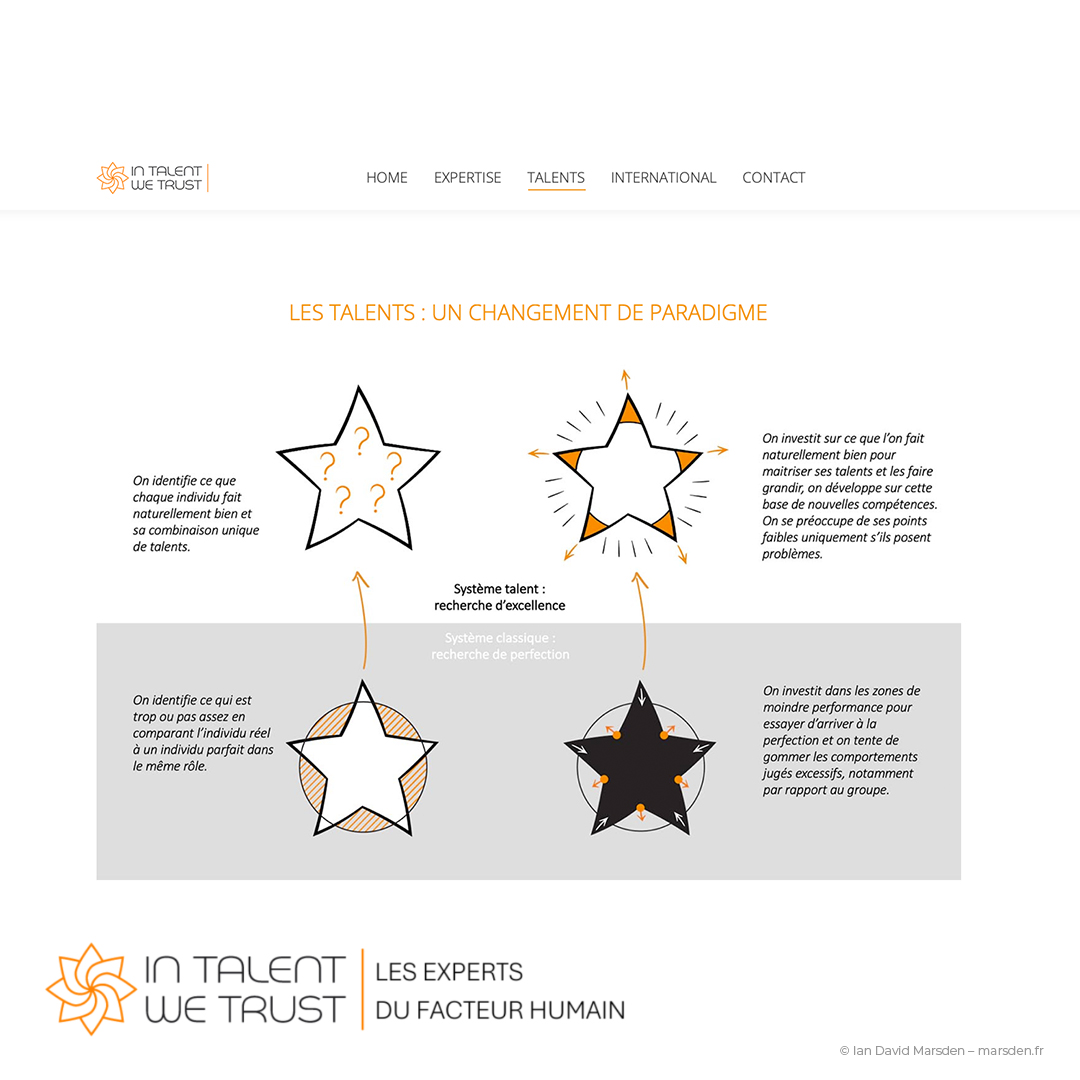
The PPHO talent diagrams used in an online explanation of the methodology.
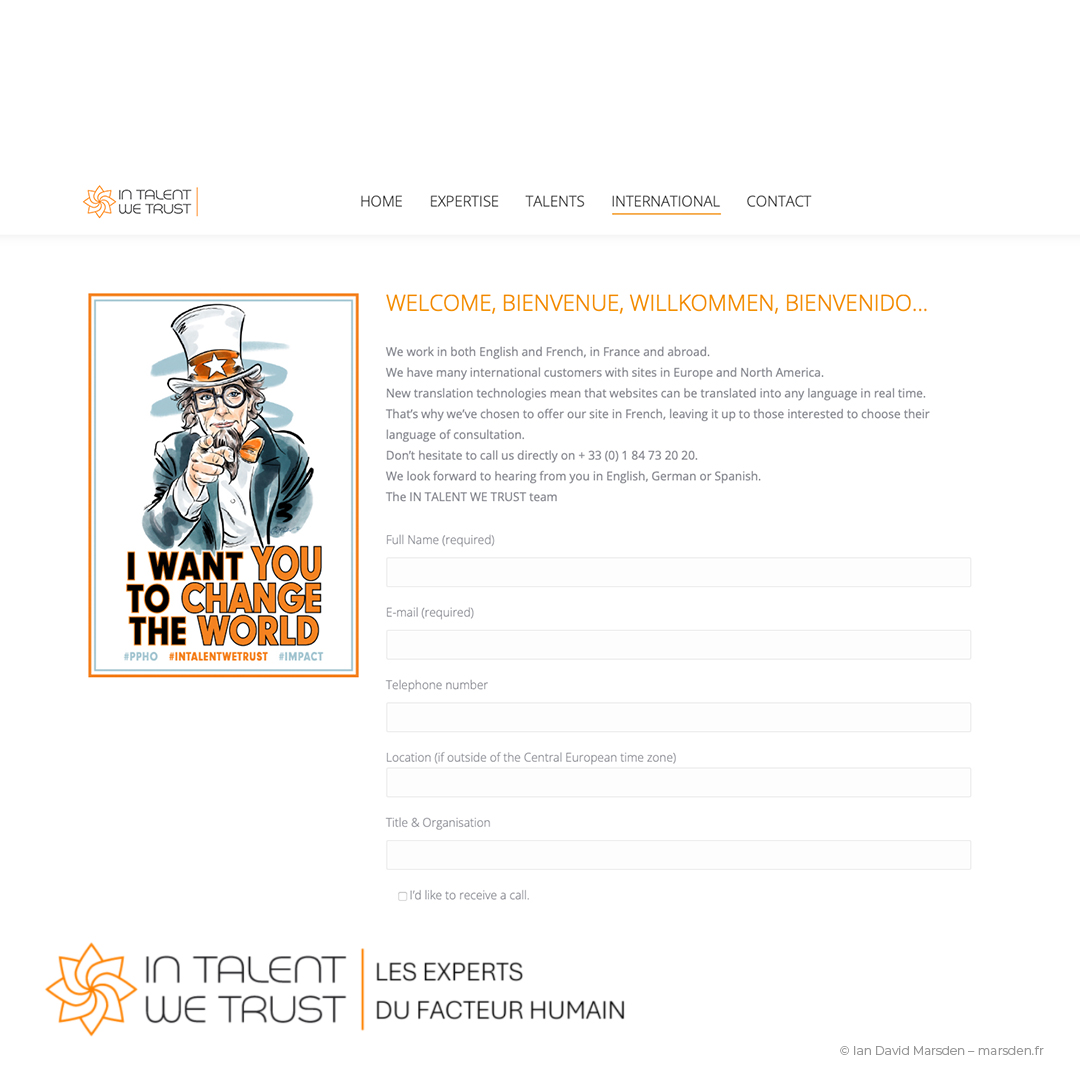
The campaign illustration integrated into the client’s website.
These examples show how visual assets originally developed for the methodology could be reused online without losing their identity. My contribution was the illustration and information-design artwork; the website itself was developed separately.
07 · Campaign Illustration
“I Want You to Change the World”
Alongside the PPHO learning materials, I created a separate campaign illustration based on the familiar visual language of the Uncle Sam recruitment poster.
The drawing was made by hand and developed through digital painting. Its more expressive treatment contrasts with the clean line-based Léonard illustrations and analytical diagrams, while the orange accent connects it visually to the client’s other material.

From drawing to motion
The poster artwork was also developed into a short drawing animation. The video shows the illustration taking shape, extending the image from a static campaign visual into motion. For more on motion graphics and hand-drawn explainer videos please visit this page.

Original campaign illustration and drawing animation by Ian David Marsden.
This is a drawing animation rather than a fully scripted explainer film. It nevertheless connects naturally with my wider work in hand-drawn explainer videos and business animation, where illustration, visual explanation, storyboarding and motion are developed together.
Project Scope & Credits
One connected visual communication system
The PPHO assignment brought several illustration disciplines together within one project. Léonard supplied a recognizable character. Visual metaphors introduced abstract subjects. Diagrams made relationships easier to compare. The printed and digital applications brought these elements together for different audiences and formats.
Selected deliverables
- Original Léonard character design and development
- Character variations, expressions, gestures and professional roles
- Conceptual illustrations and visual metaphors
- Rowing-team diagrams for cooperation and engagement
- Star-based information graphics and adaptation diagrams
- Editorial illustrations for printed PPHO learning materials
- Artwork prepared for digital communication
- “I Want You to Change the World” campaign illustration
- Motion-graphics drawing animation
Client: IN TALENT WE TRUST / WEBER SAS, Paris
Founder and PPHO methodology: Anne Weber
Illustrated visual system: Ian David Marsden
Collaboration: March 2024–March 2025
The PPHO methodology and client identity belong to their respective owners. My contribution was the illustrated communication system and associated artwork. This case study does not claim authorship of the methodology, the complete learning-guide layout or website development.
Complete Project Documentation
PPHO — Character Design & Visual Communication
The complete ten-page PDF presents the project in a concise visual format, including character development, explanatory diagrams, printed learning materials, digital applications and campaign motion.
Related Work
Explore related work in Commissioned Illustration, Character & Mascot Design, Editorial & Educational Illustration, Graphic Design & Creative Direction and Hand-Drawn Explainer Videos.
Have something complex to communicate?
I develop original illustration, characters and visual systems for companies, institutions, publishers and agencies. If you have a subject that needs to be explained visually, I would be glad to discuss it.