
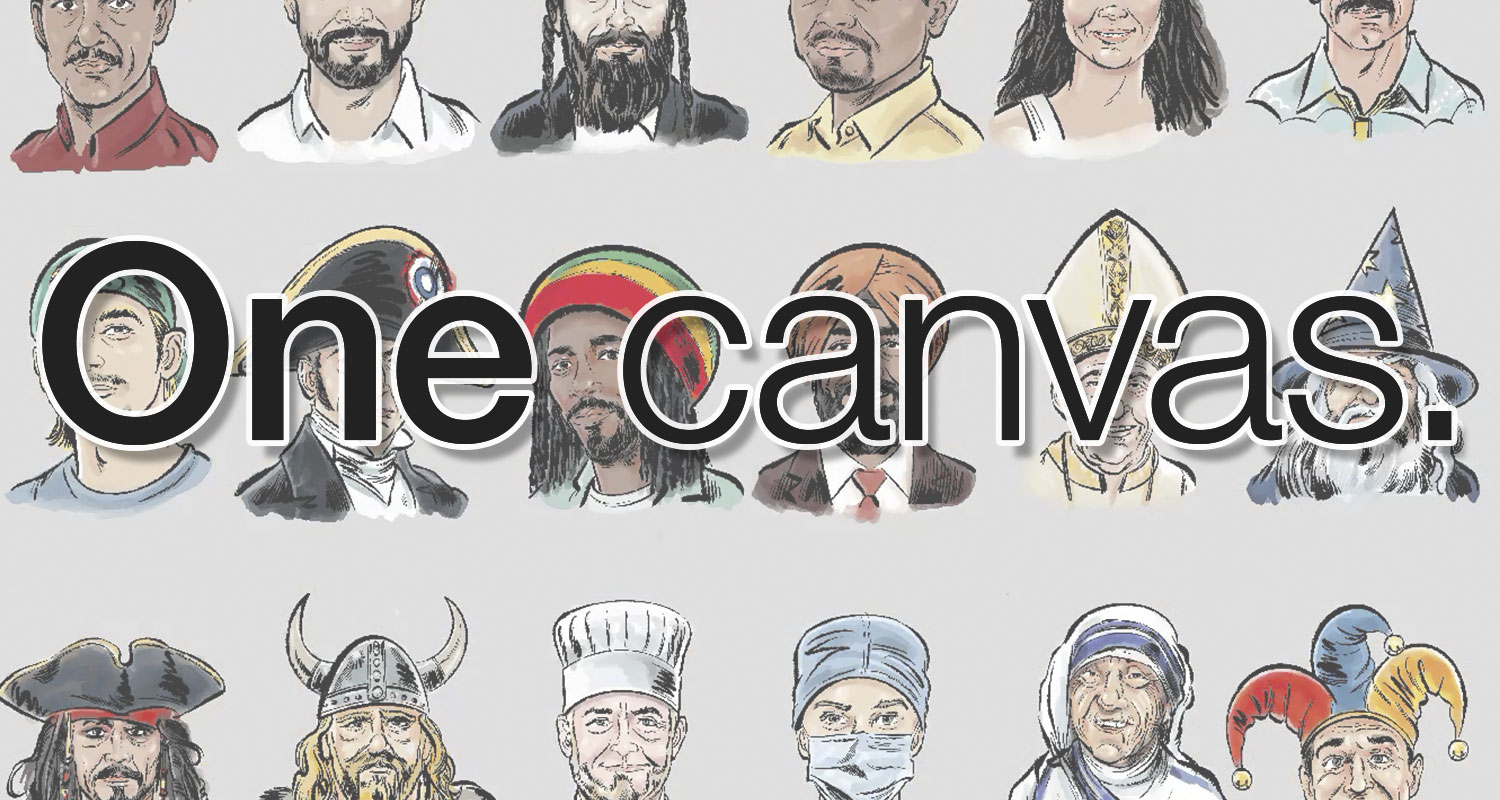
8 Billion Perspectives
There are more than eight billion of us, and no two lives are quite the same.
Different countries, languages, religions, histories, clothes, customs, professions, beliefs and ways of seeing the world. From the outside, those differences can seem enormous.
But draw enough people and something else becomes obvious.
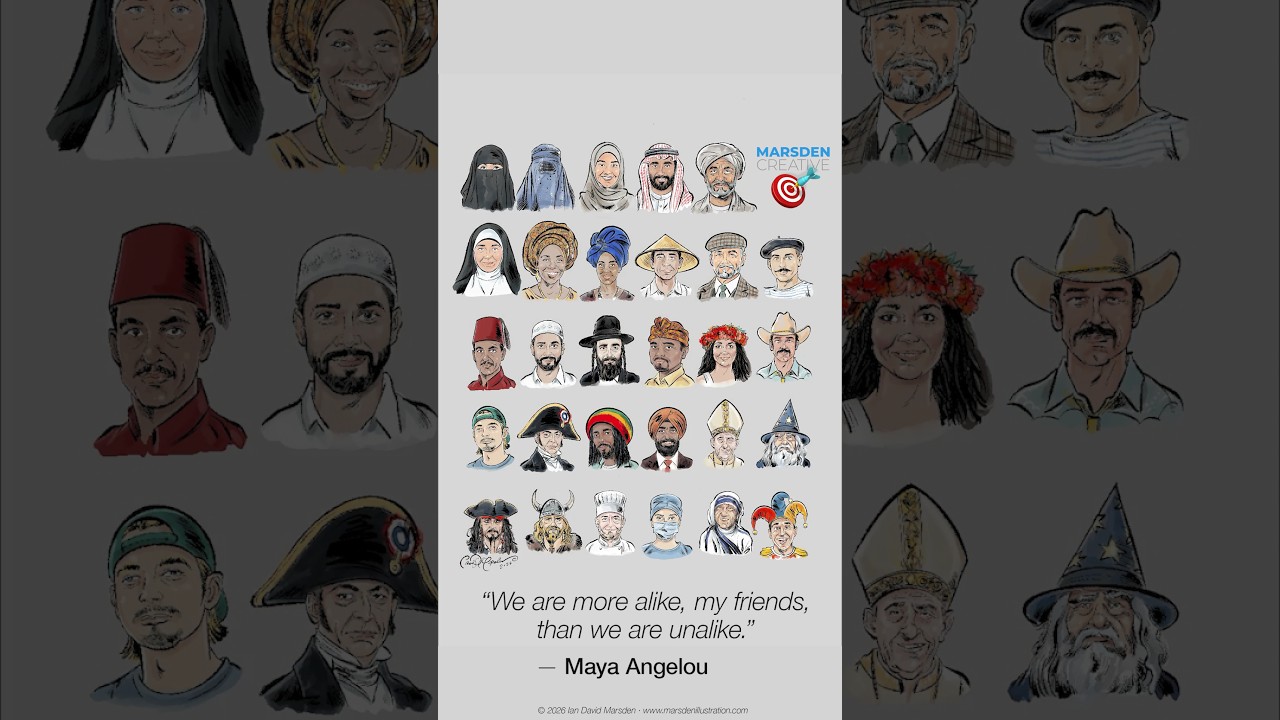
Behind all those visible differences are daughters and sons, mothers and fathers, people with dreams, people who love and are loved, people who worry, laugh, hope, grieve and carry on.
The faces change. The clothes change. The traditions, histories and circumstances change. But the human presence remains.
That thought was behind this illustration and this 60-second illustrated short.
A succession of faces appears on the same canvas — people from different places, cultures, traditions and walks of life. Each one is distinct, but none exists outside that larger human story we all share.
The short ends with a line by Maya Angelou that says it far better than I could:
“We are more alike, my friends, than we are unalike.”
— Maya Angelou
It is a remarkably simple sentence, particularly at a time when so much attention is given to what separates us.
And we have seen the same playbook used over and over again: find the differences between people, exaggerate them, turn them into fear or suspicion, and set one group against another. There will always be people willing to do that for power, influence or money, with very little concern for the damage left behind.
Perhaps the most important thing we can do is stop playing along.
Difference matters. Culture matters. Individual experience matters. The point is not that we are all the same.
We aren’t.
The point is that difference and common humanity can exist at the same time.
Perhaps recognising one does not require us to diminish the other.
And perhaps remembering how much we share makes us a little harder to divide.
Those who call empathy weakness have it backwards. Empathy and compassion are not weaknesses; they are deeply evolved human capacities that made caregiving, cooperation and social life possible. To recognise another person’s humanity and still choose compassion requires awareness, intelligence and strength.
Those who think men should be testosterone-fuelled warriors have misunderstood strength entirely. Strength is not domination, aggression or the refusal to feel. It is self-control, courage, responsibility, empathy and the ability to protect without needing to dehumanise.
That is what I wanted this 60-second short to be about.
8 billion people.
8 billion perspectives.
Different stories.
One canvas.
— Ian David Marsden


