Google MentalPlex · April Fool’s Day 2000
Google MentalPlex — The First Google Doodle Project I Created
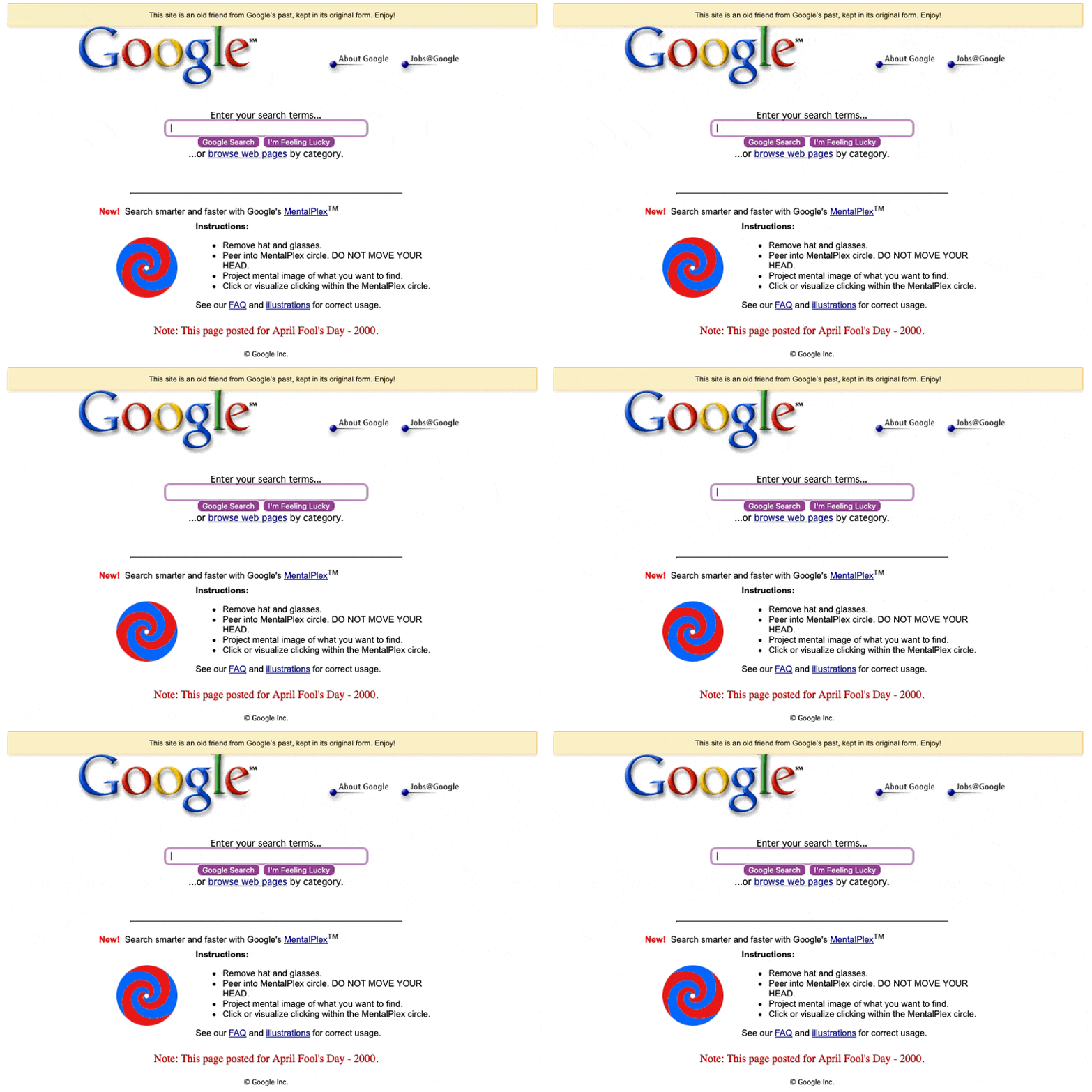
On April 1, 2000, Google invited users to search the web telepathically. Stare into a hypnotic spiral, think very hard about what you wanted to find and let Google take care of the rest.
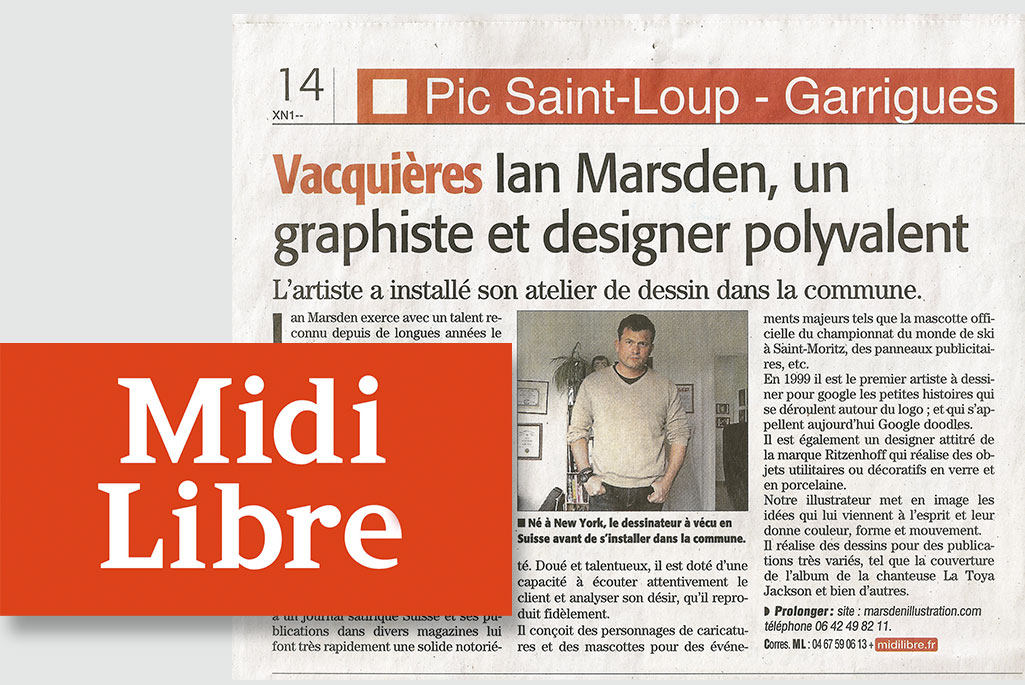
MentalPlex was the first project I created for Google after being contacted by Susan Wojcicki. It led directly to my continuing freelance work as Google’s Doodle artist.
April Fool’s Day 2000
A joke played completely straight
MentalPlex worked because it borrowed the calm authority of the early Google interface and bent it, very slightly, into absurdity. There was no elaborate setup. Google simply claimed to have developed a search technology capable of reading your mind.
The user was instructed to remove hats and glasses, stare into the MentalPlex circle, remain perfectly still and project a mental image of the desired search result. The presentation was deliberately matter-of-fact. That restraint was the joke.
There was also a separate illustrations page showing examples of correct and incorrect MentalPlex technique, extending the premise without over-explaining it.
A Curious Afterlife
MentalPlex and the Guinness record
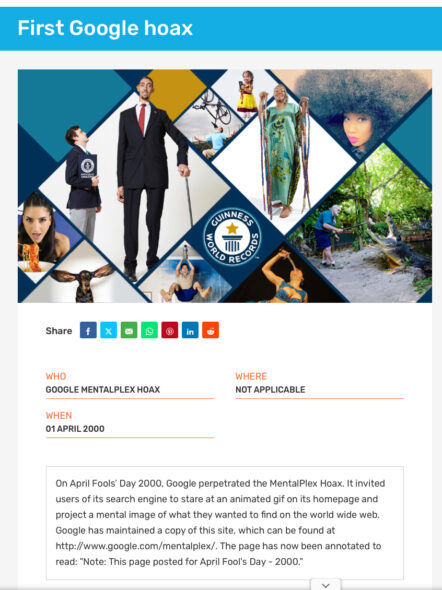
What I did not know in 2000 was that the project would acquire a surprisingly long afterlife. MentalPlex is still preserved in Google’s archive, and Guinness World Records lists the Google MentalPlex Hoax as the first Google hoax, dated April 1, 2000.
One does not generally expect to discover that a piece of one’s own work has wandered into the Guinness record books, but there it is.
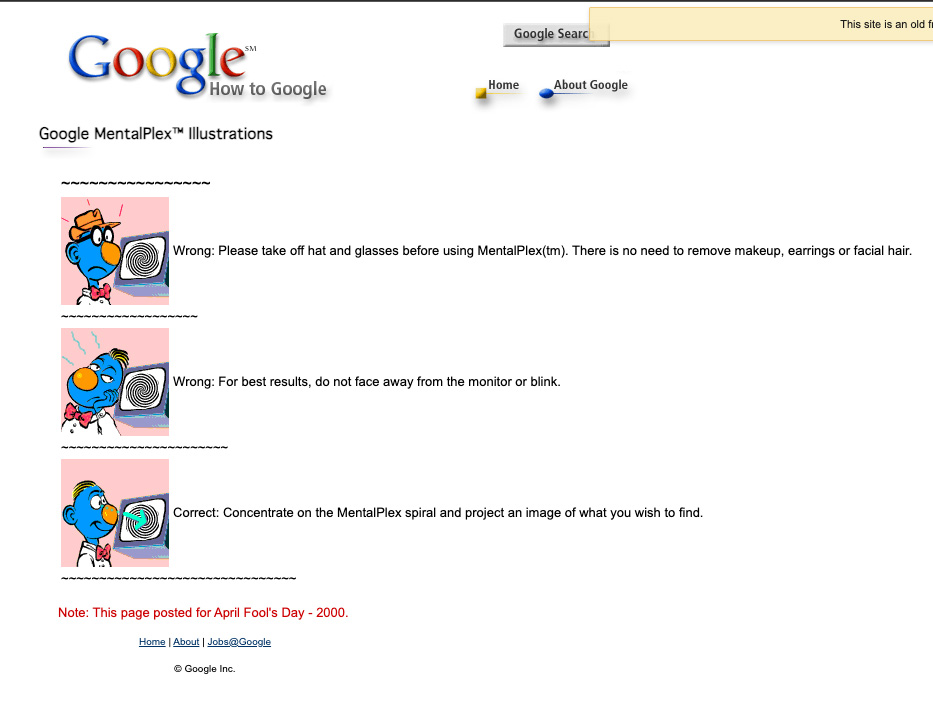
The drawings were part of the delivery
The visual material was not there simply to decorate the joke. The illustrations helped sell the fictional technology by showing people how MentalPlex should — and should not — be used.
That combination of deadpan copy, sparse interface and simple explanatory drawing gave the project its particular tone.
What Stayed With Me
The idea did most of the work
What I still like about MentalPlex is its restraint. It was absurd, but it was not noisy. The project trusted the concept, timing and presentation instead of trying to force the joke.
That relationship between idea and image has stayed consistent throughout my work. Whether the format is an illustration, comic sequence, character, campaign or hand-drawn explainer, the basic problem is much the same: make the idea clear, memorable and visually distinct without adding more than it needs.
MentalPlex was the beginning of my Google Doodle work
After MentalPlex, Google continued working with me on a freelance basis. I went on to create the Google Aliens sequence, the Founding Fathers July 4 series, Kangaroodle for the Sydney 2000 Olympic Games and other homepage Doodles during the following year.
Current illustration work
If you arrived here through Google history rather than my current portfolio, I still work directly with companies, publishers and agencies on commissioned illustration, comics, characters and hand-drawn visual communication.