Cartoons and Comics by Ian David Marsden


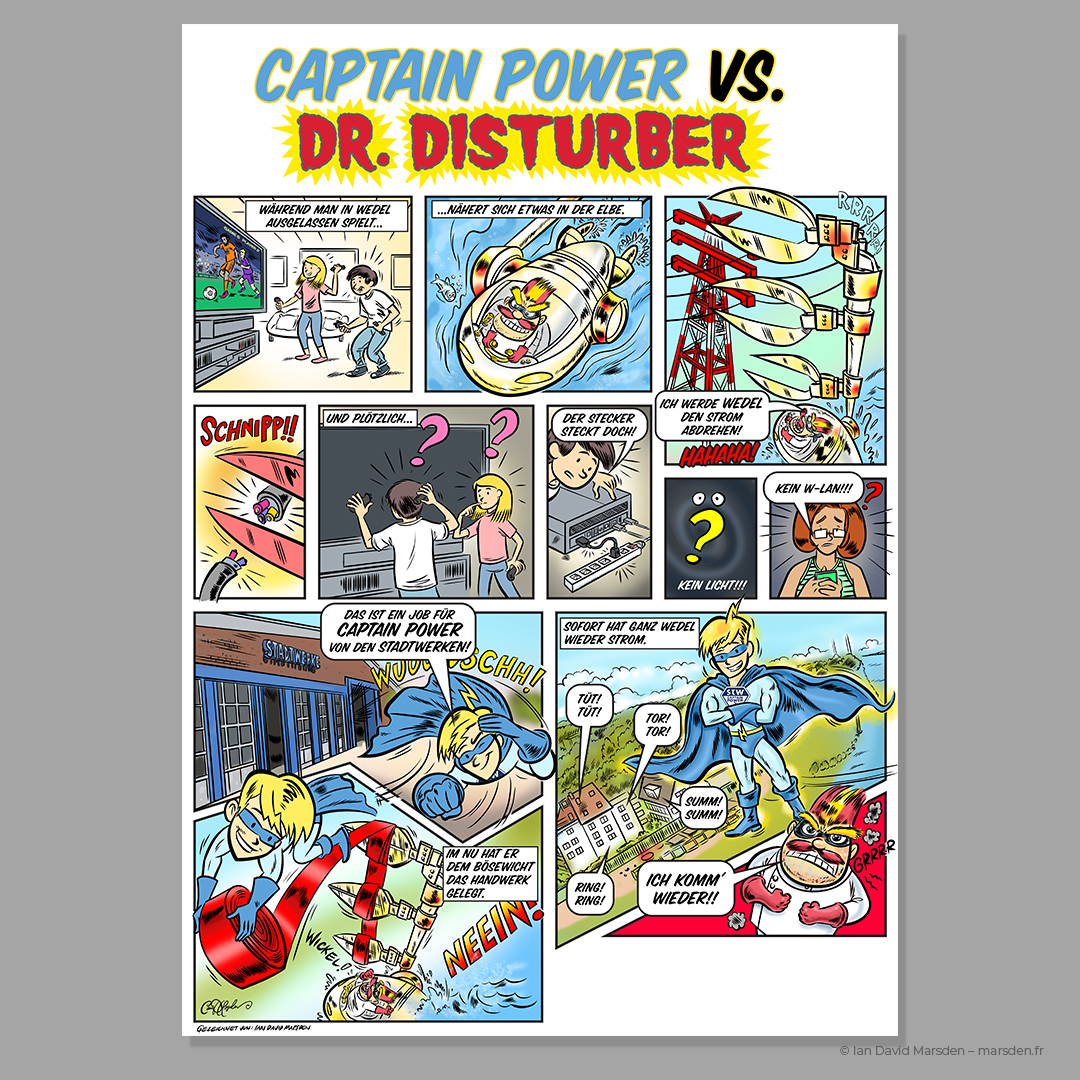
Business Comic – Captain Power vs. Dr. Disturber (Full Page)
Full-page business comic created by Ian David Marsden for Stadtwerke Wedel (Germany). Featuring superhero Captain Power and villain Dr. Disturber, this comic promoted energy efficiency and infrastructure awareness through engaging visual storytelling.
uperheldencomic, comiczeichner deutschland, energiekommunikation, auftragsillustration, kinderfreundliche illustration, comiczeichnung
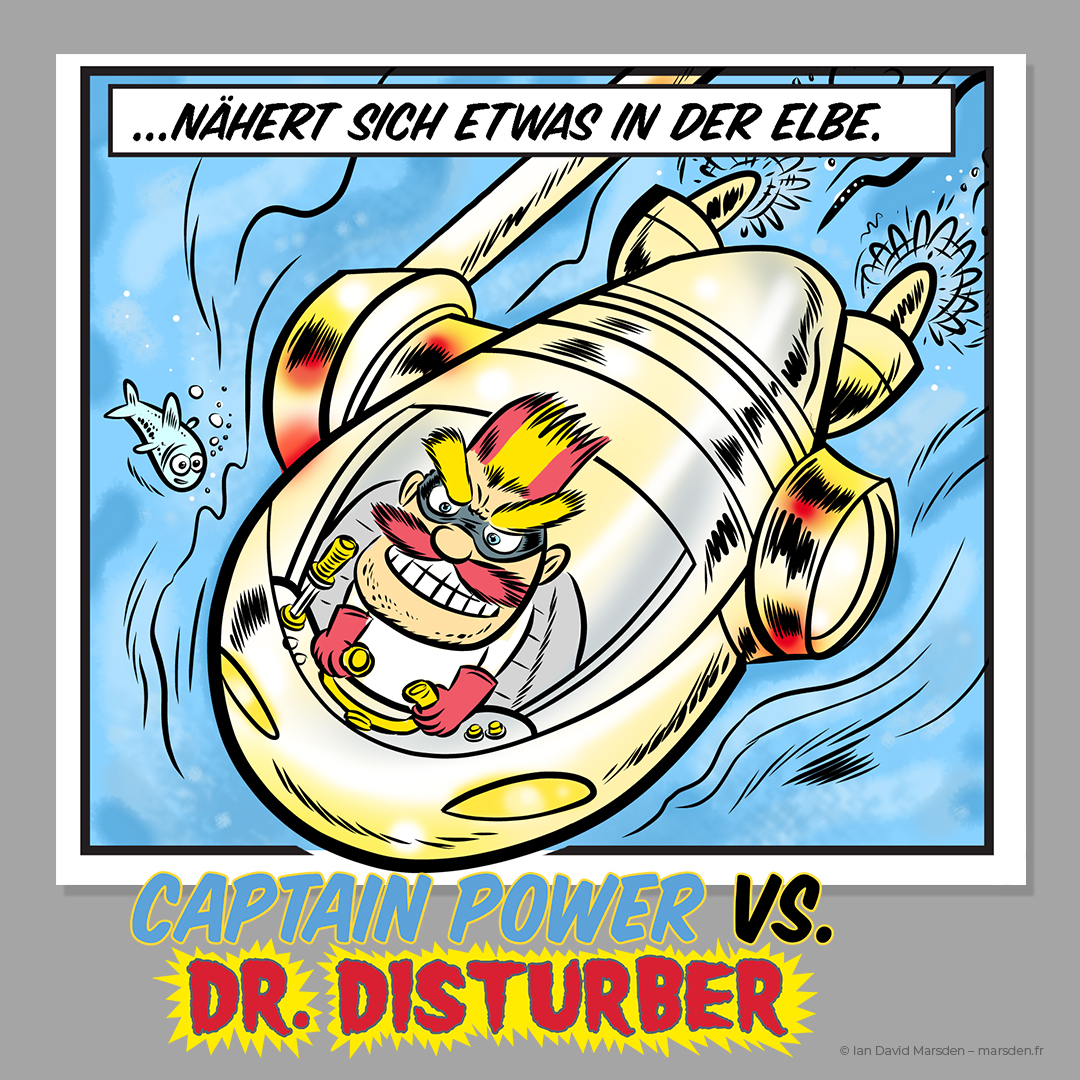
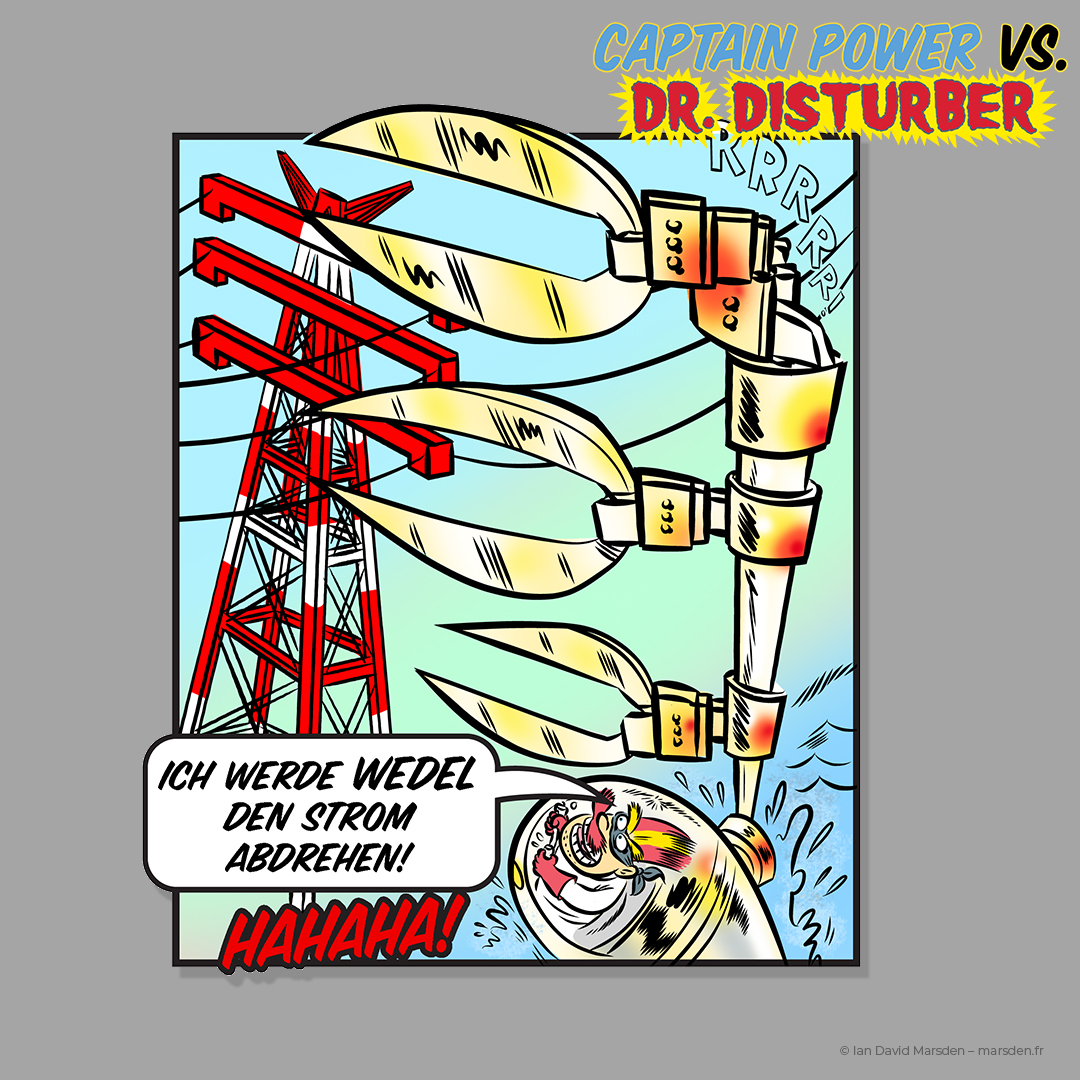
In this comic panel created by Ian David Marsden, the villain Dr. Disturber pilots a menacing underwater submarine equipped with giant scissor arms. His mission: to sabotage the Stadtwerke Wedel energy supply by severing critical electric lines. Part of a custom comic created for a public utility awareness campaign in Germany.

Captain Power Emerges from Energy Plant – Comic Action Panel
Captain Power bursts from the Stadtwerke Wedel headquarters, red electric tape in hand, ready to stop Dr. Disturber’s sabotage. Is he secretly part of the utility company? The mystery remains… An exciting panel from the corporate comic illustrated by Ian David Marsden.
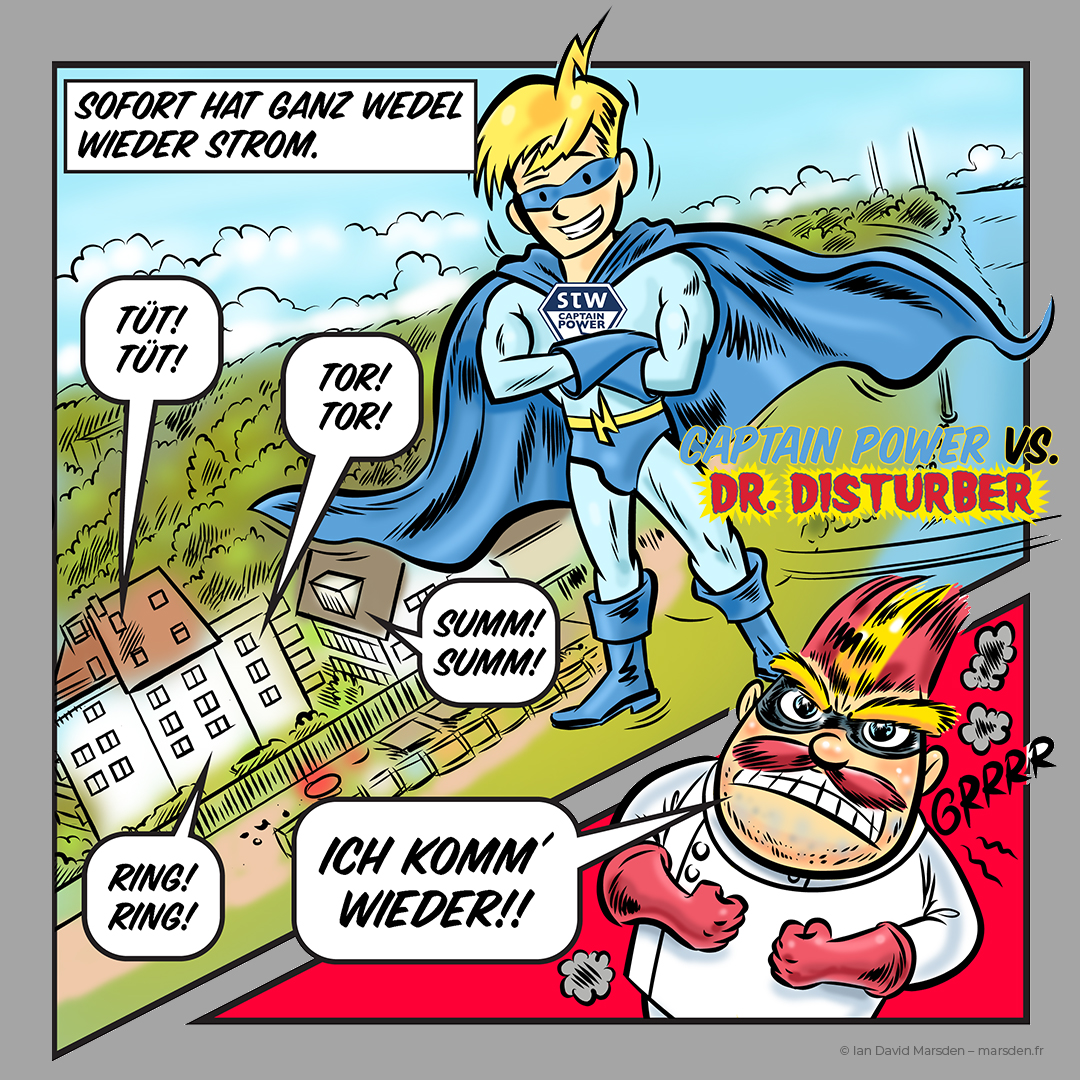
Victory and Villain’s Promise – Final Comic Panel
In the last scene, Captain Power floats triumphantly over the peaceful town of Wedel as all electrical systems run smoothly again. Below, Dr. Disturber flees, vowing, “You haven’t seen the last of me!” A fun and engaging ending to the awareness comic illustrated by Ian David Marsden.

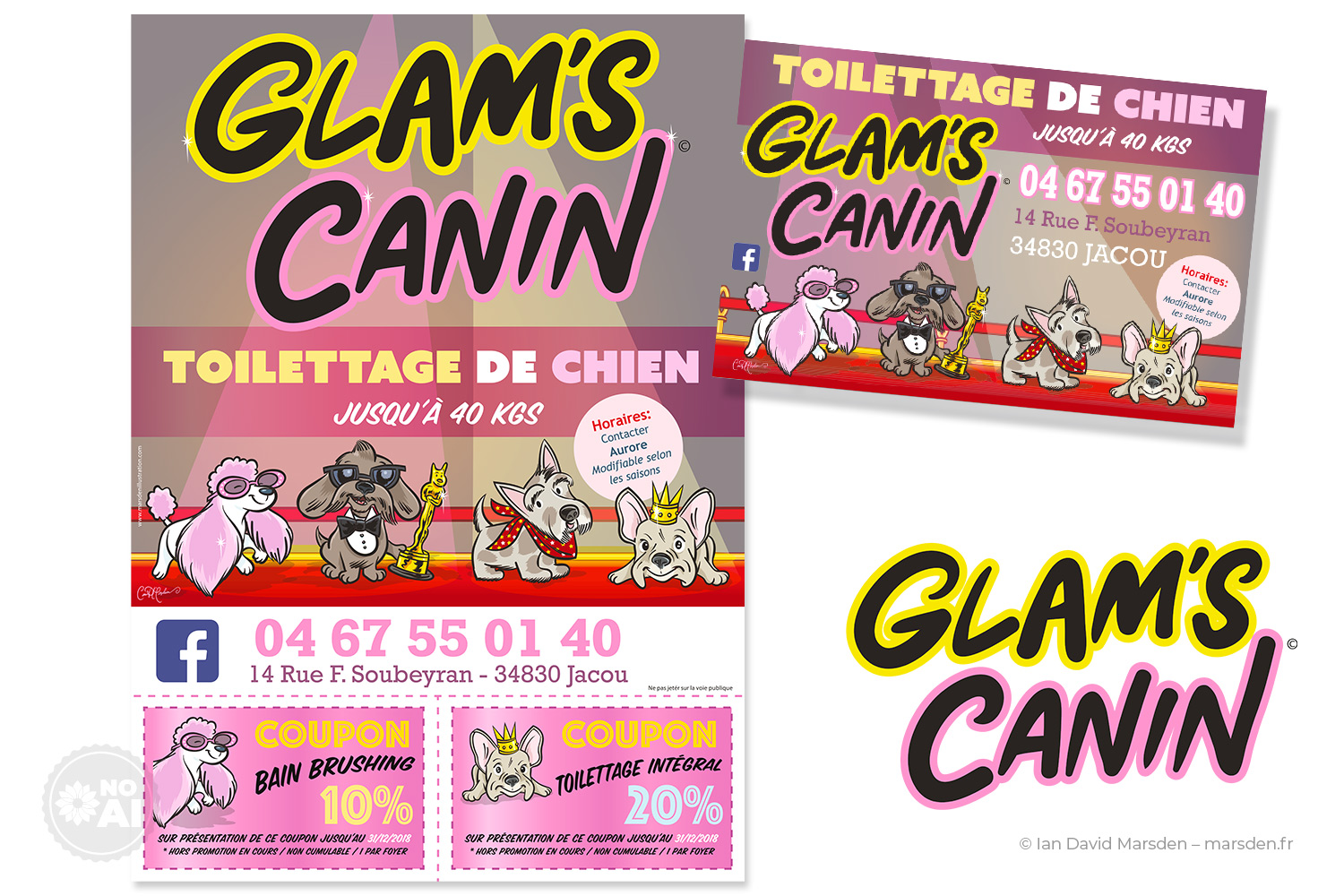
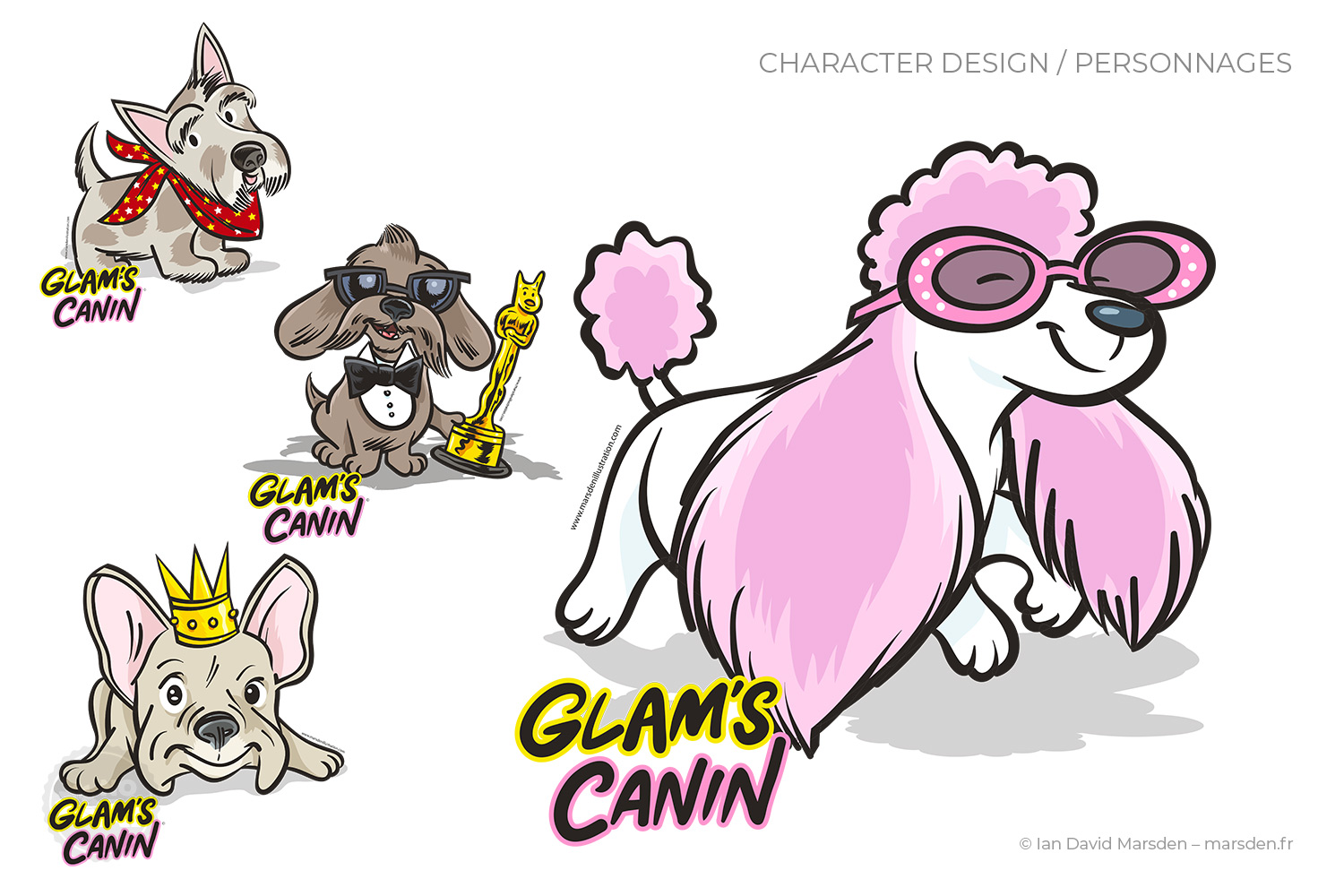
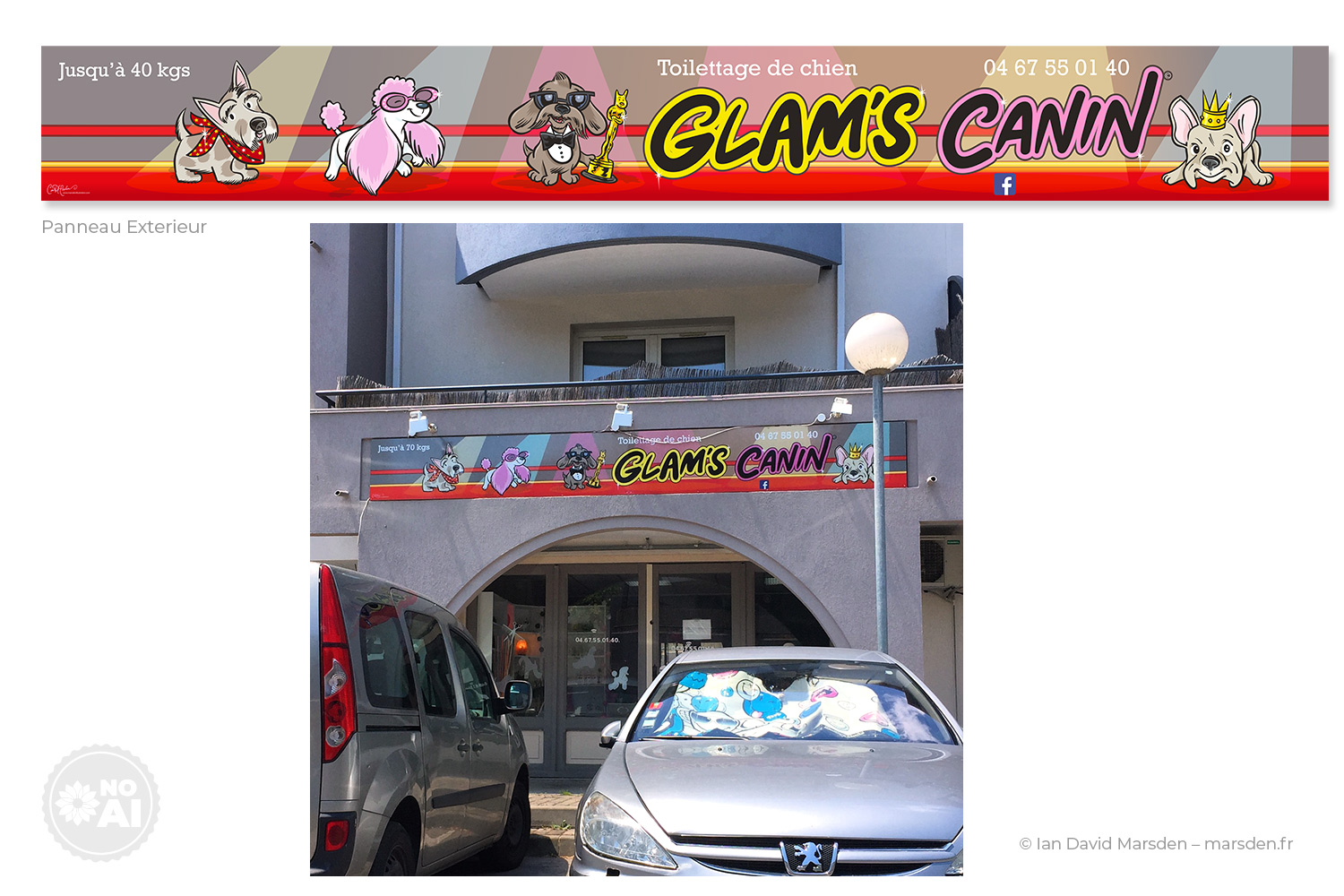
Glam’s Canin Dog Grooming Marketing Set – Posters, Flyers & Branding
Complete visual identity system for Glam’s Canin, a French dog grooming business. Includes flyers, business cards, loyalty cards, and storefront graphics with playful dog mascots and bold pink visuals. Created for pet grooming marketing.
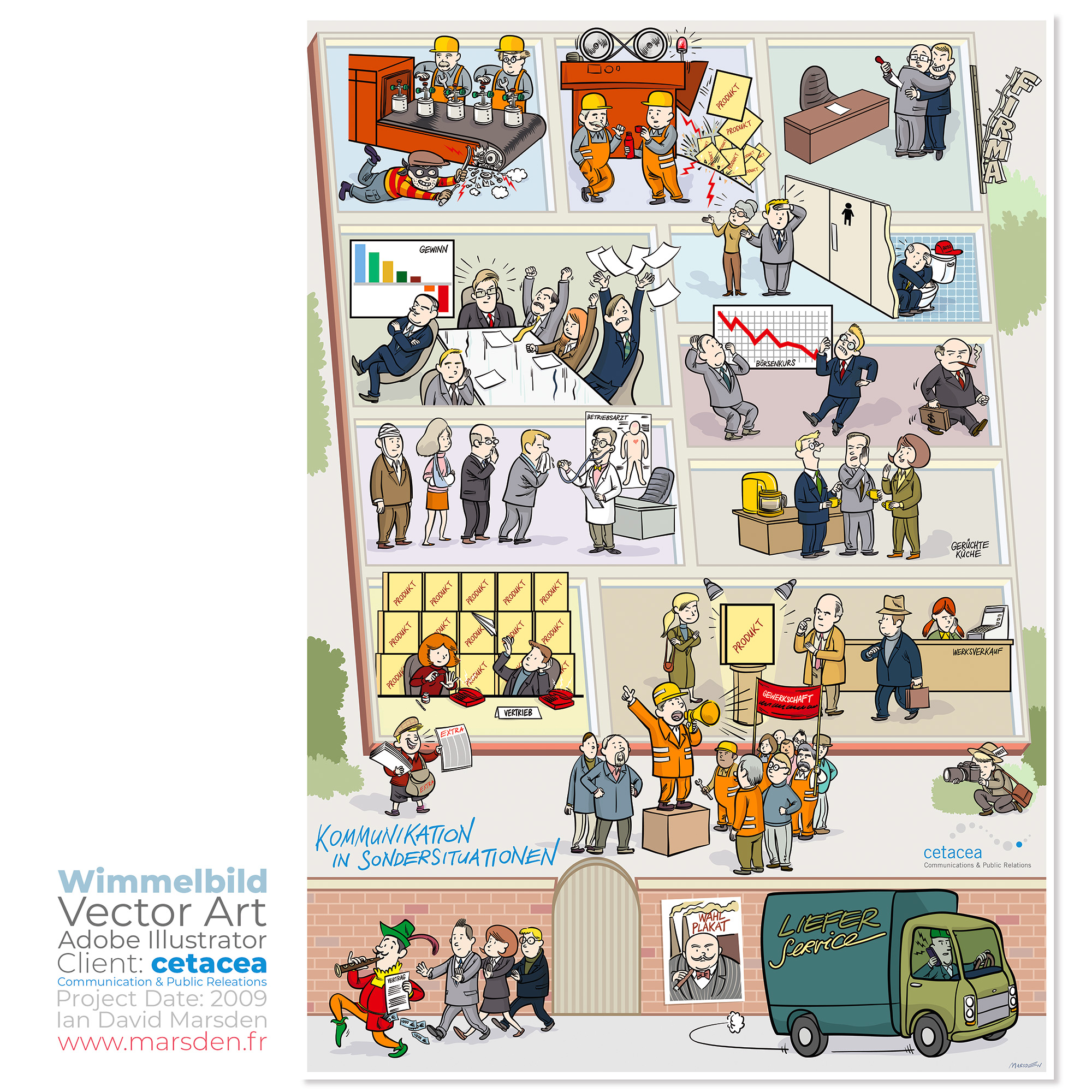







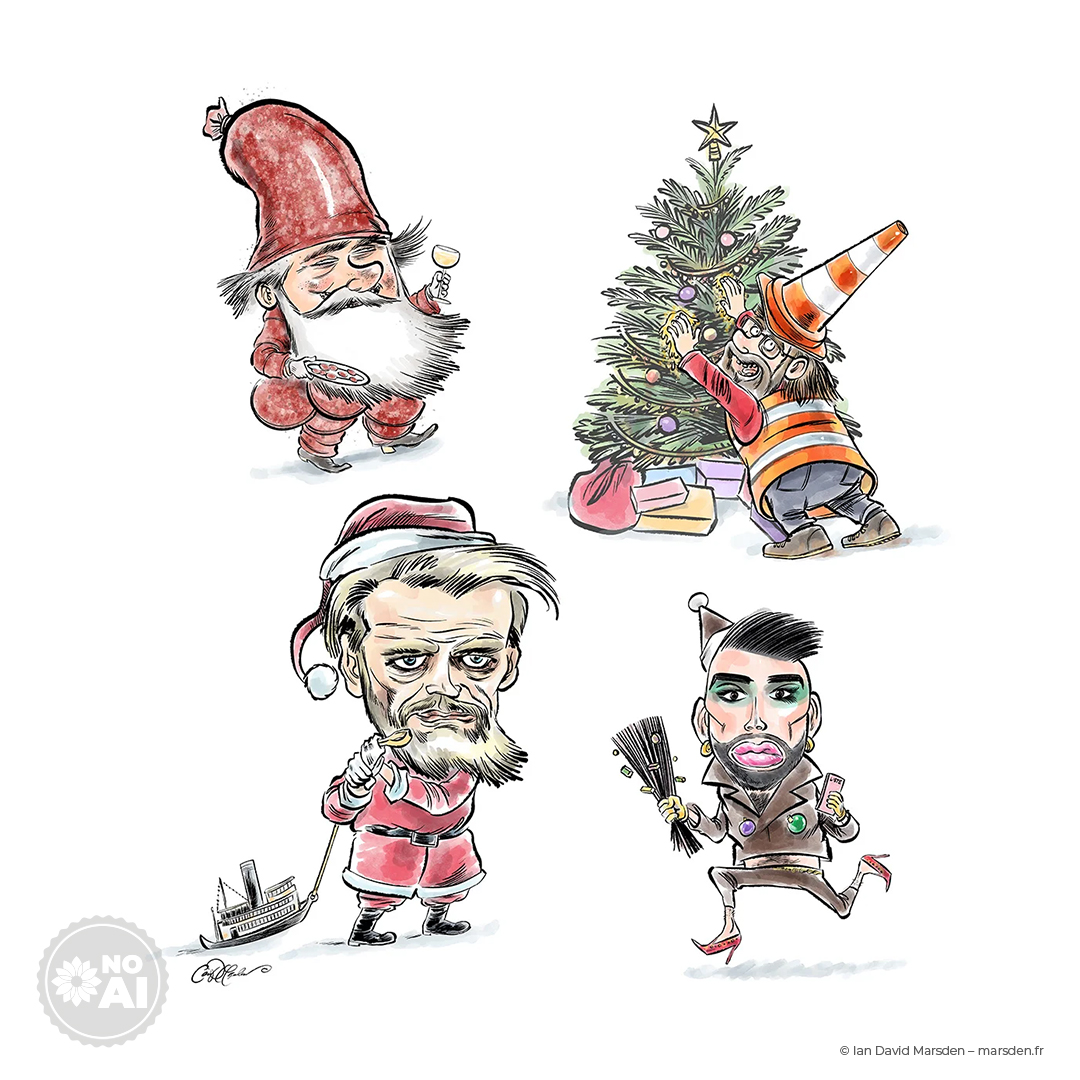
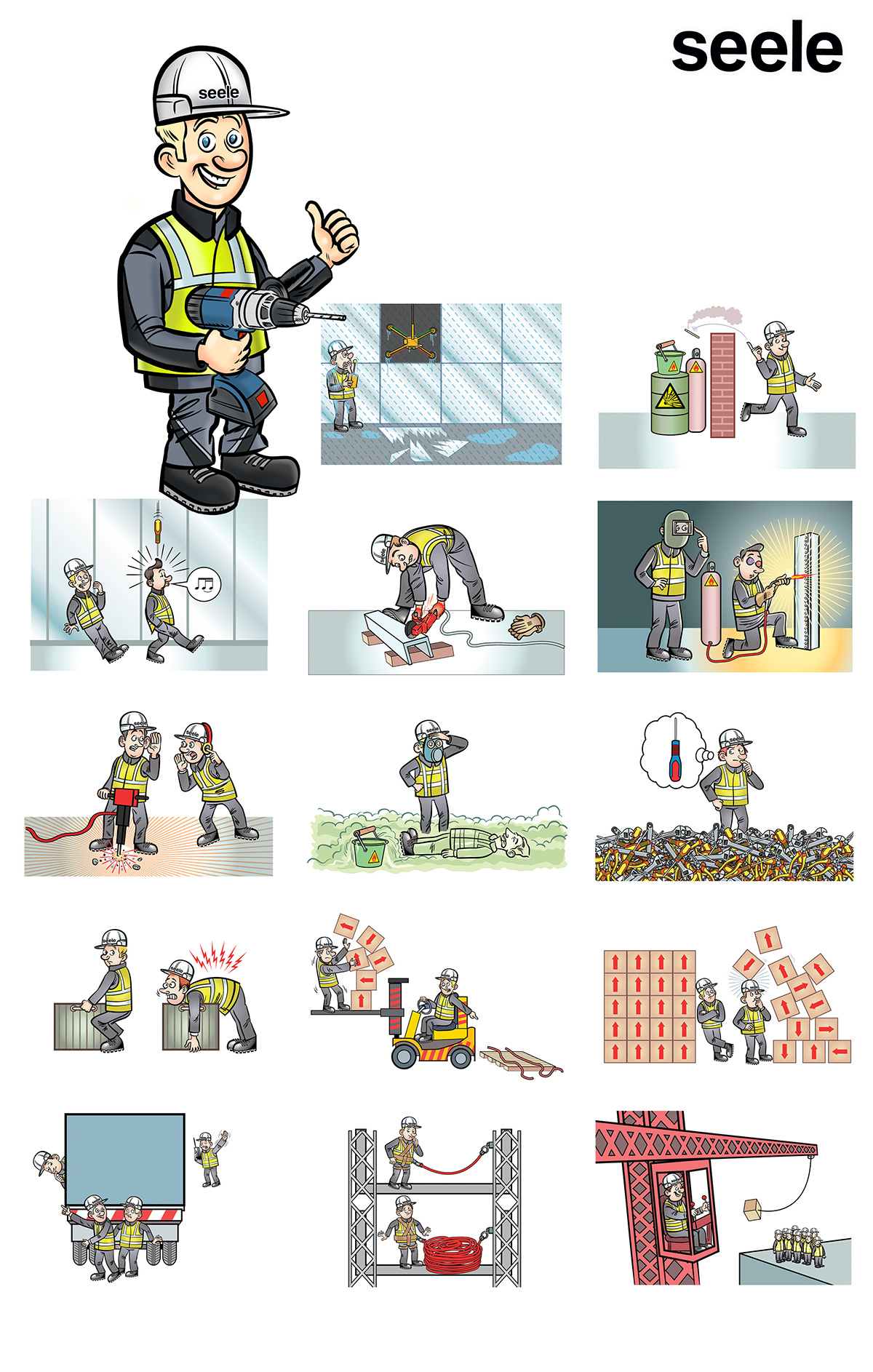
Construction Safety Mascot Illustrations – OSKAR for Seele GmbH
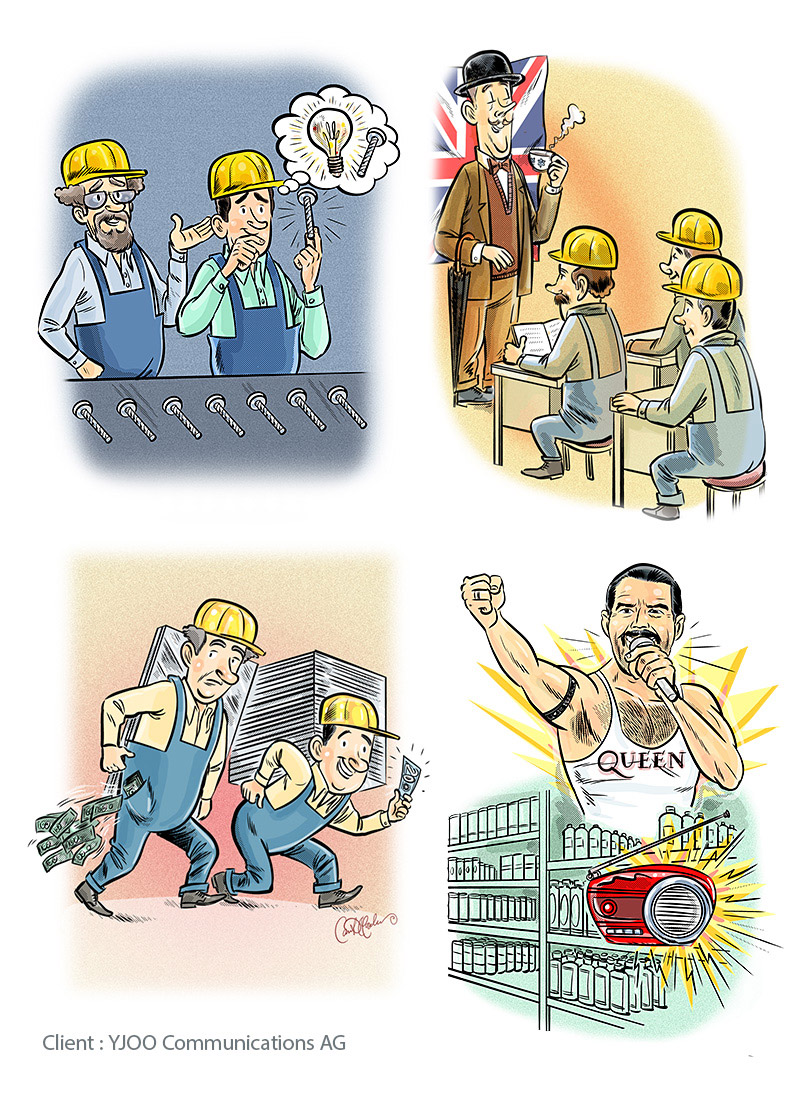
A complete set of safety-themed character illustrations for Seele GmbH, creators of Apple Store façades. OSKAR demonstrates workplace procedures, risk prevention, and team coordination across a variety of construction scenarios. Designed by Ian David Marsden.
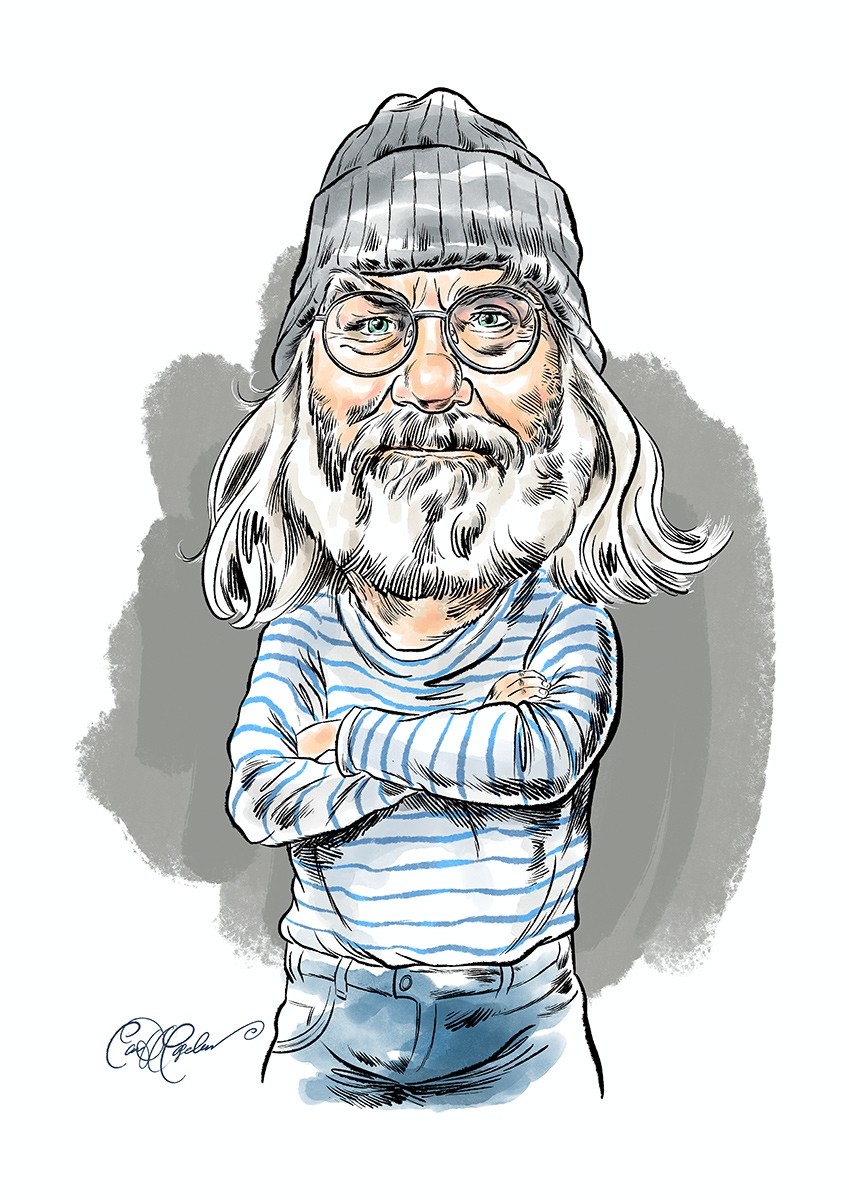
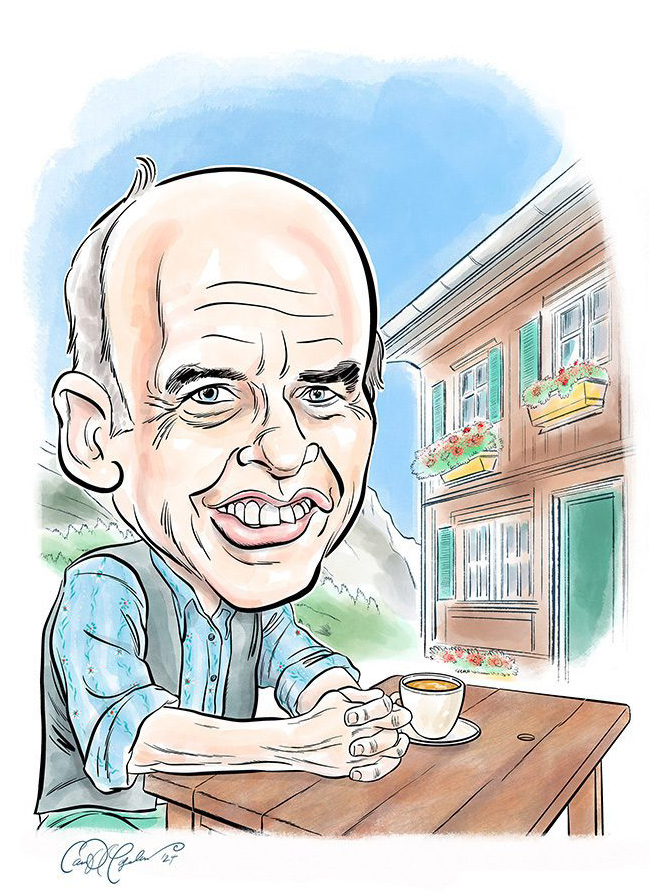
Helmi Sigg Cartoon Portrait by Ian David Marsden
A vibrant cartoon portrait of Helmi Sigg, renowned Swiss comedian, actor, and author, created by illustrator Ian David Marsden. This caricature celebrates Sigg’s legendary career in Swiss entertainment, including his role in Ewigi Liebi and collaborations in Trio Eden.
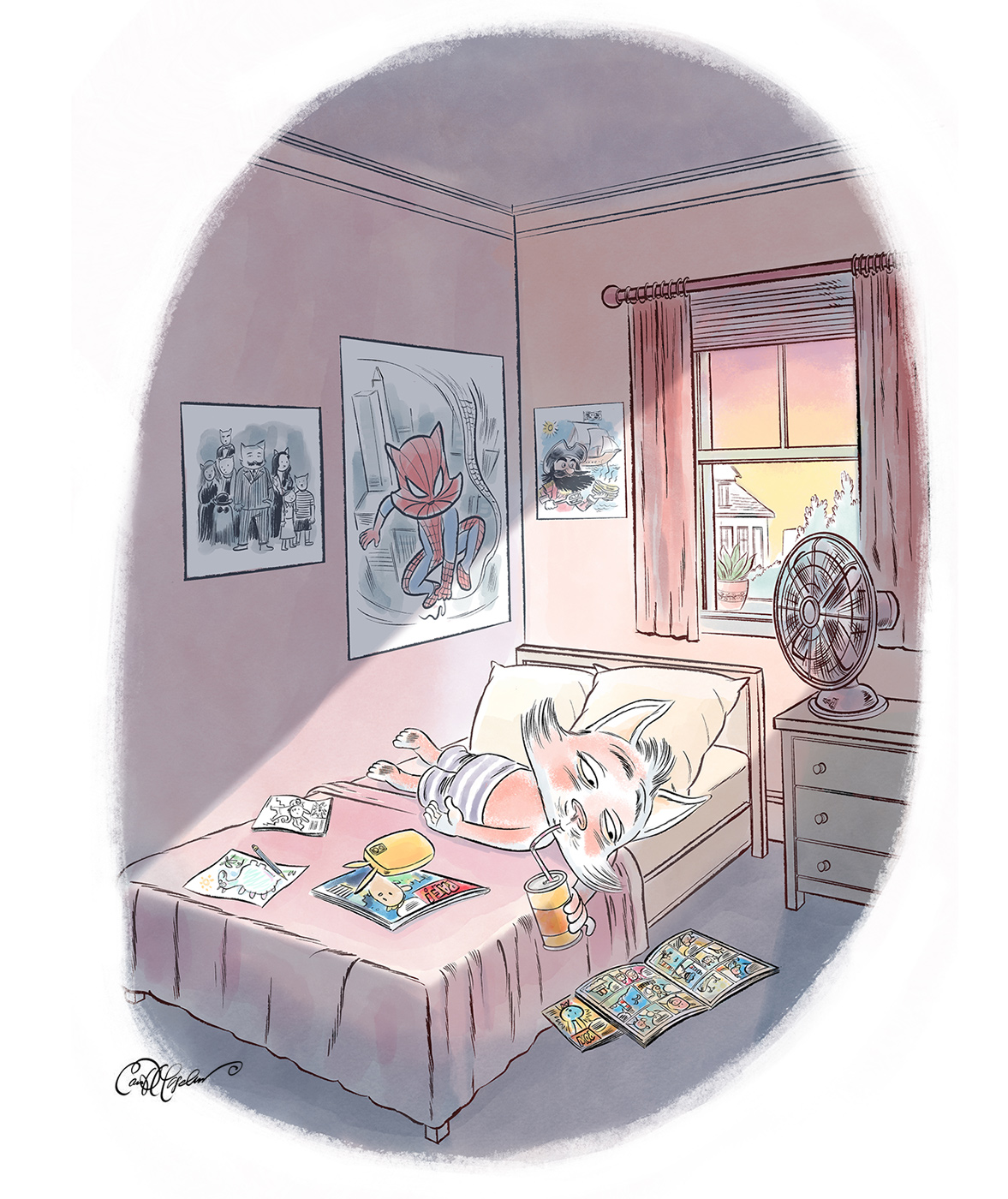
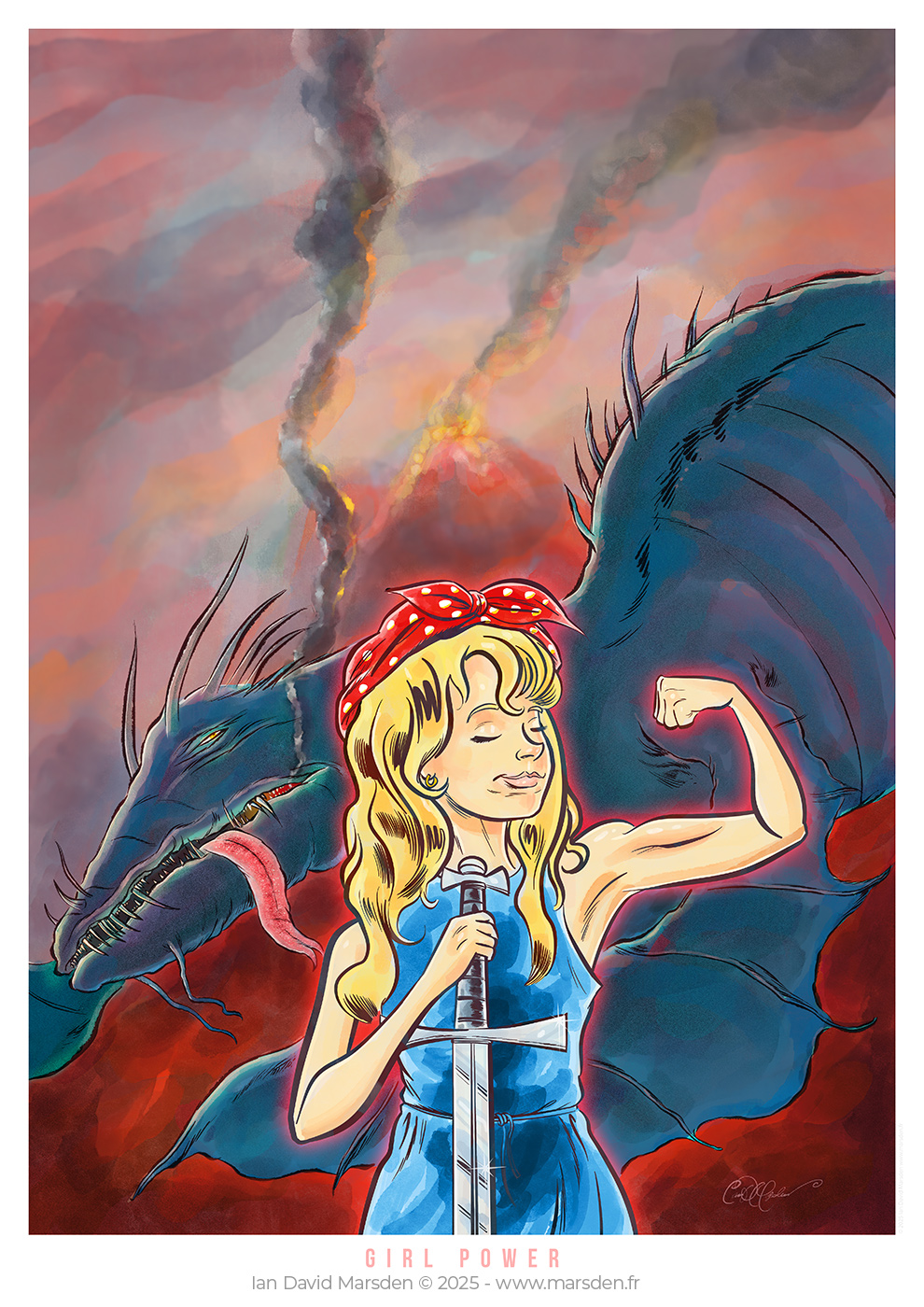
Girl Power – Rosie the Riveter Meets Excalibur
A bold, empowering twist on classic mythology and fairy tale — inspired by Rosie the Riveter and the legend of Excalibur, this editorial-style illustration features a defiant Little Red slaying a dragon twenty times her size. A visual anthem of strength and defiance wrapped in fairy tale form.

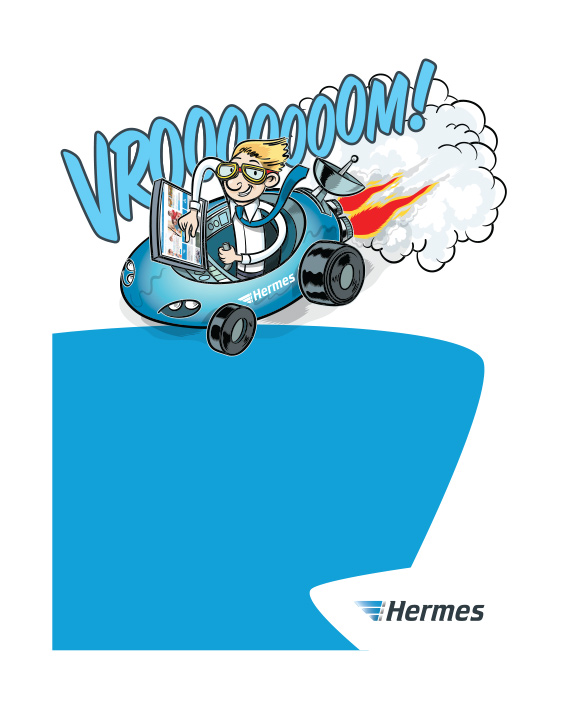
Futuristic Speedy Hermes Car
A cartoon illustration depicts a person in a small, futuristic blue car with "Hermes" branding. The person is excitedly steering while wearing goggles, and the car emits smoke and flames from the rear, suggesting speed. The word "VROOOOOOM!" is prominently displayed above the car.

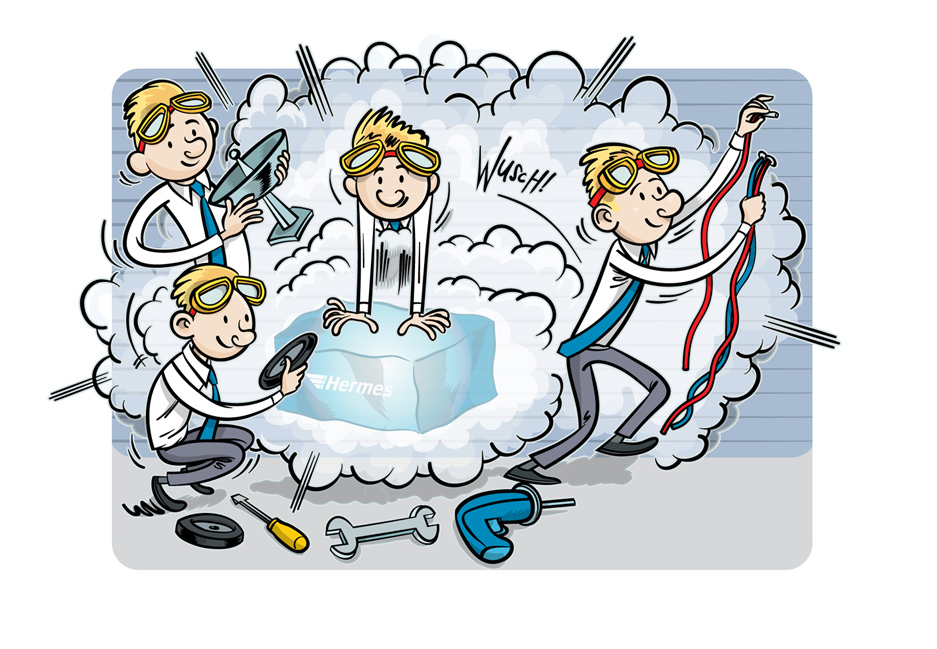
Ice Cube Operations by Cartoon Characters
Cartoon characters wearing goggles are engaging in various activities around a large ice cube labeled "Hermes" in a cloud of smoke. One character holds a drill, another emerges from the ice, one works with a wrench and screwdriver, and another deals with colorful ropes.
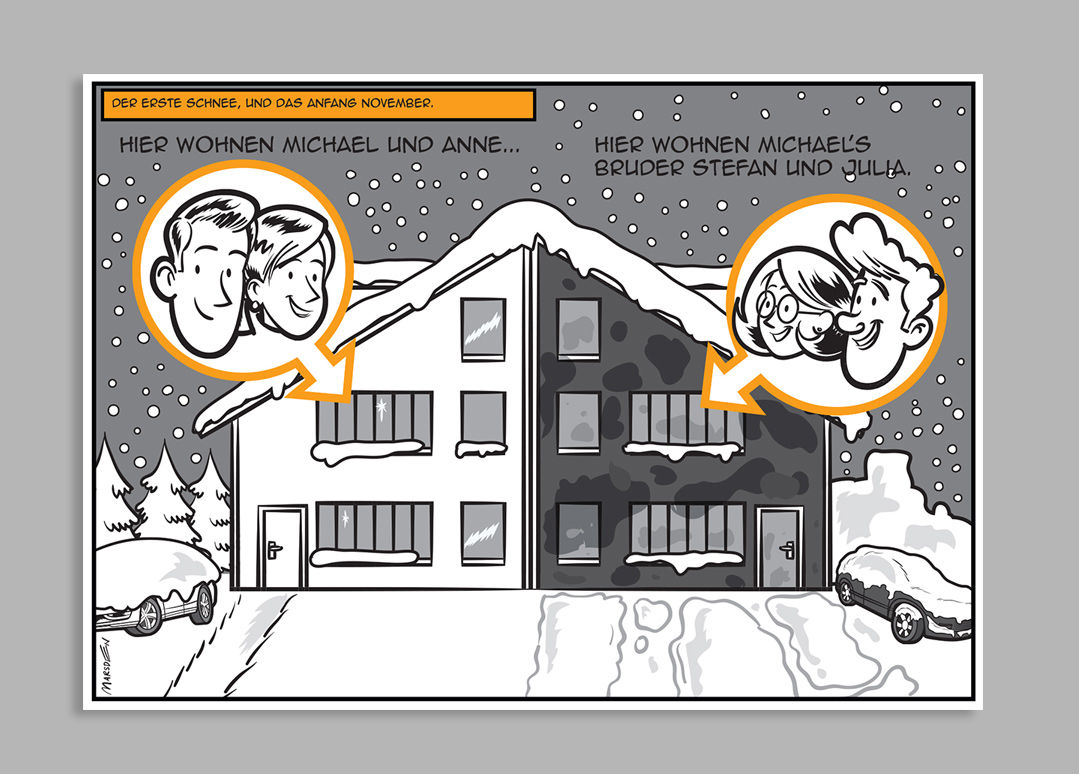
Neighboring Snowy Houses
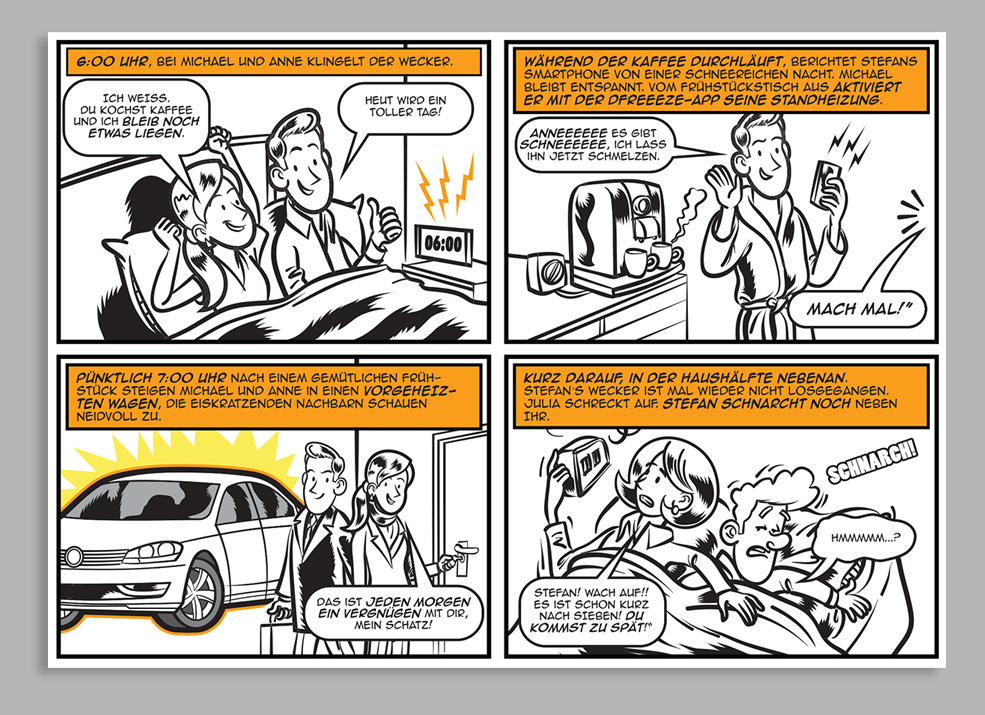
The image is a cartoon showing two neighboring houses covered in snow. Speech bubbles indicate that Michael and Anne live in one house, while Michael's brother Stefan and Julia live in the other. Snow-covered cars and trees surround the buildings, and snowflakes are falling.

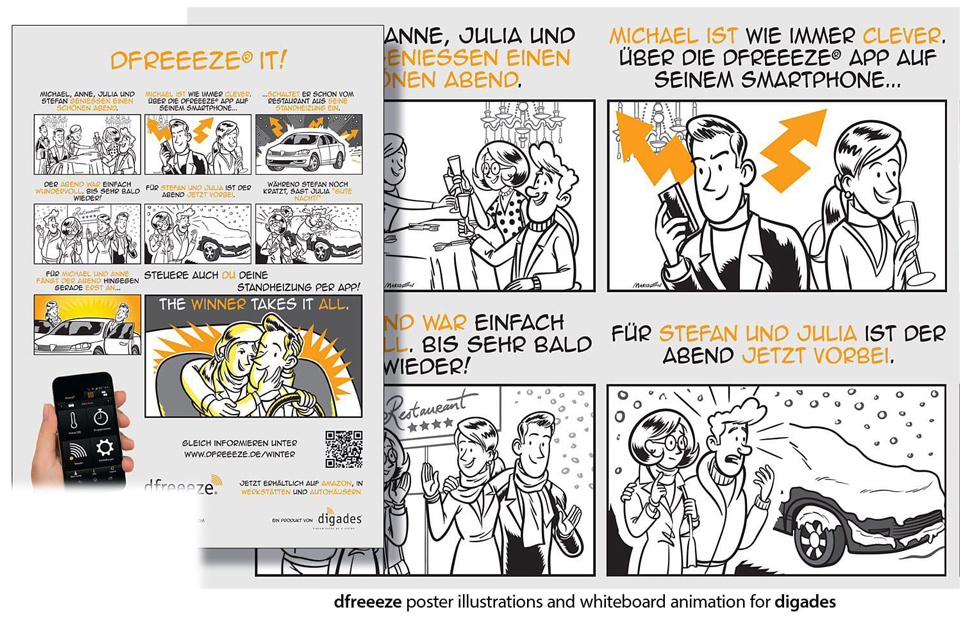
Winter Car Preparations Mishap
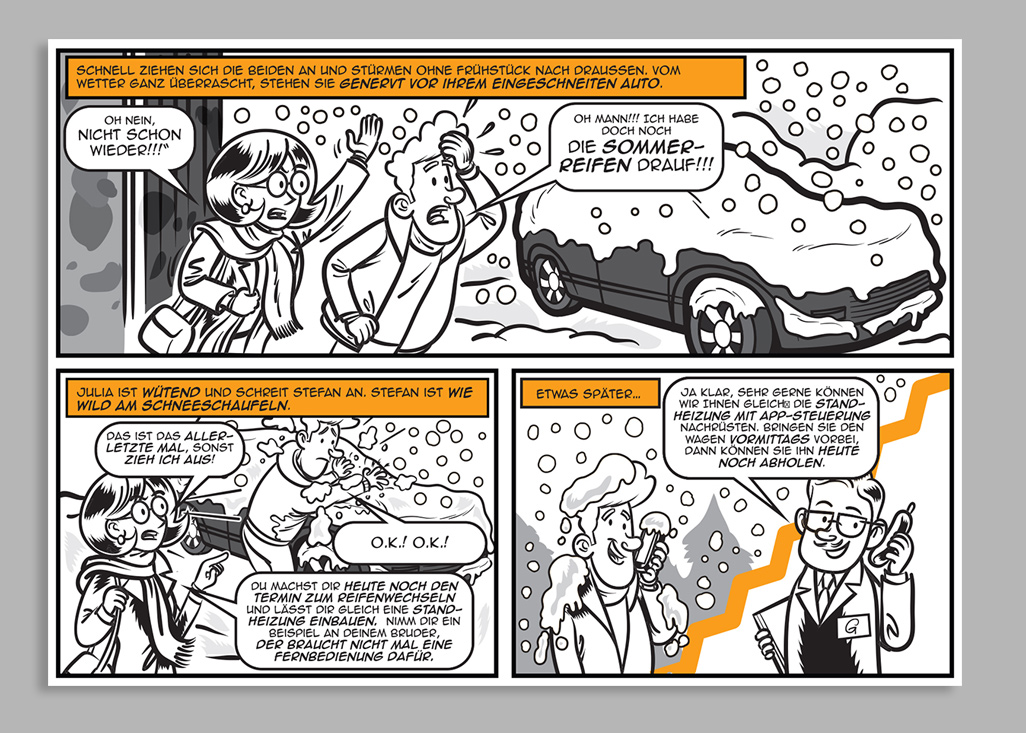
A comic strip depicts a couple who rush outside to find their car buried in snow, realizing they still have summer tires. The woman angrily scolds the man, who shovels snow frantically. Later, the man arranges for a tire change and installation of an app-controlled engine heater, ensuring the car is ready by the afternoon.
Dinner Talk on Tech Innovations
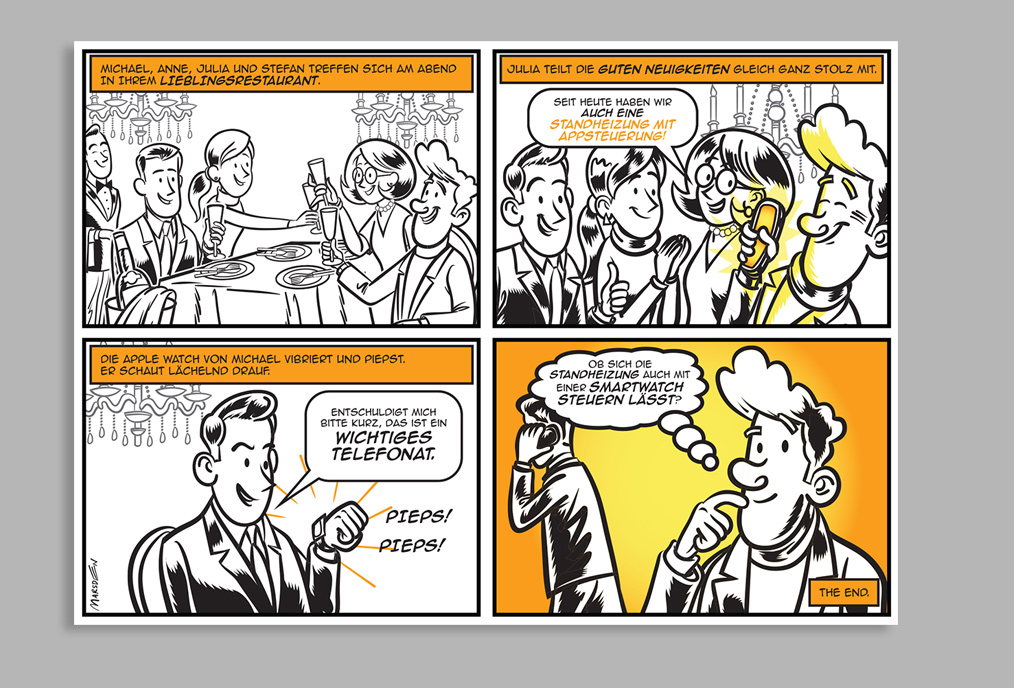
Four friends are dining at their favorite restaurant. One of them, Julia, shares exciting news about a new app-controlled parking heater. Michael's smartwatch vibrates, indicating an important call. Another friend wonders if the parking heater can also be controlled via smartwatch.
Mechanic Introduces Car’s High-Tech Upgrades
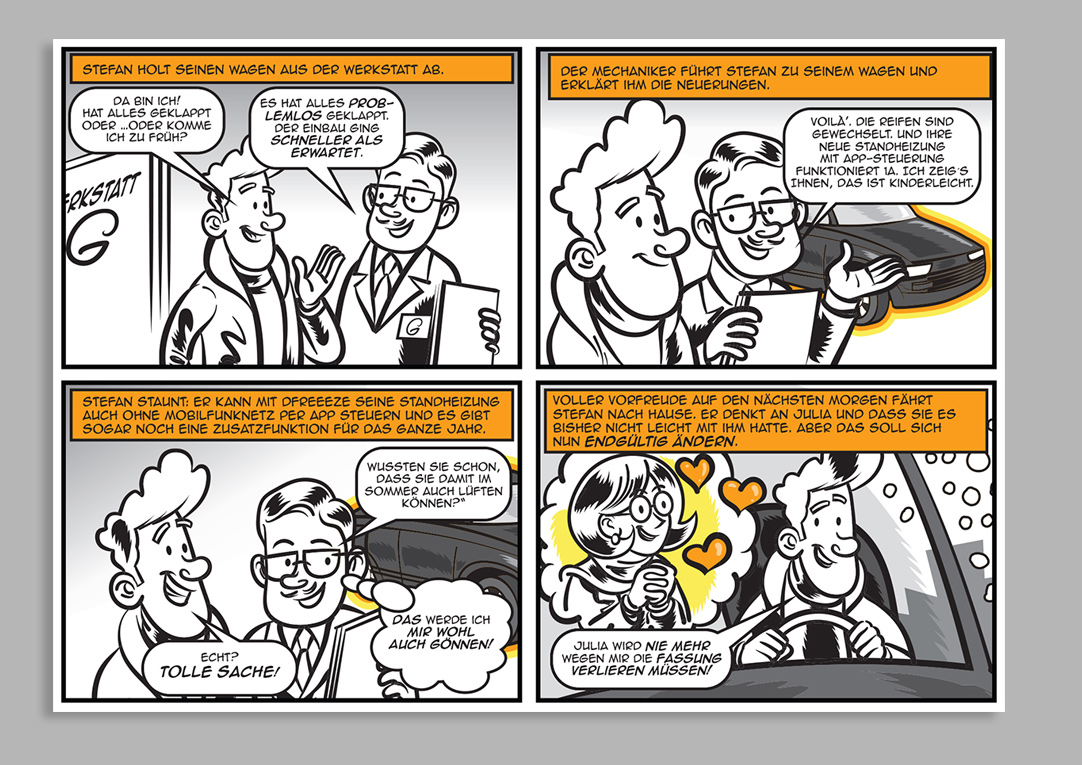
A comic strip depicts Stefan picking up his car from a mechanic. The mechanic explains the new updates, including an app-controlled heating system. Stefan is impressed with features like remote operation without a mobile network and additional year-round functions. He drives home excitedly, thinking of Julia and anticipating a positive change in their relationship.

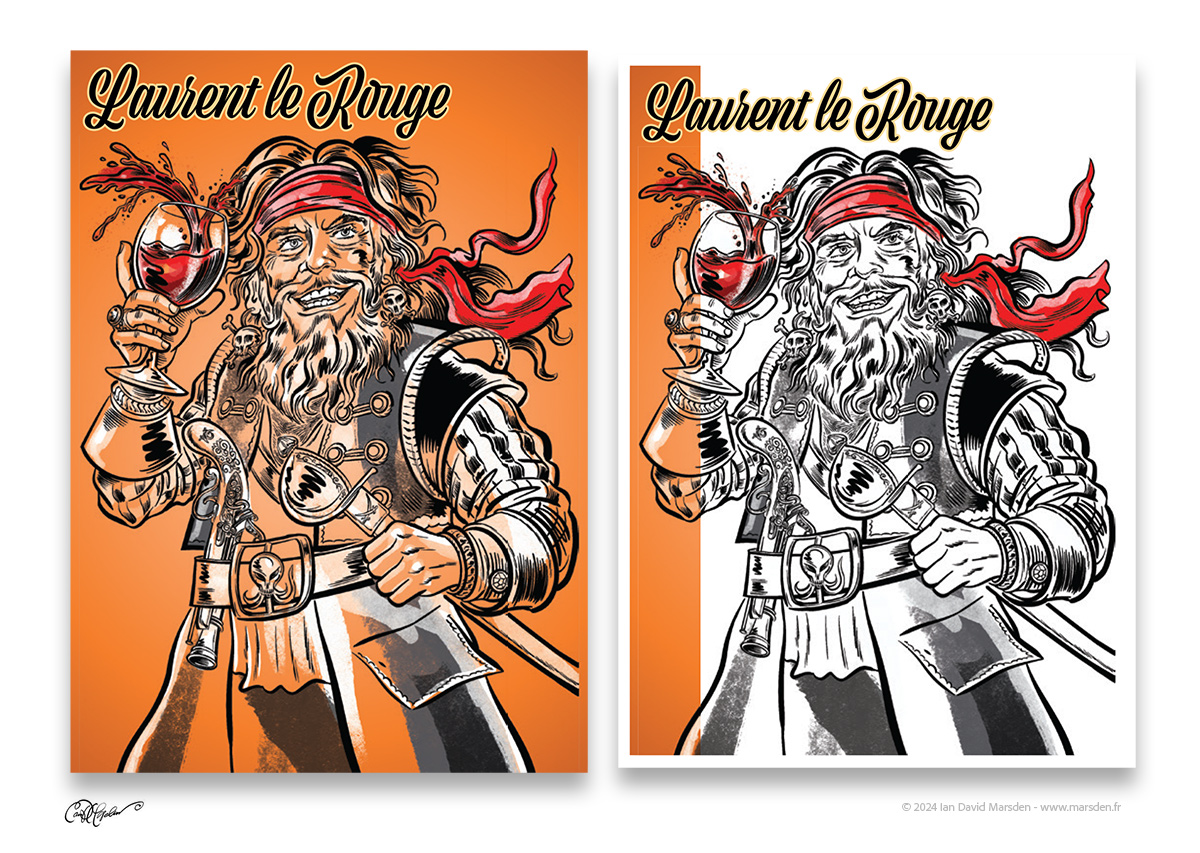
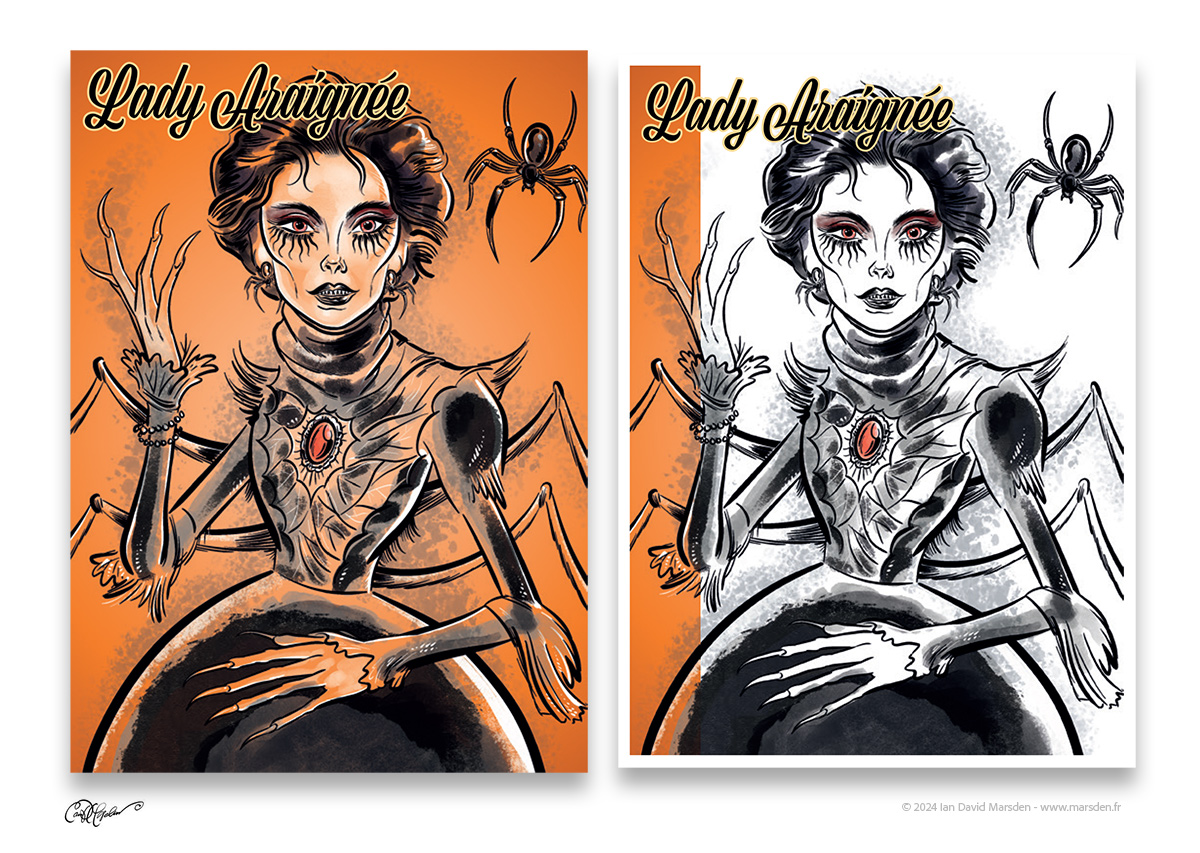
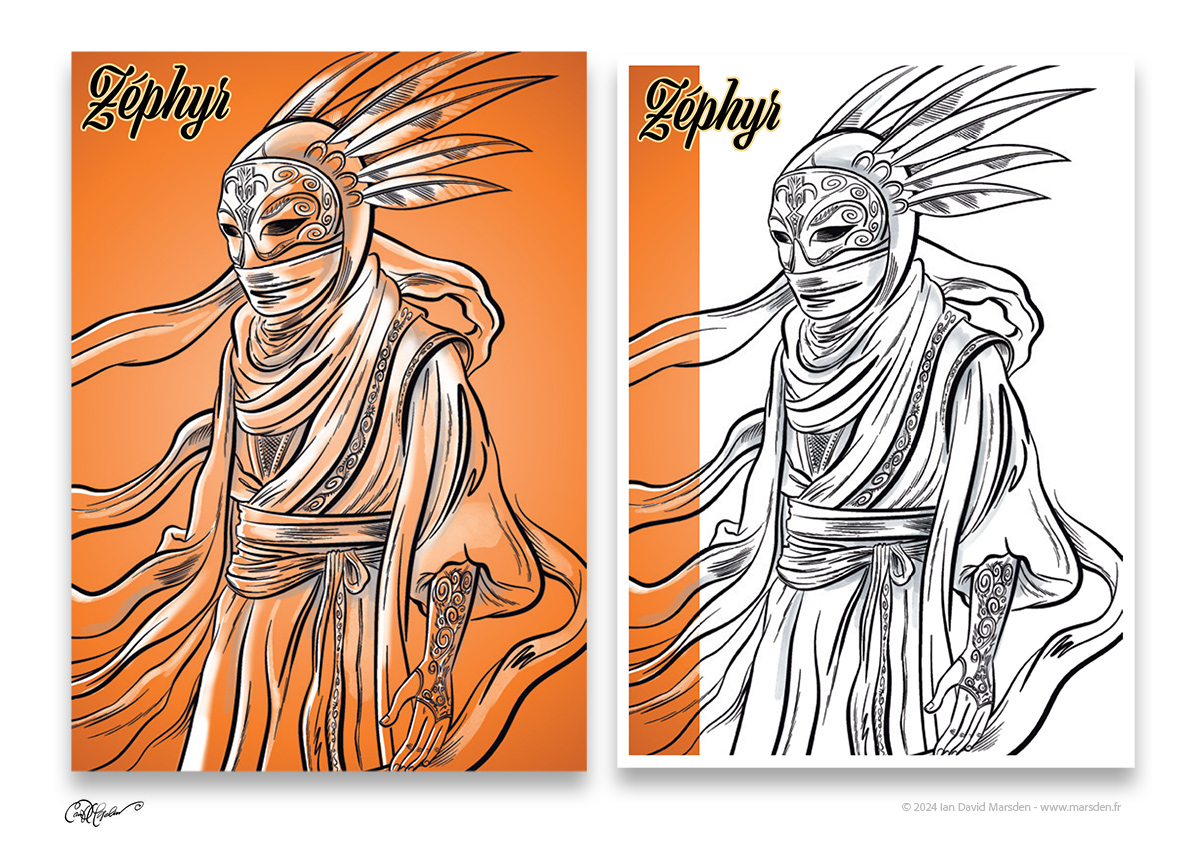
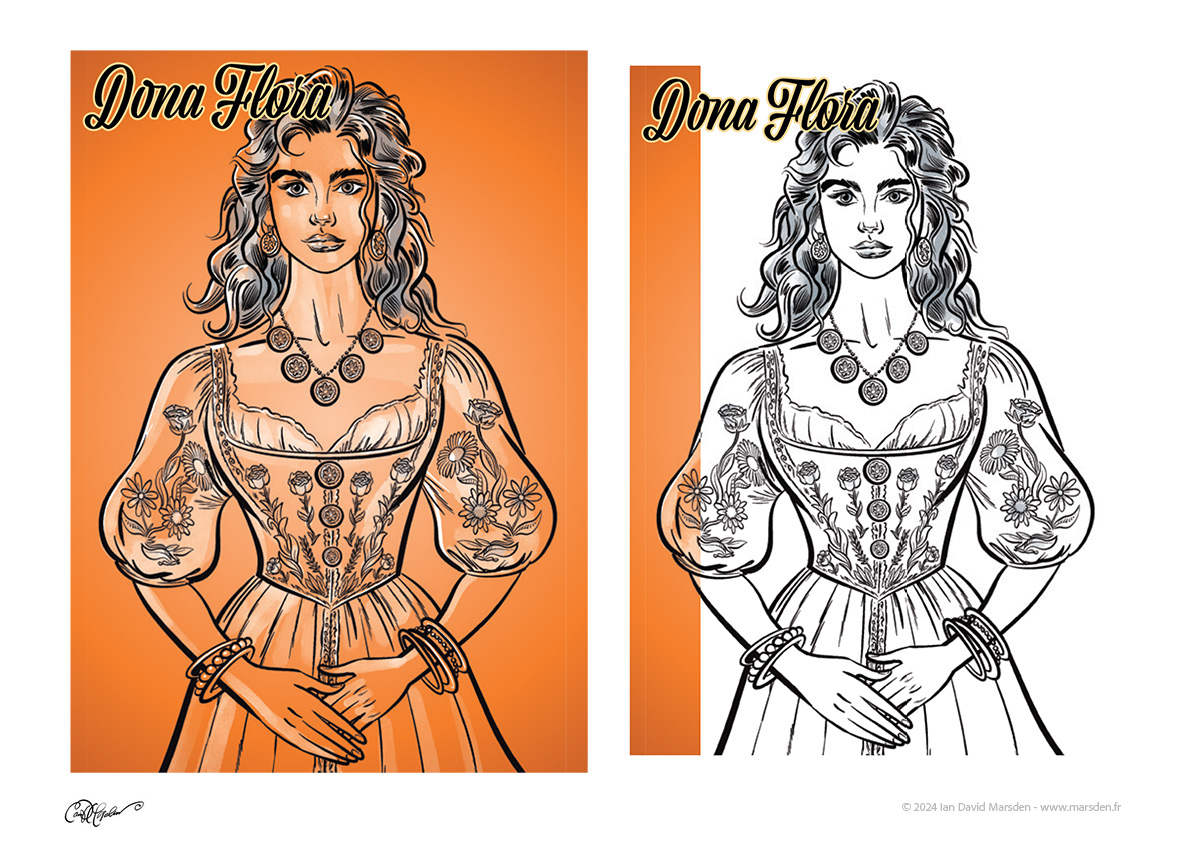

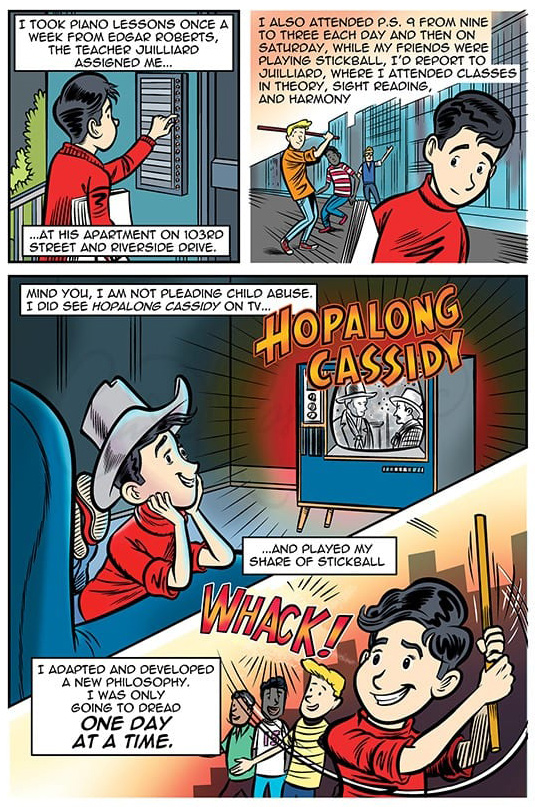
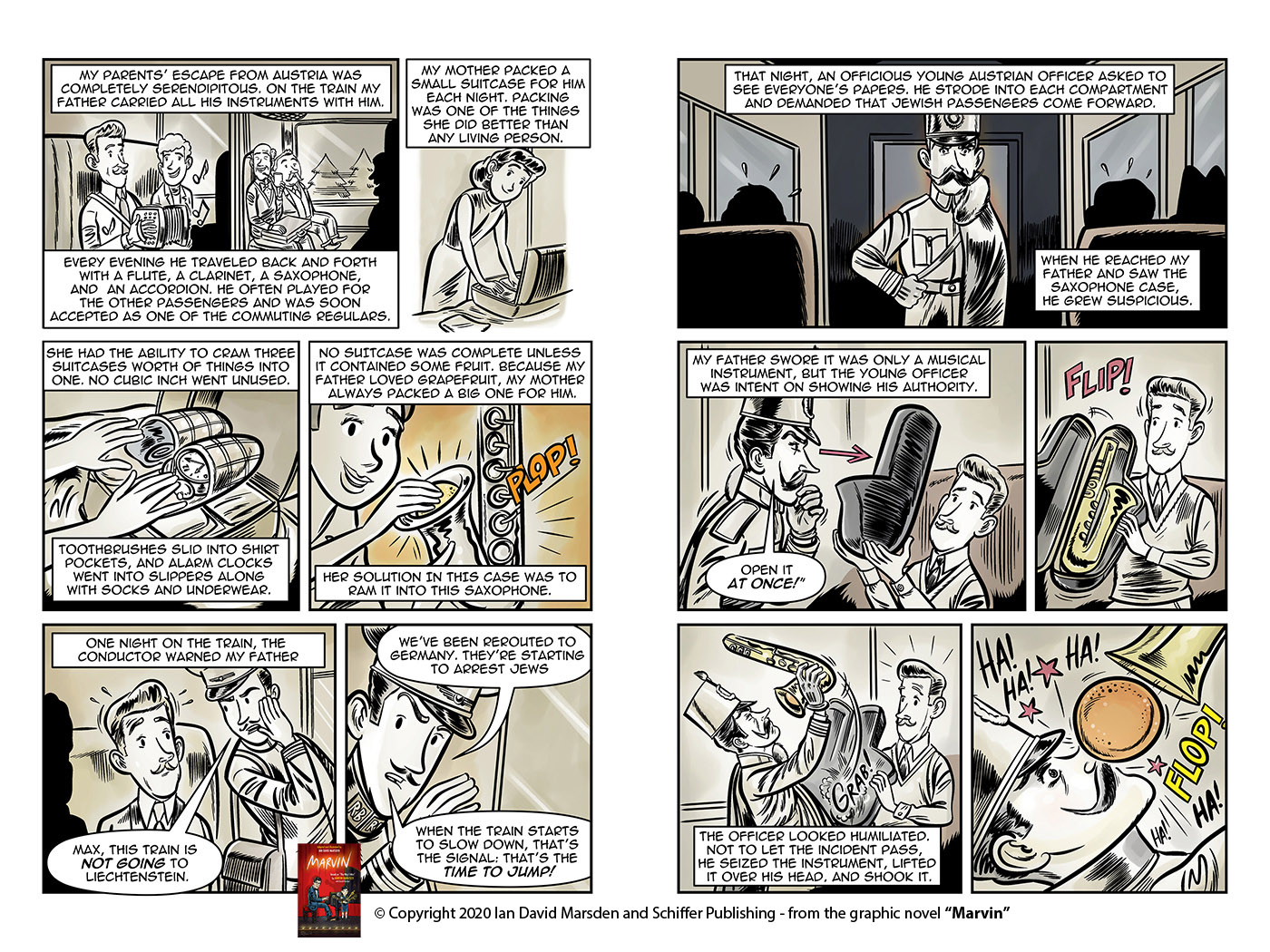
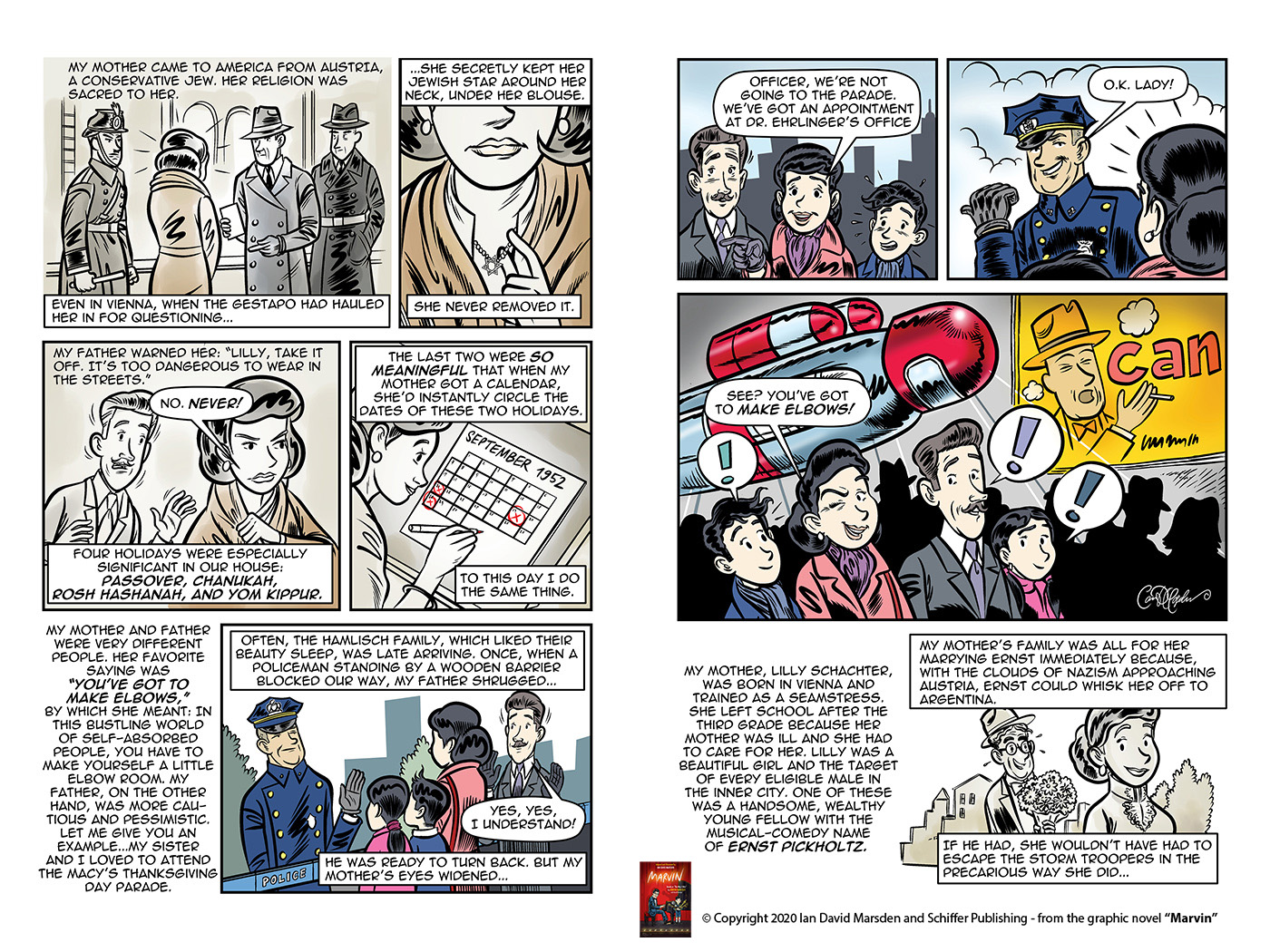
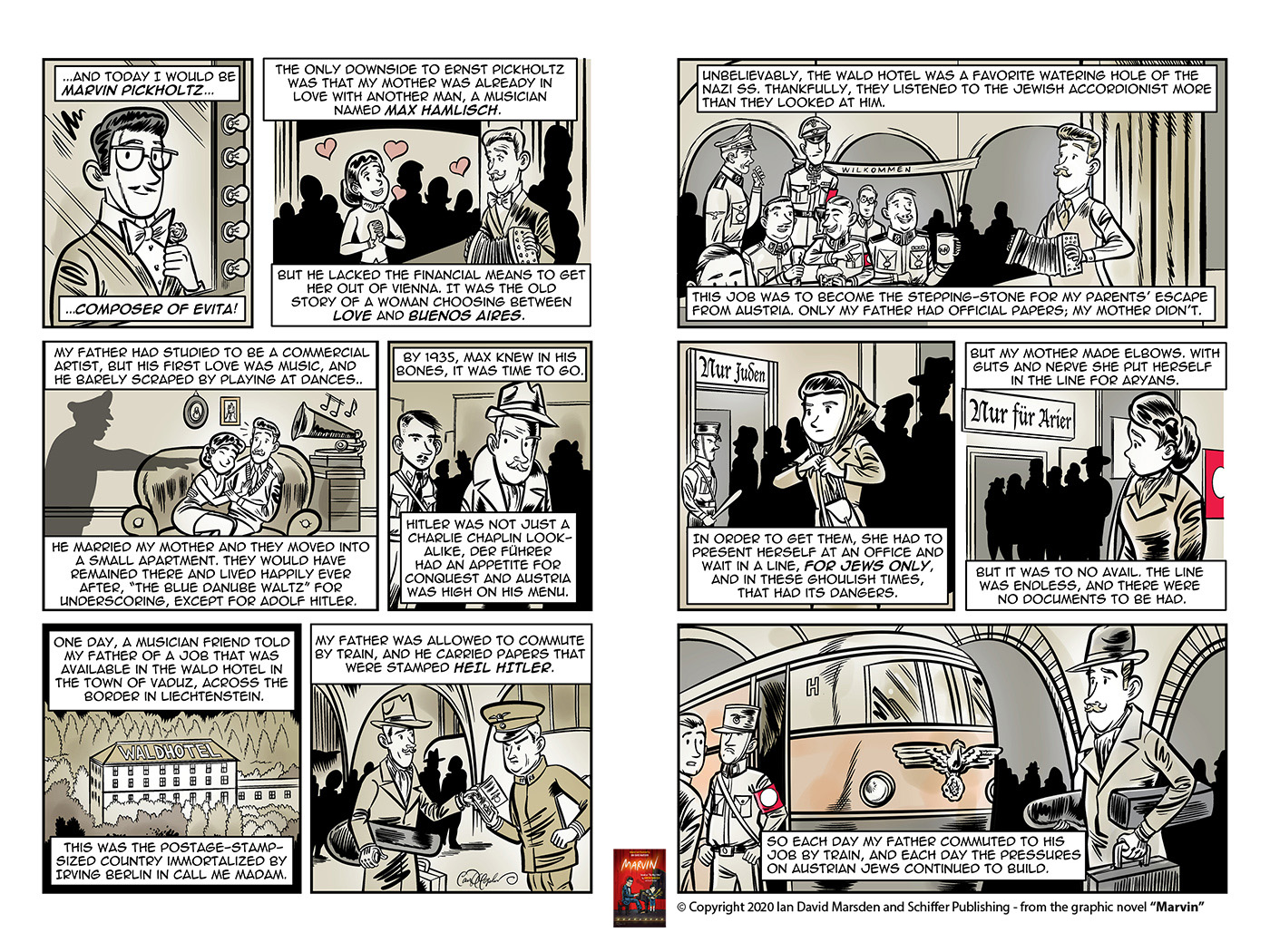
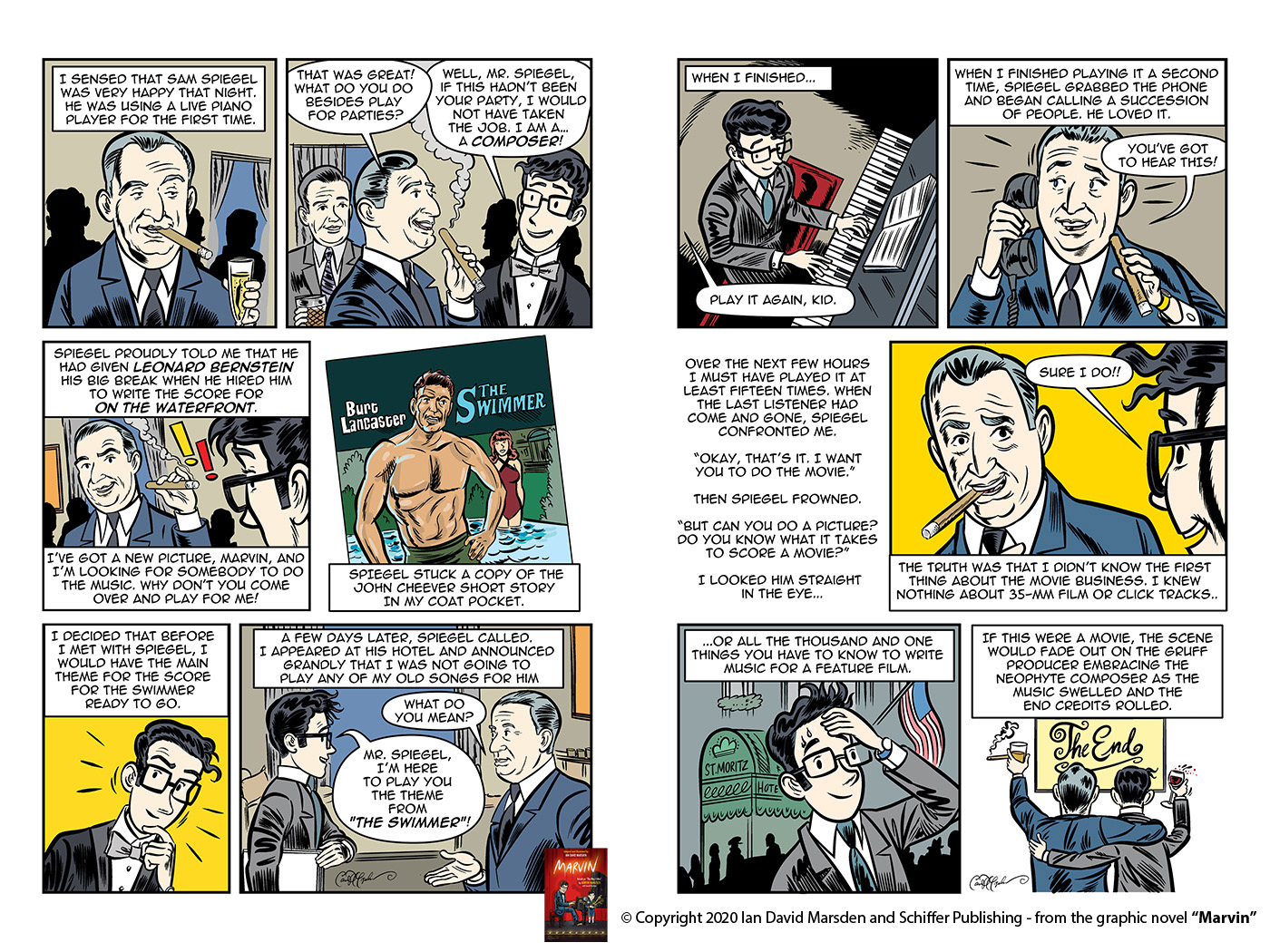
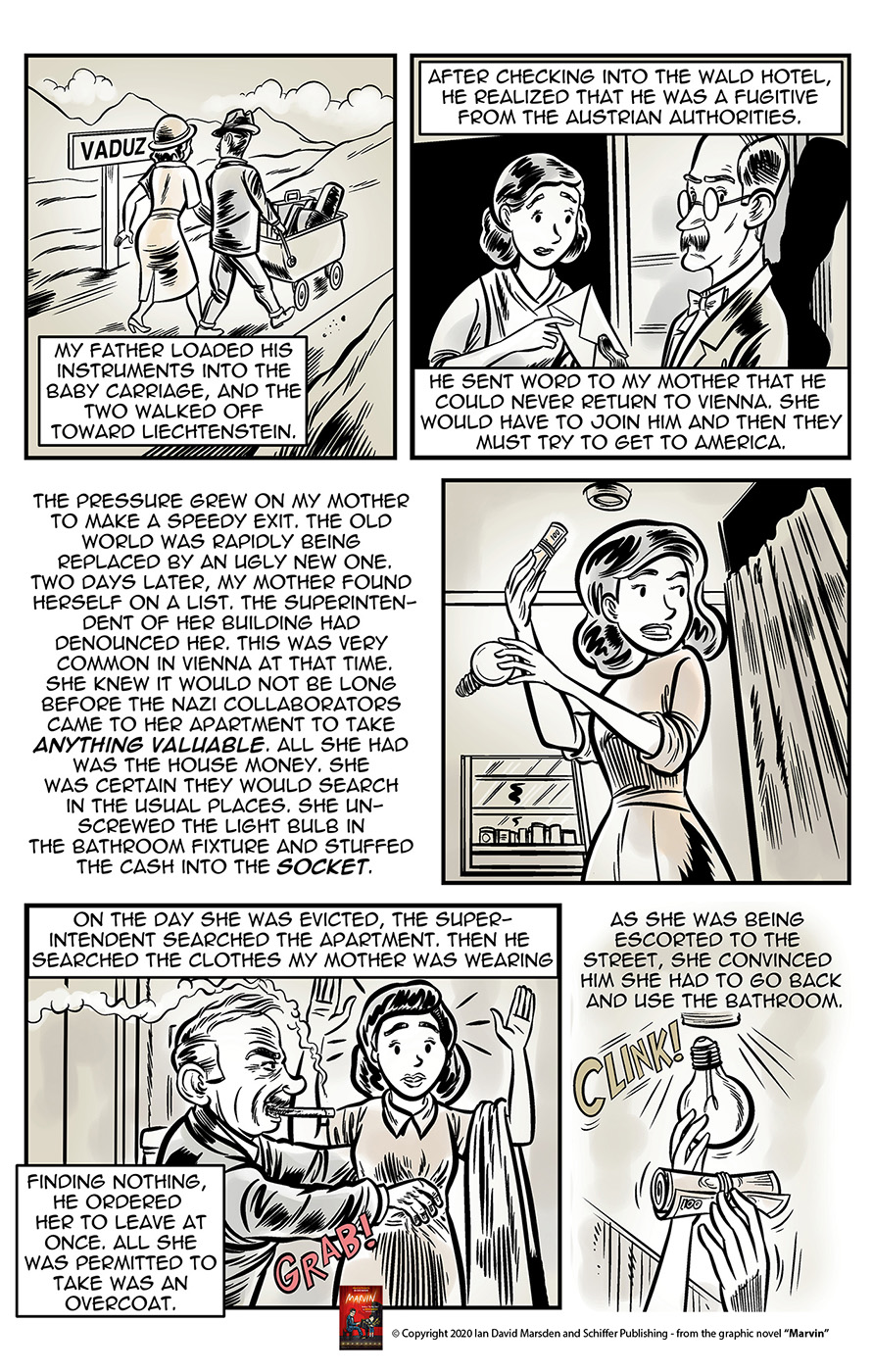
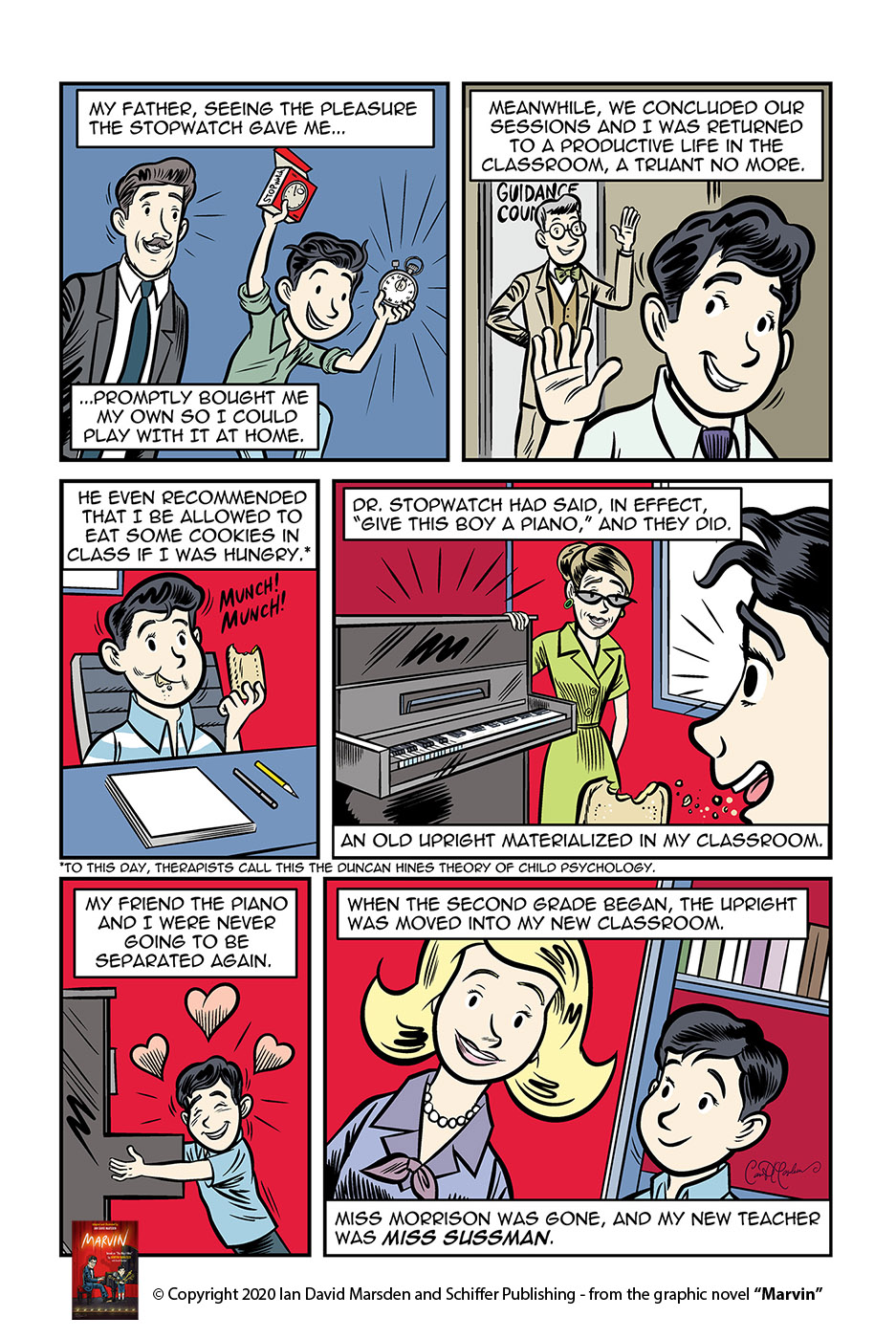
MARVIN Graphic Novel Spread — Lilly Schachter, Jewish Identity and the Macy’s Thanksgiving Day Parade
A family-history spread from MARVIN: Lilly Schachter keeps her Jewish identity close in Vienna, later becomes a New Yorker, and learns during the Macy’s Thanksgiving Day Parade that American crowds require “elbows.”




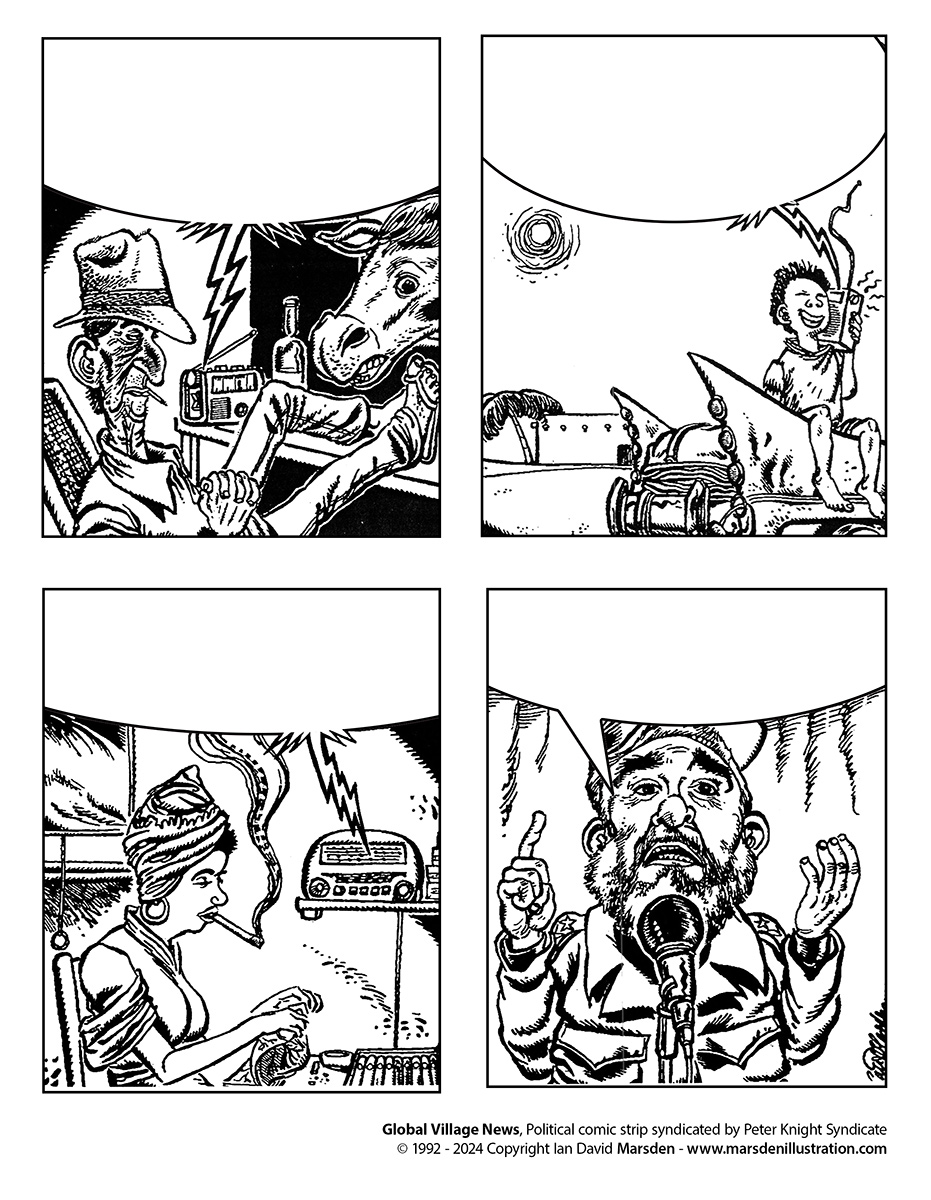
Radio Connection
The image is a four-panel black and white comic strip. The first panel shows a man with a hat relaxing with his feet up, accompanied by a goat and a radio. The second panel features a child smiling while listening to a radio. In the third panel, a woman is sitting and knitting with a radio nearby. The fourth panel depicts a man speaking passionately into a microphone, gesturing with his hands. Each character is connected by radio signals, suggesting a shared message or broadcast.
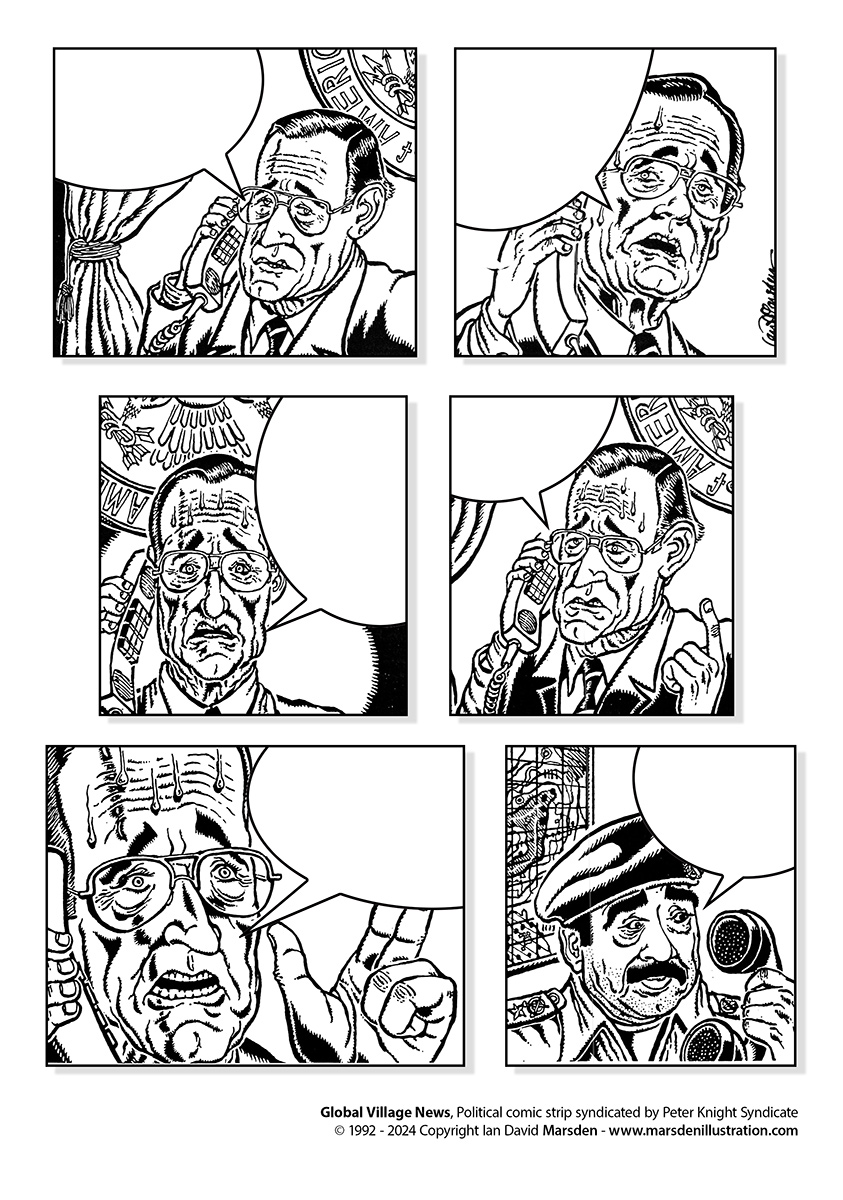
Political Phone Conversations
A five-panel political comic strip features a man in a suit speaking on a telephone in four panels. He appears worried or frustrated, with various hand gestures indicating stress or confusion. In the final panel, another man, wearing a beret and uniform, speaks into a phone with a confident expression. The setting suggests a formal or governmental environment, indicated by insignias and decor visible behind the characters.
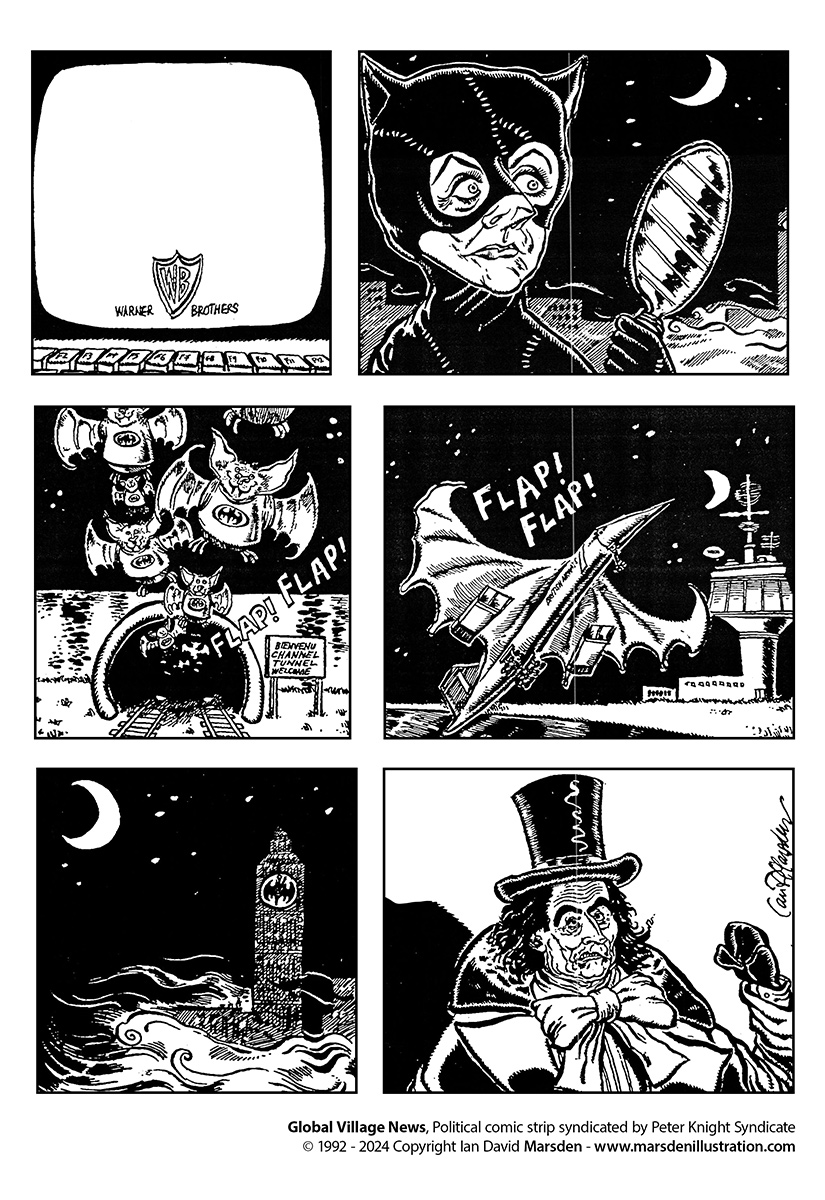
Bat-Themed Global Village
The comic strip features a series of panels with a character dressed as a cat-like figure holding a mirror under a night sky. Birds, resembling bats, are flapping over a tunnel entrance labeled "Channel Tunnel Welcome." An aircraft with bat-like wings appears next to a large radio tower. In another panel, a clock tower is decorated with a bat symbol. The final panel depicts a person in a hat with a bow tie. The strip is titled "Global Village News" by Ian David Marsden.
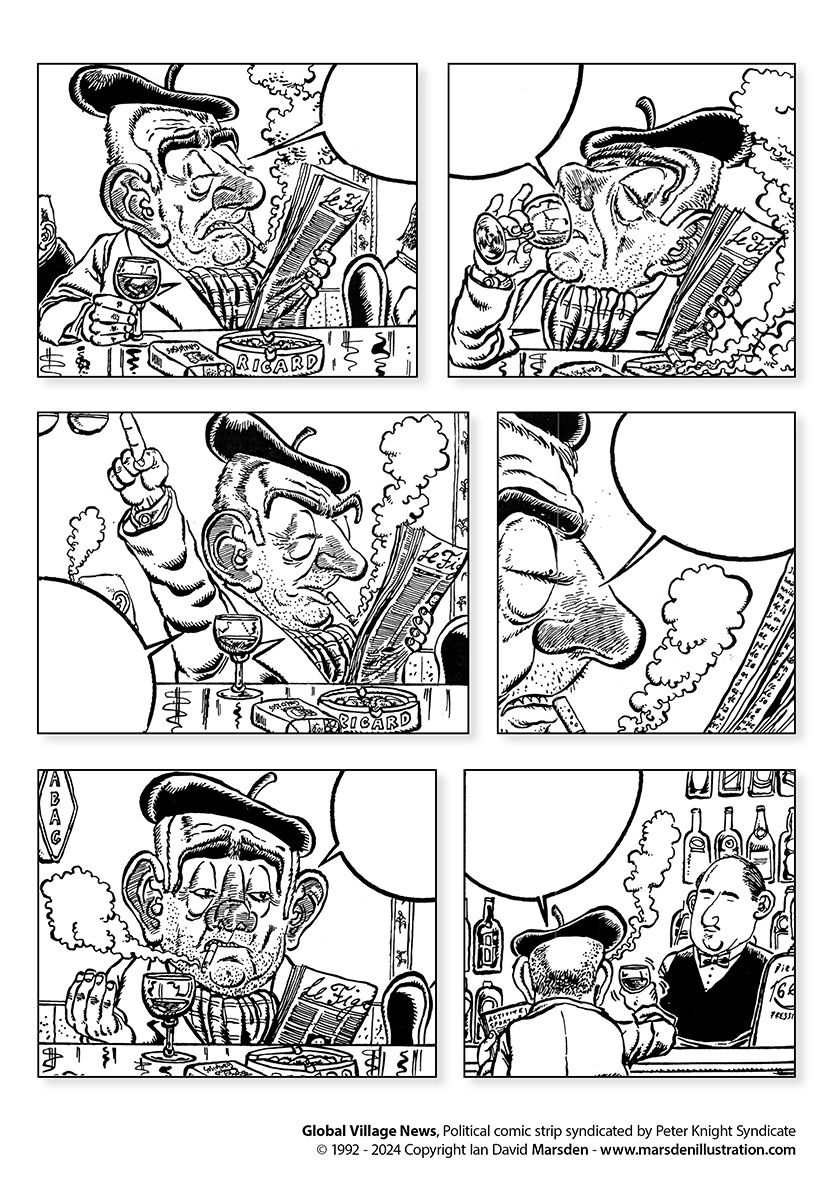
French Cafe Comic Scene
A black-and-white comic strip featuring a man in a beret, smoking while reading a newspaper at a bar. He drinks from a glass and gestures emphatically. The setting appears to be a French cafe, with a bartender present and bottles visible in the background. Speech bubbles are empty, indicating no dialogue.
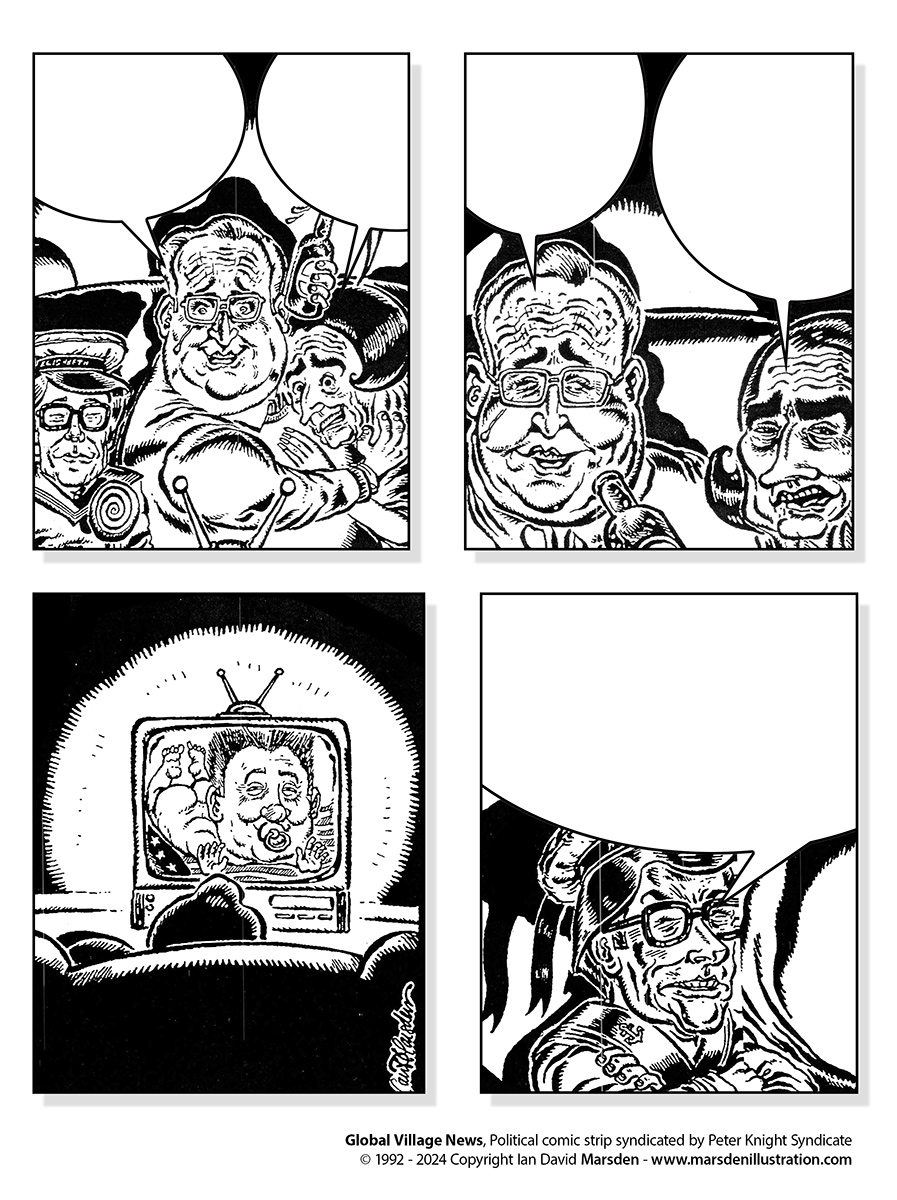
Political Satire Comic Strip
A black-and-white political comic strip shows various characters in a series of four panels. The first two panels depict three individuals, one holding a bottle, with speech bubbles above them. The third panel shows a television screen displaying a baby with a pacifier, as people watch from behind. The final panel returns to the previous scene with one of the characters speaking. The strip is titled "Global Village News" and is created by Ian David Marsden.

Elvis Stamp Comic Strip
A black and white comic strip featuring several panels, each depicting different characters and scenes. The first panel shows a man speaking into a microphone labeled "TV." The second panel includes a man holding a clapperboard labeled "Elvis Stamp Scene 1." Subsequent panels resemble postage stamps featuring illustrated portraits of a singer, with the denomination of 29 cents U.S. Mail. Additional scenes include a visibly sweating man and another holding a bottle. The final panel shows a man giving a thumbs-up gesture. The strip is titled "Global Village News."

Political Satire Caricatures Comic
A black and white comic strip featuring six caricatures of various individuals, each in a separate panel, some with speech bubbles. The characters display distinct facial expressions and attire. The comic is a political satire from the Global Village News series by Ian David Marsden, dated from 1992 to 2024.
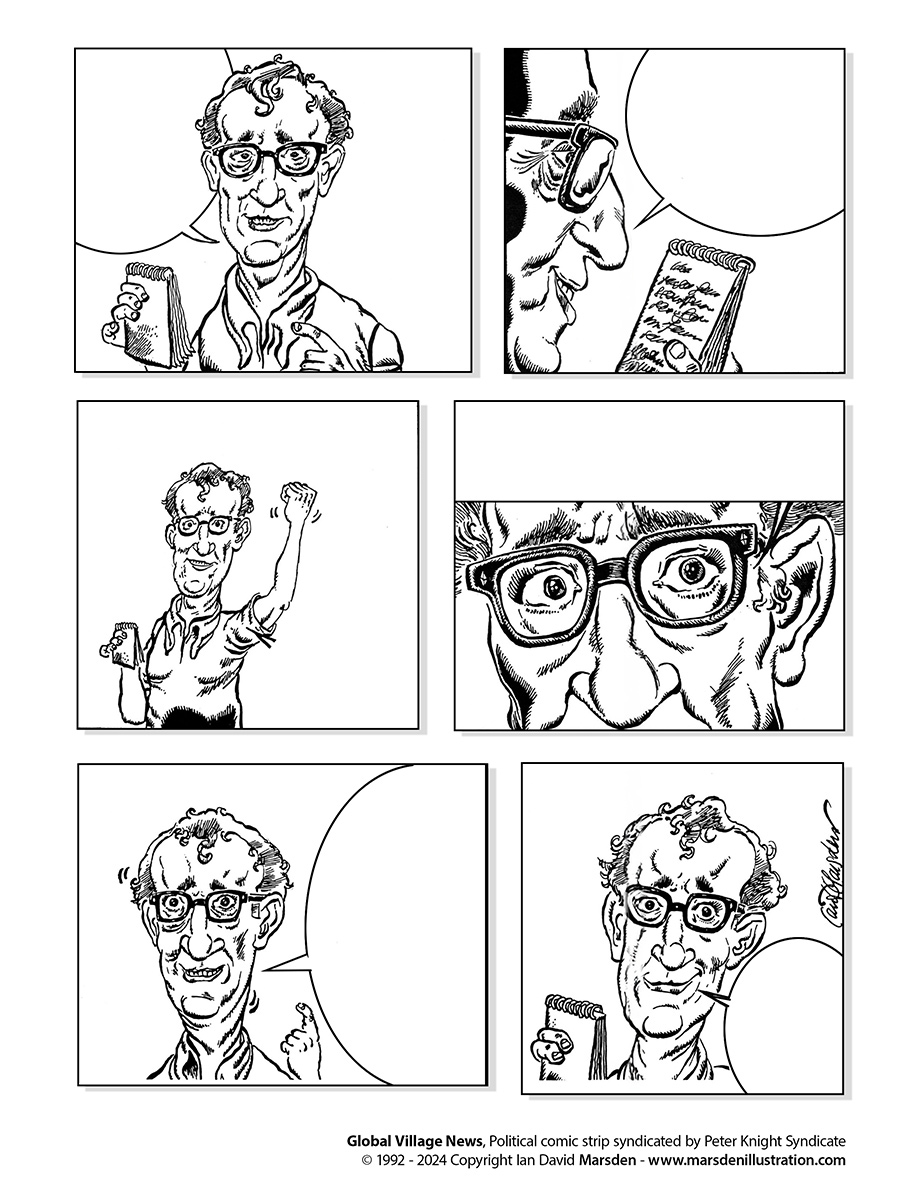
Curly-Haired Man Explains Comic Story
A comic strip features a bespectacled man with curly hair holding a notepad. Different panels show him from various angles, sometimes looking at the notepad with speech bubbles included. His expressions vary from contemplative to excited, suggesting he is sharing or explaining something.
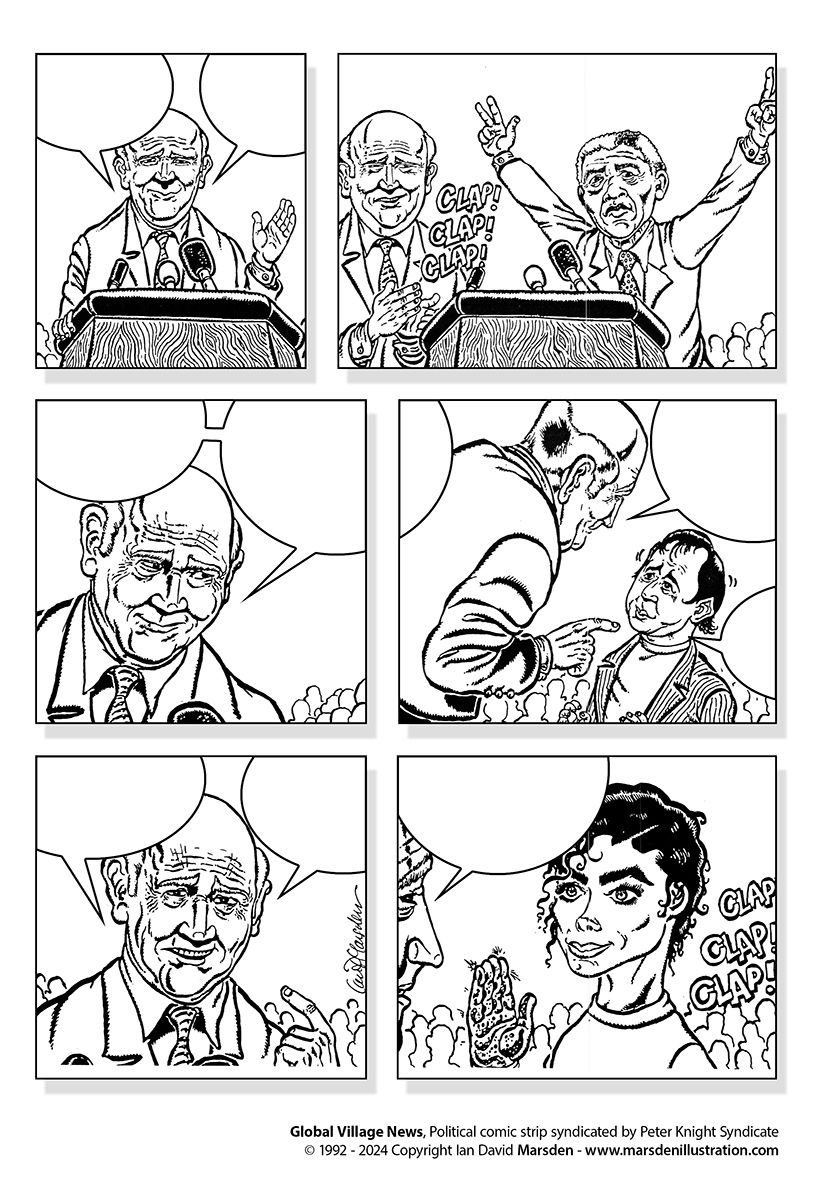

Political Caricature Dinner
The image is a political comic strip with four panels. Each panel features a different cartoon caricature of a political figure with speech bubbles, standing or sitting at a table with various food and drink items. The setting suggests a humorous or satirical context, based on the visual elements and over-exaggerated characteristics of the figures.
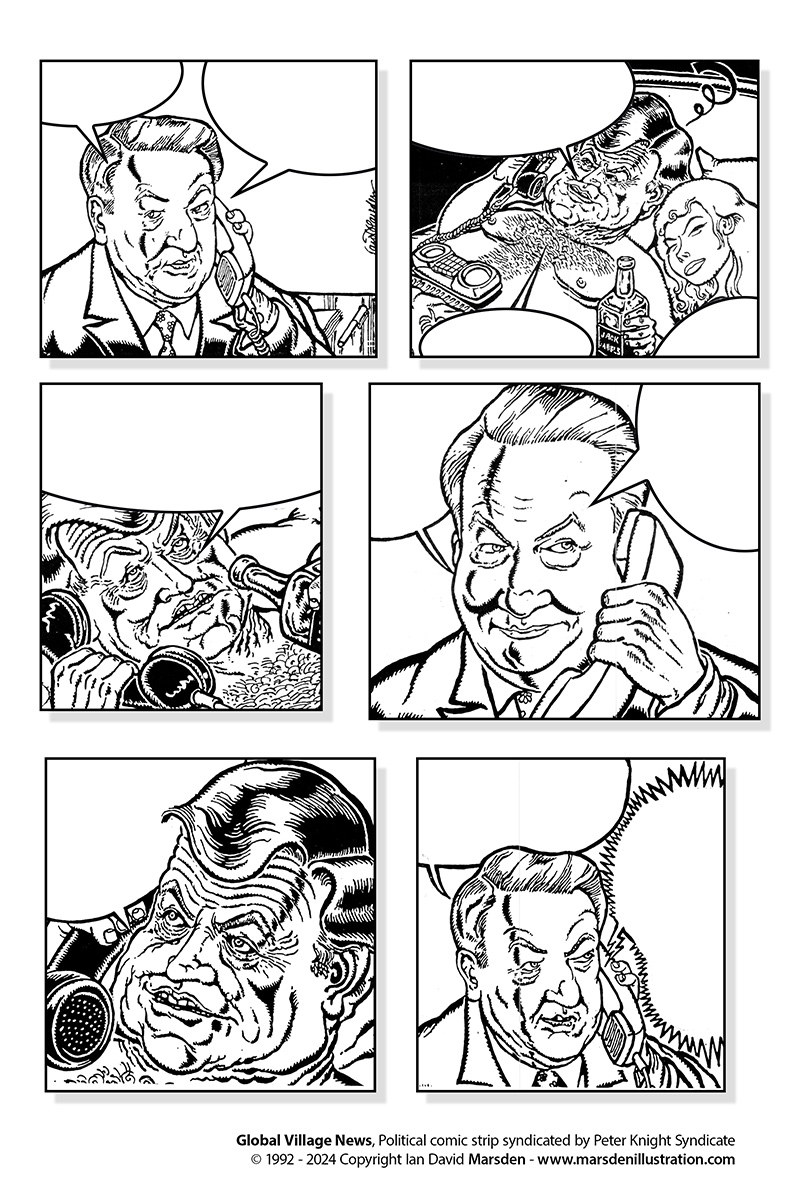
Phone Call Shenanigans
A black-and-white comic strip featuring two men engaging in a phone conversation. The first man is shown speaking into a telephone, while the second man is depicted lounging in bed with a bottle labeled "Jack Daniels" and a woman resting beside him. The artwork exhibits detailed facial expressions and a bold, illustrative style.
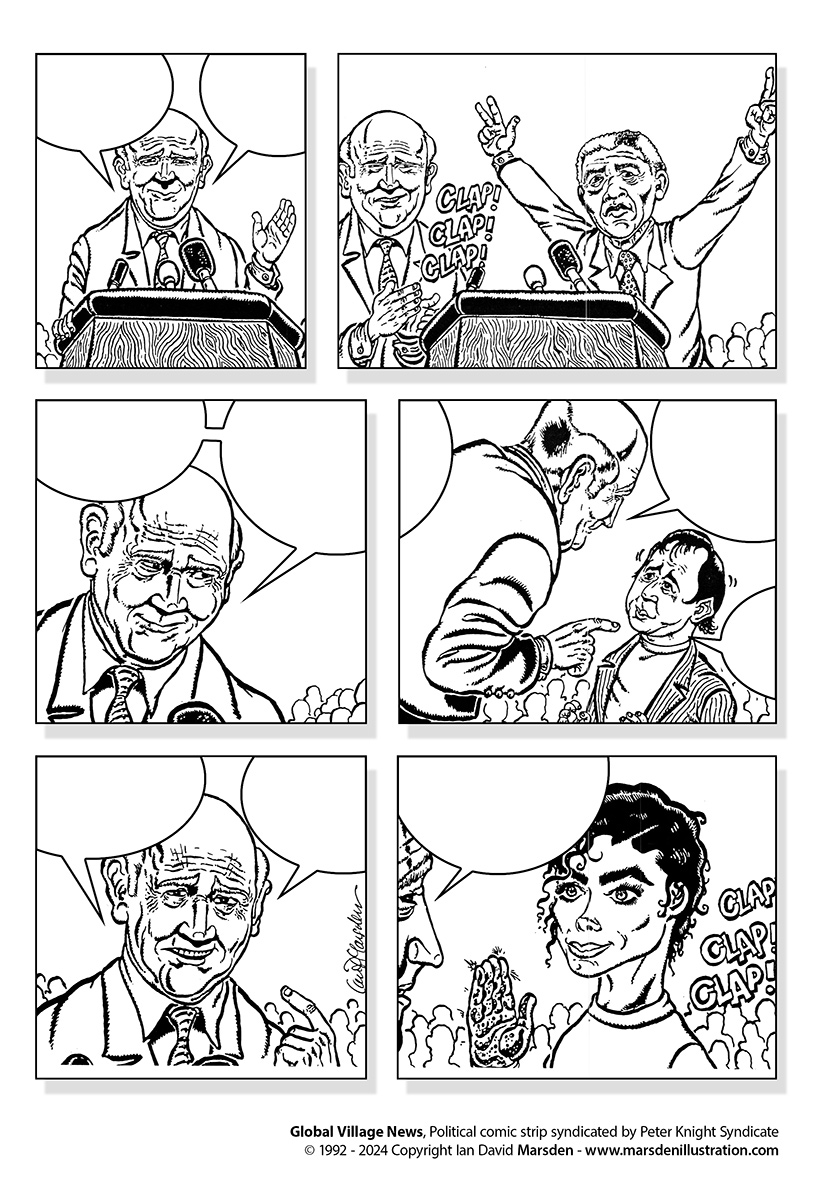
Political Speech Applause
A political comic strip shows a series of panels featuring a man at a podium speaking to an audience with microphones in view. He claps, and there are cheers from the crowd. Another character with horns whispers to a woman, who responds with a neutral expression, joining in the applause. The comic is titled "Global Village News" and credited to Ian David Marsden.